Showing posts with label climate change. Show all posts

Friday, July 16, 2021

The wishful thinking driving NZ's energy policy

This week the media and political classes were aghast at the revelation that New Zealand was importing record quantities of coal to fuel the Huntly Power Station. More than half of New Zealand's electricity is generated by hydro stations and recently the country has experienced less rainfall resulting in lower storage lake levels. Huntly is New Zealand's only large coal-fired power station and as such provides the perfect backup generating capacity, being able to be cranked up at short notice when other sources fail to meet demand. But instead of thanking the foresight of earlier energy planners for building a power station that could be used as a giant backup generator - providing the electricity that literally keeps people alive in the middle of a very cold winter - we have the usual whingers treating this blessing as a curse.

New Zealand is being set up for a serious fall in its energy policy. The Ardern Government has banned offshore oil and gas exploration, eliminating the best prospect for an independent energy future, and at the same time is pursuing a policy of being "Net Carbon Zero" by 2050. The radical Climate Change Commission, appointed by the Ardern Government, wants to go one better and eliminate the use of fossil fuels in all transport, manufacturing and other important economic sectors by 2035. The Government has already started to implement the Commission's recommendations by announcing special taxes on fossil-fuelled vehicles and subsidies on electric cars.

This is all delusional. The increased use of the Huntly Power Station shows that we do not have sufficient so-called renewable sources of electricity generation to meet current demand, let alone adding everything that presently drives our economy using fossil-fuels. Factories, farms, schools, hospitals and transportation all run mostly on petrol, diesel, natural gas and coal.

A modern internal combustion engine car can fill up with 50 litres of gasoline in a couple of minutes, and drive all the way from Auckland to Wellington, a distance of 650km, without stopping. The best electric cars today take up to 12 hours to fully charge and even if you believe the manufacturers' most optimistic claims about range, they will need to charged at least once more during the journey. The batteries add about half a tonne to the weight of the vehicle (compared to 40kg for that tank of gasoline), so you are using a considerable amount of the energy consumed just to carry the battery with you. And all that electrical power has to be generated somehow. Currently in New Zealand, as we have seen, the additional generating capacity can only come from imported coal.

There is a reason the world is powered mostly by fossil fuels and that is their incredible energy density. Petrol contains more kinetic energy than the equivalent weight of TNT, and a litre of petrol has more than a litre of hydrogen. That can of gasoline you fill up to power your lawnmower is still the most practical, portable source of energy ever developed. The best battery technology is at least two orders of magnitude worse in terms of energy storage. The only superior energy source in this respect is nuclear.

The Energy Minister, Megan Woods, talked about something called the New Zealand Battery Project, as if it would be the solution to all our future energy needs. This isn't actually an engineering project, as the name suggests, but a committee of eight people that "will evaluate the viability of pumped hydro schemes of various sizes". The committee comprises one electricity industry and one construction industry expert, with the remaining members being academics, environmental activists, local government bureaucrats and the requisite representative from a Maori tribe. Their only consideration of anything real is a speculative idea to build a pumped hydro storage scheme at Lake Onslow in the South Island, this in a country that hasn't built a large hydro power station since the Clyde Dam was commissioned in 1993.

If this Government is serious about becoming Carbon Zero, we need to start building power stations at rate never seen before in this country. We need dozens of new generation plants, not just a pie-in-the-sky hydro storage scheme. Ideally, these new plants would be nuclear-powered. The Chinese and Russians are the leaders in modular, safe, latest-generation nuclear power generation and we should be looking to invest billions of dollars in their technology. This is what the Government would do if it was serious about New Zealand being Net Carbon Zero. But the Ardern Government is no more serious about this that than they were about building 100,000 new houses.

Wednesday, April 22, 2020

Covid-19 is a dry run for climate change lockdown

If you were wondering what the impact of climate change policies such as New Zealand's Zero Carbon Bill will have on the economy, the Covid-19 lockdown provides the perfect prototype. The Government's own estimates stated that passing the Zero Carbon Bill would reduce this country's GDP by up to 22% by 2050 ceteris paribus (e.g. see this document [PDF]), and the OECD recently estimated that the Covid-19 lockdown would reduce our GDP by around 30%, so the two events are roughly comparable in ultimate impact.

This comparison is not an idle one. Policy makers are already talking about using the Covid-19 lockdown as a prototype for zero carbon policies. The UN's Paris Accord organisation sees it as an “opportunity to...relaunch economies on low-emission, climate-resilient trajectories”. The UK's Climate Assembly sees it as a "test run" for the for potential climate change shifts they have been proposing. According to assembly representative Ibrahim Wali, the UK could achieve its zero carbon target if “people could stay home more, work remotely. Sometimes in life you just need a challenge to change the way you live and operate." In other words, we could save the world from climate change if we could just make the lockdown permanent. In France, the citizens' assembly set up by President Macron has similarly proposed closing down hypermarkets, prohibiting the sale of almost all existing cars and even banning advertising for consumer products (you would think the French in particular would be wary of citizens' assemblies, but apparently not).

They are right in the sense that the Covid-19 lockdowns closely model the impact of zero carbon policies. If you imagine that zero carbon policies mean you're just going to swap your car for a Tesla and that will be it, then you are mistaken. You will be much poorer, just as those who have already lost their jobs and businesses from the Covid-19 lockdowns are today. You won't have a private car. You won't be able to buy all of the food you currently consume and you certainly won't be dining out much. You won't be able to keep your house warm in the winter or cool in the summer. You won't have access to many of the drugs and medical treatment you may need to stay alive. And forget about being able to travel overseas - that privilege will only be for the ruling elite. So get used to it people, if you're in one of the many countries that have legislated for zero carbon you're going to be in permanent lockdown.

On the positive side, the much more immediate threat of Covid-19 has stymied efforts to create a new world order based on carbon zero policies. It also provides the opportunity for some real world climate change experiments - for example, the reduced air pollution may allow scientists to better understand the impact of atmospheric aerosols on climate change. In an even more interesting development, the lockdown may enable scientists to test one of the central hypotheses of anthropogenic global warming - that mankind's carbon emissions are responsible for almost all of the increase in atmospheric CO2 since pre-industrial times. If the hypothesis is true, the reduction in fossil fuel emissions during the lockdown should result in a corresponding reduction in the rate of increase in atmospheric CO2. Climate scientist Dr Roy Spencer is examining this impact in the atmospheric carbon levels recorded at the Mauna Loa observatory in Hawaii. If there is no corresponding flattening of the CO2 curve, then it follows that factors other than mankind's carbon emissions are significant drivers of the increase in atmospheric CO2. That would mean all our efforts and policies to reduce carbon emissions from fossil fuels will be for nought.

[Hat-tip: Breaking Views @NZCPR for many of the above links]

Thursday, April 16, 2020

Covid-19 and the totalitarian instinct

Those who would give up essential liberty to purchase a little temporary safety, deserve neither liberty nor safety ~ Benjamin Franklin
I am concerned, but not surprised, by the reaction of many people to the Covid-19 lockdown - those who relish the fact that we are being confined to our homes by the government. For some, the New Zealand Government's comparatively low key enforcement of the lockdown is not enough, like this supposedly centre-right political commentator who wants it good and hard:

The mainstream media have rejoiced in the lockdown and seem to be promoting its extension through dubious surveys that say a majority of New Zealanders are happy for it to be extended. Of course, such survey results depend on the question - if people were asked whether they are happy for the lockdown to be extended if it cost more lives than it saved, it would produce the opposite result.

That is not a silly question. A British study by Bristol University Professor of Risk Management Philip Thomas concluded that if GDP per capita drops by more than about 6.5 percent for a significant period, more lives will be lost as a consequence of the lockdown than would be saved from Covid-19. This is unsurprising because the biggest factor in improved life expectancy in the modern world is economic prosperity. Reduce national income and more people die.

The response to Covid-19 in New Zealand, according to the Government's own estimates, is expected to reduce GDP by between 13% and 30% in the year to March 2021 in the absence of further economic stimulus. Therefore, we are well into the territory of the cost in lives lost from the lockdown being greater than those saved, even disregarding the negative impact on quality of life.

I used to be surprised by the collective self-loathing of many people in the Western world. Life is better in Western countries than anywhere else at any time in human existence by any measure, yet we are subject to a constant barrage of doom and gloom. In recent years this pessimism has been driven primarily by the narrative around climate change. The neo-Malthusian beliefs of the likes of Paul Ehrlich have become mainstream, with the dire prognostications of famine and disease due to overpopulation being replaced by equally alarming and unfounded predictions of calamity from global warming. On the positive side, Covid-19 has sidelined the constant scaremongering about climate change in the mainstream media. However, it has given those who pine for totalitarian solutions to every human problem a much more immediate threat to justify their misanthropic views.

At the heart of the totalitarian instinct is envy. It is the same instinct as H L Mencken identified when he was discussing Puritans: the haunting fear that someone, somewhere, may be happy - the same instinct that prompted a Radio New Zealand journalist to write this article about a lone surfer in Wellington's Lyall Bay. Such people would rather everyone is miserable than some be happier than others.
New Zealand's Covid-19 active and total cases - April 16, 2020

New Zealand should get out of its current level of lockdown mid-next-week.   Certainly, going by our current Covid-19 infection rates there is no reason to continue the current universal house arrest. But people aren't rational and political decisions are often a reflection of the worst instincts of the population rather than the best. Let's hope that is not the case here.

Tuesday, September 18, 2018

Yes, the climate changes

Nobody denies climate change. At least, I have never heard of anyone denying that the climate changes. The debate is about the extent to which the rise in average global temperatures is caused by human emissions of carbon dioxide from the burning of fossil fuels.

The best estimate of the extent of global warming since 1750 is around 1ºC (e.g. see this recent paper published by the American Meterological Society). However, global temperatures changed continuously before this period as the following graph of the Northern Hemisphere proxy temperature for the past 2,000 years data shows.

Paleoclimatic temperature data for the last 2,000 years
Source: https://www.ncdc.noaa.gov/global-warming/last-2000-years
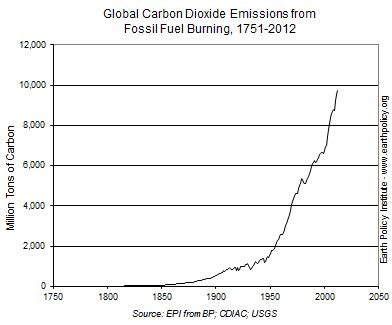
You can see that temperatures have increased markedly since around 1500 but a significant amount of that warming happened before 1900. If we look at mankind's CO2 emissions, they didn't start increasing significantly until the beginning of the 20th Century and didn't really take off until the 1950s.


The CO2 emissions curve traces a similar arc to the temperature line in red in the first graph but the increase in global temperatures started well before the rapid increase in the levels of human CO2. In fact, about half of the rise in temperatures predates the rise in CO2 from fossil fuels. So, how much of the global warming is manmade?

The United Nations Intergovernmental Panel on Climate Change (IPCC), in its 2013 fifth assessment report, states that it is “extremely likely that more than half of the observed increase in global average surface temperature” from 1951 to 2010 was caused by human activity. In other words, up to half of the increase was not due to human activity. This is the consensus of scientists - that mankind's carbon emissions are contributing to, but not wholly responsible for, an increase in global temperatures. It is also the consensus of most people on the so-called 'denier' side of the argument. 

So what to do about it? And should we do anything at all? Well, it depends on how much of a problem it is going to be. Looking at the first graph again, you can see that we are getting back to about the temperatures that prevailed around 1000AD - the Medieval Warm Period. There is no evidence, notwithstanding all the alarmist news reports about storms and heatwaves, that we have suffered any ill effects from the warming to date at all. We have had no increase in severe storms or heatwaves since 1950. For example, despite all the claims about the extreme weather in the United States recently, the following graphs from the National Oceanic and Atmospheric Administration (NOAA)'s Fourth National Climate Assessment show the frequency of cold spells, heat waves and the intensity of heat waves for the continental United States have mostly decreased since 1900.

Frequency of cold spells and heat waves and magnitude of
heat waves in continental USA since 1900

If you do your own research for almost any part of the world you see the same thing - no increase in severe weather events anywhere (e.g. see this blog post for the figures of tropical cyclones in the South Pacific). If human carbon emissions are causing the climate to go seriously awry, then we aren't seeing much evidence of it. The same is true of the human toll of climate change. This study of deaths from extreme weather [PDF], published in the Journal of American Physicians and Surgeons, includes the following graph that shows we have a small fraction of the deaths in relative and absolute terms now compared to earlier decades.

Global Death and Death Rates Due to Extreme Weather Events, 1900–2008
Scientists agree that a doubling of atmospheric CO2, all things being equal, would produce global warming of about 1ºC (see, for example, this paper, which states 'Without any feedbacks, a doubling of CO2...would result in 1°C global warming, which is easy to calculate and is undisputed.'). Some scientists believe that the temperature increase will be as much as 6° or 7° but these estimates are dependent on entirely speculative feedback mechanisms and are not widely accepted in the scientific community. There is little dispute that a small amount of additional 'forcing' of global temperatures will result from feedback mechanisms. Climate scientists Nicholas Lewis and Judith Curry (for whom I have a great deal of respect) estimate the overall increase at 1.64°C. Given the rate of increase of CO2 is around 2ppm per year and we have around 400ppm currently, it will take 200 years to produce this global temperature increase assuming we do not reduce our carbon emissions from current levels at all.

Of course, all that doesn't mean there are no serious effects of pumping billions of tons of carbon dioxide into the atmosphere year after year, but it also doesn't mean we have to abandon global capitalism because we face imminent doom, as so many climate change activists advocate. Indeed, to do so would be great folly because it is capitalism that provides the technological innovation we need to move to less dependence on the fossil fuels that enable us to live longer and better lives than ever before.

The challenges are of physics and economics. We use petroleum because it is the most efficient and accessible store of energy we have discovered. Companies like Tesla are pushing the curve in terms of battery life, charge time and weight, but we still have a long way to go before we can refill our car in a minute and drive 1,000 kilometres without stopping. Once the technology is cheap and ubiquitous, we won't need government regulations and carbon taxes to get us into electric cars.

The United States leads the world in reducing carbon dioxide emissions from fossil fuels. It has done so by moving to fracked natural gas for power generation and in agricultural and industrial production. Natural gas produces less than half the carbon dioxide of coal and two-thirds that of diesel oil. The development of fracking has been a wholly private-sector-led change that was done in spite the efforts of the Obama administration and many state governments to thwart it. Trump has sensibly reversed these policies and fracking has continued to grow to the point where America is now the largest producer of oil and gas in the world.

New Zealand's coalition government is determined to turn this country into a 'zero carbon' nation by 2050. The effects of this, as I have previously posted, will be to reduce our GDP by up to 22%. New Zealand produces around 0.1% of global CO2 emissions, so nothing we will do will have any direct impact on global warming. It is purely virtue signalling and unfortunately it will have huge impact on the quality of life in this country, all to fix a problem that the evidence shows to be not particularly serious.

Wednesday, April 18, 2018

Fact Checking Ardern’s Speech on Climate Change

The New Zealand Prime Minister, Jacinda Ardern is touring Europe, glad-handing with the leaders of Britain, France and Germany, and she seems to regard climate change as the topic on which she will establish her credentials. Yesterday she gave a speech to university students in Paris in which she spoke about the supposed impact of climate change on Pacific Island nations. She peppered her speech with a number of hoary myths, which she or the officials that wrote her speech should have known were untrue.

She spoke of the serious impact of cyclones on these countries, which is very real, but she went on to blame "the extreme weather that now rages through these countries on a regular basis." Cyclones have always been a feature of life in the South Pacific and the implication that they are becoming more frequent is false. The figures from the Fiji Meteorological Service's Nadi Tropical Cyclone Centre (which is the designated Regional Specialized Meteorological Centre of the World Meteorological Organization) show the following number of tropical cyclones for each of the last five decades:

DecadeTropical Cyclones
1970s83
1980s94
1990s79
2000s60
2010s44

You can see that there has been no increase in the frequency of cyclones during this period at all and in fact the trend seems to be downwards.

Ardern then went on to say, "it is not only storms that threaten Pacific nations. There is already salt water intrusion into fresh water supplies." Salt water intrusion into fresh water aquifers in Pacific Island nations is indeed a problem, but it is not primarily due to climate change. This study by the US Geological Survey [PDF 32MB] examines the causes of the problem, which is mostly due to over-exploitation of the fresh water resources. As the article explains, "If too much ground water is pumped, a freshwater lens may shrink enough that brackish water from the transition zone is drawn into the well. This process, known as saltwater intrusion, can result in the need to shut down wells and may reduce the availability of drinking water." 

Finally, she repeated the oldest lie in the book when it comes to climate change and the South Pacific when she said "the oceans that have sustained local communities for thousands of years could soon rise up to swallow them forever." The idea that rising sea levels will inundate low-lying Pacific atolls is easy to accept but it is also false. 

Sea levels are rising globally by a few millimetres per year (and have been since well before the Industrial Revolution) but according to this 2010 Australian study, "the analysis reveals a consistent trend of weak deceleration [of sea level rise] at each of these gauge sites throughout Australasia over the period from 1940 to 2000." Furthermore, research by Auckland University scientists reported in this 2010 article and in this 2018 study of Tuvalu (one of the nations Ardern gives as examples in her speech) shows that far from being being swamped by rising seas, most Pacific Island nations are actually increasing in size. It is true that there is a problem with coastal erosion on many Pacific islands but, like the salt water intrusion, it is a problem of resource use by the locals - in this case deforestation and over-development of coastal land.

Climate change is the least of the problems for Pacific Island nations, despite what Ardern would have us and her European hosts believe. Poor governance and corruption in the islands and trade protectionism by countries such as New Zealand and Australia (which have completely destroyed the export trades of most Pacific Islands and therefore their economic self-sufficiency) are the main factors driving unsustainable resource use in the islands. These are the issues Ardern should be addressing if she is serious about the welfare of our Pacific Island neighbours. But I suspect she is far more interested in promoting herself on the global political stage than solving real problems.

Monday, July 24, 2017

New climate science papers support Trump's position on Paris Agreement

Donald Trump has announced that the United States will withdraw from the Paris Agreement on climate change and predictably this has produced a storm of protest from the political and corporatist elite (who benefit from such things), and a doubling down of predictions of doom from alarmists (some so overdone that even the leading proponents of anthropogenic global warming ['AGW'] theory have distanced themselves from them). 

Trump decided to withdraw from the Paris Agreement because he understood its implications - a racheting commitment that will undermine American self-determination and prosperity. He was advised that even though America is the one country that can probably meet its commitments (ironically because of its move to fracked natural gas instead of coal to generate power), the legal and constitutional risks of staying in the agreement far outweighed the diplomatic benefits of staying in it. If you want to understand more about why this is the case, listen to James Delingpole's interview of constitutional lawyer, Chris Horner, here).

It is interesting that just as the climate change lobby works itself into a lather about Trump's announcement, new scientific studies have appeared that cast more doubts on the basic AGW theory. The first of these studies (see published paper here) found that almost all of the warming in recent years in datasets published by leading climate research organisations such as NOAA and the UK MetOffice is due to adjustments to the raw temperature readings and that these almost exclusively made recent temperatures warmer. One would expect the adjustments, if statistically sound, to produce as many decreases as increases and, in fact, there is a strong argument for net reductions in recent readings to account for heat island effects from modern infrastructure.

The second study (see published paper here) is more of a bombshell, claiming that the entire physics of global-warming theory – the assumption that greenhouse gases warm the atmosphere by trapping outgoing heat – is wrong, and that the Earth's greenhouse effect is actually due to the intensity of the Sun's radiation combined with surface atmospheric pressure. The scientists and the publication seem credible, and even if you rightly take a sceptical viewpoint (as I always do on AGW matters irrespective of whether it is towards claims that support or contradict my existing views), it is further evidence that there is not an overwhelming scientific consensus on AGW theory.

I believe that mankind has an impact on the climate. I believe that carbon emissions from fossil fuels contribute to this impact. However, even without the new studies, there is strong evidence that the AGW effect is small and that the effects of increases in atmospheric carbon dioxide and modest global warming are likely to be beneficial overall to both humans and other living things. I also believe that mankind's best defence against any adverse climatic events is prosperity - and the best way of ensuring prosperity is free enterprise in a deregulated economy, which is the exact opposite of what those promoting solutions for AGW (such as the Paris Agreement) want to achieve.

Tuesday, May 16, 2017

Climate of Change

It looks increasingly like Donald Trump will withdraw the United States from the Paris Climate Accord and in my opinion that will be a very good thing. I have written numerous times on this blog about anthropogenic (i.e. human-caused) global warming but will restate my conclusions and some of the evidence below to explain why I support Trump's position on climate change.

1. The earth has been warming since the 1600s, when we experienced what is known as the Little Ice Age, and has warmed about 0.85ºC since the mid-19th Century. Temperatures today are similar to those in what is known at the Medieval Warm Period, as shown in the following temperature reconstruction graph.

Reconstructed global temperature past 2,000 years (Loehe and UKMO data)

2. Carbon dioxide is a greenhouse gas. It makes the Earth habitable for life, and life would not exist on Earth if there was no CO2 in the atmosphere. An increase in atmospheric CO2, all other things being equal, would be expected to lead to an increase in average global temperatures but with a diminishing effect (the physics behind this is explained in the "Into the Laboratory" section of this article). 

3. Mankind's carbon emissions, mostly generated through the burning of fossil fuels, contribute to the CO2 in the atmosphere. The exact extent of mankind's contribution to the increase in CO2 is unknown because we don't know the net natural contribution, but in recent years mankind's total emissions has been roughly equal to the increase in CO2 so many scientists just assume that human emissions account for all of the increase. If this was true then CO2 levels would have been constant prior to the development of human civilisation, which is patently not true as the following graph shows.

Reconstructed atmospheric CO2 levels (100PPM) from various sources

4. Carbon dioxide is NOT a pollutant. To claim that is to say that all life on Earth pollutes the environment merely by living, which is patently ridiculous. The concentration of CO2 in the atmosphere has increased from around 250ppm to 400ppm since the 18th Century but current CO2 levels are not dangerous. In fact, we are still only a little above the minimum levels of atmospheric CO2 necessary to sustain life on Earth and scientists now accept that rising CO2 levels have led to increased greening of the world, including a net increase in rainforest and a receding Sahara Desert.

5. The current increase in global temperature levels are NOT dangerous to life. Human civilisation flourished in warm periods and geographical areas (such as the Middle East and Mediterranean) rather than in cooler periods and climes precisely because less resources needed to be spent creating shelter and growing food in warmer areas, leaving more resources to be devoted to civilisational advancement.

6. Dangerous weather events are NOT increasing around the world. In fact, the last decade has seen fewer hurricanes and storms than any other decade since modern records began. Total deaths attributed to all extreme weather events globally declined by more than 90% since the 1920s, in spite of a four-fold rise in population and much more complete reporting of such events (source: Goklany). Many more people die each year from extreme cold than from heat and therefore an increase in global temperatures is likely to further lower climate deaths. Millions die in the third world every year from toxic heating fuels such as dung and biomass, deaths that would be prevented if they converted to natural gas or other clean fossil fuels.

So what is the point of the international political consensus on reducing carbon dioxide emissions? We know that human carbon dioxide emissions won't lead to runaway global warming and that further CO2 increases won't be harmful to life. On the other hand, we can say with certainty that policies that reduce the ability of people in cooler climates to heat their houses will lead to more deaths, and likewise any policies that reduce the ability for people in the third world to shift to less toxic energy sources than they currently use.

I accept, as do almost all scientists, that human activity contributes to changes in the climate, but I think the evidence does not support the proposition that mankind's carbon emissions are the dominant factor in recent increases in global average temperatures. But what about the argument that prudent risk management means we should cut our emissions anyway? Well, a prudent risk management strategy always considers the costs of mitigation and at the moment the costs of mitigation far outweigh the costs of the risk. Eliminating human carbon emissions to stop global warming is akin to amputating your leg to get rid of a muscle ache.

This is why the Paris Accord is bad policy and why I hope Trump' sticks to his guns and withdraws from it.

Monday, April 24, 2017

The irony of the Washington science march

Albert Einstein once said, "Genius abhors consensus because when consensus is reached, thinking stops."

The participants in the so-called March for Science in Washington DC over the weekend should heed the great man's advice. I am sure they missed the irony of a protest march in the US capital against political interference in science. It is obvious from photographs of the march (such as the one below) that many of those present had a political agenda that has nothing to do with maintaining objectivity in science. They were marching to force their views on everyone else and that doesn't make them right, it makes them thugs, and thuggery has no place in science.

Marching against political interference in science!
Science, unlike politics, is not a matter of opinion and it doesn't matter what the consensus is. The scientific method works by challenging the consensus. The oft-quoted 97% figure of scientists supporting the consensus on anthropogenic global warming (AGW) is factually wrong (which I wrote about here and here), but it wouldn't matter if the figure was 100%. Scientific breakthroughs are usually made by individuals or small teams of scientists challenging the consensus, often years after the science is considered settled.

Over the weekend we also had the ridiculous sight of Bill Nye, the self-titled "Science Guy", criticizing CNN for including Dr William Happer in a discussion about climate science. Bill Nye is an television personality who made his name hosting a science programme for children. He has a Bachelor of Engineering degree but has never worked as a scientist. William Happer, on other hand, is one of the top physicists in America, having been a full professor at both Columbia and Princeton, and he is responsible for the invention of adaptive optics, the technology that allows telescopes to adjust to disturbances in the Earth's atmosphere when imaging space. Happer has been outspoken on AGW and as a scientist whose specialist field includes the properties of the Earth's atmosphere, he ought to have more credibility on the subject than Nye. The fact that Nye would have CNN deny a voice to Happer and provide a one-sided platform for his own beliefs, says a lot about Nye.

The most delightful part of the Einstein quotation above is that he went on to say to his students, "Stop nodding your head." Einstein didn't want people agreeing with him, he wanted to be challenged. He understood that you cannot claim to be on the side of science if you wish to shut up those who disagree with you.

Friday, February 10, 2017

The truth is out on climate science

The subject of anthropogenic (i.e. man-made) global warming (AGW) is what prompted me to start blogging and many of my posts have dealt with it. Anyone who writes or speaks critically about this topic knows that it takes a thick skin to do so because, as I discovered early on, the debate very quickly becomes ad hominem. Over the years I have maintained my position in spite (or perhaps because) of some pretty nasty personal attacks. My view, which is based on having read literally hundreds of scientific papers on the subject, is that the science indicates mankind's role in rising global temperatures is minimal. If you want to read in more detail about my conclusions, I summarised them about a year ago in this post.

I am not a scientist but I studied statistics and applied maths at university and climate science is primarily a subject of numbers, so when I started to delve into the science I found I had a good understanding of the analysis behind the computer models that climate scientists rely on for their predictions. I became particularly concerned by the so-called 'hockey stick' that purported to show a straight line of stable temperatures over the last 1,000 years and then a sudden uptick in temperatures in the 20th Century, and I could see that it was based on highly flawed data collection and analysis methods. It is now generally accepted in the scientific community that the graph is garbage.

I was encouraged by the release of the 'Climategate' emails from the University of East Anglia's Climatic Research Unit that showed scientists colluding to hide data, undermine the peer review process and discredit other scientists who did not support the so-called consensus. But with some pretty effective obfuscation by supporters in the mainstream media (who focused on the 'hacking' of the information rather than the content it revealed), the controversy died down. There have been other revelations of unscientific behaviour and methods amongst the climate science community but none that have severely dented the credibility of the AGW theory - until now.

It has been revealed that the National Oceanic and Atmospheric Administration (NOAA), the main US Government organisation that provides climate data for policy-making, deliberately exaggerated critical data in support of Barack Obama's diplomatic efforts to reach an agreement at the United Nations Climate Change Conference in Paris in 2015. The NOAA data was critical to the Paris accord because it purported to show that the so-called pause in global temperatures since 1997 did not exist. Predictions of climate disaster are based on contentious theories of 'feedback' effects whereby temperature rises are compounded as carbon dioxide in the atmosphere increases. Mankind's carbon emissions have continued to increase significantly over the period since 1997 but if temperatures have not increased proportionately then that gives credence to the alternative theory that rising CO2 levels have a diminishing, not increasing, effect on temperatures. Retired NOAA scientist John Bates told the Daily Mail that NOAA cooked the data to hide the pause with the intent of influencing the Paris conference outcome.

This may be the final nail in the coffin of the credibility of the AGW theory. The revelations come at an opportune (or inopportune, depending on your view) time with an avowed sceptic in the White House and critics of AGW in senior cabinet positions. Trump had promised to kill the Paris agreement and AGW-related regulatory impediments to fossil fuel exploitation before these revelations came to light and this will give strength to his case.

As Shakespeare said, at the length truth will out, and it gives me a great deal of satisfaction to see the entire AGW scientific and policy edifice finally crumbling as the lies and fraud on which it is built are finally exposed.

Wednesday, December 2, 2015

A Climate Change Primer

I don't write here much on the subject of climate change. This is in spite of the fact that I am keenly interested in the topic and it was climate change that really got me started blogging. The reason for my reluctance to return to the topic will be obvious to anyone who has been active in the public debate, but given the significance of the 21st Conference of Parties to the United Nations Framework Convention on Climate Change (COP21) being held in Paris, which has been hailed as the greatest gathering of world leaders in history, I thought it was time I returned to the subject and explained in layman's terms what all the fuss is about.

Around eight years ago I was talking to a friend of mine who is a prominent New Zealand scientist about the question of anthropogenic global warming and he urged me to read the 2007 Fourth Assessment Report (AR4) of the UN Intergovernmental Panel on Climate Change (IPCC), which had just been released.

At the time I was pretty neutral on the issue and I wanted to trust the authors of the report - after all, they were supposed to be experts in the field - but as I started to delve into AR4, I began to have some concerns about what I was reading. While I am not a scientist, I studied maths and statistics at university and climate science is more about these fields - analysing past trends and making predictions - than anything else. There is a bit of physics involved and this is entirely incontrovertible - Svante Arrhenius, a Swedish physicist, first suggested in 1896 that increases in atmospheric carbon dioxide (CO2) would lead to global temperature rises. The scientific disagreement (and there really is a lot of scientific disagreement - 97% consensus claims notwithstanding) is really in two areas - the extent to which increases in CO2 will drive a relative increase in global temperatures, and the extent to which carbon emissions from human activity are responsible for the CO2 increases. Let us deal with the second of these two issues first.

Carbon in the atmosphere is measured very accurately these days. The most reliable measurement is done by the Nasa Earth Observatory on the top of Mount Kilauea in Hawaii. It has been taking accurate measurements since the 1950s, during which period atmospheric carbon dioxide has increased from around 320 parts per million to around 400 ppm. Prior to this, the record is less accurate but other sources suggest the atmospheric carbon dioxide content increased from around 270ppm in the mid 19th Century, and some ice-core records suggest CO2 levels rose from as low as 220ppm in the 18th Century (which would indicate the trend started well before there were significant fossil-fuel emissions).

The scientific claim that humans are causing the increase is based on chemical analysis of the composition of the carbon in the atmosphere, specifically the change in the ratio between the quantity of the isotopes of Carbon-12 and Carbon-13. Biological sources such as trees contain more Carbon-12 so a measured decrease in the Carbon-13/Carbon-12 ratio in the atmosphere means the source of the emissions is likely to be biological. A major source of biological carbon emissions is, of course, the coal, oil and gas extracted from the ground and burned by humans, but there are also natural biological emissions from swamps, forest fires and the like. Further evidence that the increase is caused by humans is derived from the fact that the increase in atmospheric carbon dioxide in recent years roughly equates to the sum of human carbon emissions. 

It all seems perfectly logical to assume that mankind is causing the increase in carbon emissions until you consider that carbon in the atmosphere has never been constant and in fact there is strong evidence that atmospheric carbon dioxide levels rose to similar levels to today during earlier periods in the Holocene (up to around 12,000 years ago) and much higher than current levels in prehistoric eras. Some scientists have provided evidence that over long time periods increases and decreases in atmospheric CO2 tend to follow rather than lead corresponding changes in temperatures. Others have provided evidence that the changes in the C-13/C-12 ratio do not correlate with mankind's carbon emissions either geographically (i.e. the greatest increases are not over industrialised areas such as North America and Europe) or with seasonal cycles of human carbon output (e.g. increased fossil fuel use in cold climates during winter).

The other issue is whether anthropogenic carbon emissions will cause the sort of temperature increases that are predicted by some scientists and politicians. This depends on the effect of what physicists call 'forcing'. Scientists agree that increasing carbon dioxide in the atmosphere will not on its own produce an increase in temperatures anything close to the maximum level predicted in the AR4 report (6.6℃ by 2100). This predicted level of increase arises from computer models that multiply the warming effect of carbon dioxide by other factors, the most important of these being an increase in cloud cover. But the effect of increased cloud cover is known to be both positive and negative in terms of temperature increases. Water molecules in the upper atmosphere act as a greenhouse gas but clouds also reduce the amount of the sun's radiation reaching Earth thereby tending to reduce temperatures. Many scientists believe that increases in carbon dioxide will have a diminishing, not an increasing, impact on global temperatures.

The best indication of the likely future increase in temperatures is provided by the past increase. Average global temperatures have increased about 0.76℃ since the mid-19th Century - around 0.05℃ per decade. The rate of increase went up in the last few decades of the 20th Century to about 0.13℃ per decade but temperatures have been largely static since 1998. A reasonable worst case scenario is that the rate of increase in the late 20th Century will soon resume, which would mean we will see a 1℃ increase over the entire 21st Century. To put that in perspective, the total increase in temperatures from the Little Ice Age around the year 1600 to the present day is probably about 2℃. This period has seen the greatest increase in human life expectancy and quality of life in the history of our species, something that some historians ironically credit in part to the warmer climate.

Is this issue, as President Obama and the Pope are claiming, the greatest threat facing mankind? I certainly do not think so. Weapons of mass destruction, epidemic diseases, religious fundamentalism, even collisions with objects from outer space are probably greater threats to our civilisation. So why has this become the biggest issue of our time? Well, answering that question is probably another whole blog post.

Friday, June 19, 2015

Science, Politics and the Death of Free Speech

The Hapless Tim Hunt
Last week we saw the extraordinary sight of Nobel-winning scientist, Tim Hunt, being hounded out of his job because he made a bad-taste joke about women in the science laboratory. Not only was he forced to resign from his job at University College London but he also lost his positions with the Royal Society and the European Research Council.

At the same time it has been revealed that the scientists of the US National Oceanographic and Atmospheric Administration have been deliberately manipulating data to make global temperature records fit the political narrative around global warming, and we have seen the pronouncements from the head of the Roman Catholic church on the subject being heralded in the mainstream media.

It seems we are entering (or returning to) an era when science no longer stands alone from politics and religion but rather is considered to be just another cultural artefact. Here in New Zealand we have had educationalists promoting the teaching of 'Maori science', presumably in the belief that while Newton's or Einstein's theories apply on Proxima Centauri and planets in the Vega system, they do not amongst the people of partial Polynesian descent who happen to live in New Zealand in the 21st Century.

Tom Nichols, a professor of national security affairs at the US Naval War College and adjunct professor at Harvard University, has written about the 'death of expertise'. He posits that we no longer value professional knowledge and that the views of a Playboy model who did not complete high school are just as valid as those of a immunologist when it comes to assessing the efficacy and risks of vaccination. Perhaps this is unsurprising when the scientific community is so willing to sell-out their knowledge and methods for political favouritism.

But, as Tim Hunt discovered, it is not true to say that any opinion is valued. It is only those that fit with the template of totalitarian views of Western so-called liberals that are allowed to be heard (and I don't think it is extreme to call these views totalitarian because they certainly meet the dictionary definition of 'exercising control over the freedom, will, or thought of others'). In today's world you can believe anything so long as it is consistent with the acceptable groupthink. Thus it is perfectly acceptable for scientists to manipulate data for political ends but not acceptable for scientists to make slightly inappropriate jokes about female colleagues.

It seems we have finally arrived at the time envisaged by George Orwell in his novel 1984, where truth is lies, the use of any language that might describe any undesirable concepts is banned, and even thoughts are crimes.

Sunday, June 29, 2014

Scepticism is Essential to Good Science

I am, as I claim in the sidebar to this blog, something of a science nut. I read widely on a range of scientific issues, often delving into a level of detail that most non-scientists would avoid. My favourite scientific discipline is physics, particularly the fields of cosmology and quantum mechanics and I like to think I have an understanding of these fields that eludes the casual reader. I don't claim that my understanding is due to any particular intellectual strength but rather a perseverance when it comes to deciphering scientific jargon together with some grounding in university-level mathematics. So I was very interested to read in this Quanta magazine article that a group of scientists are challenging the consensus around quantum mechanics.

Quantum mechanics is the area of physics that covers the behaviour of particles at the smallest scale. It is established scientific wisdom that sub-atomic particles do not behave as do larger objects with 'classical' physical properties. The properties of particles at the quantum level are said to be 'probabilistic', that is they cannot have a particular position and velocity at any one time but rather only a probability of being in a set position and velocity. But the Quanta article suggests that 80 years after Danish physicist Niels Bohr and others of the 'Copenhagen' school gave us the probabilistic interpretation of quantum mechanics, a classical explanation of the behaviour of sub-atomic particles is rearing its head again. If it is proven right (and we are a very long way from that), it will justify Albert Einstein's own scepticism about the probabilistic interpretation when he famously said, 'God does not play dice'.

It is not unusual for long-held, consensus scientific theories to be overturned by new evidence. Indeed, that is the way of science. Copernicus and Galileo overturned the earth-centric view of the cosmos, Einstein himself overturned the belief that the speed of light could not be constant, and in 1982 the long-held modern medical consensus that stress is the primary cause of stomach ulcers was overturned by Australian scientists Dr. Barry Marshall and Dr. Robin Warren, who correctly identified a bacteria, Helicobacter pylori, as the culprit.

Which, of course, brings me to climate change. We are told by such luminaries as President Obama that there is a 97% consensus amongst scientists that climate change has a predominantly anthropogenic (i.e. human) cause. The 97% figure comes from this paper by John Cook and others that was based on their review of scientific literature. Leaving aside the thorough debunking of the research that has been done by the likes of meteorologist Anthony Watts, when faced with such as a claim of scientific consensus we should ask, so what? 

Einstein apparently said that 'genius abhors consensus because when consensus is reached, thinking stops', and I agree with him on that. When introduced to the climate change debate by a well-known (pro-anthropogenic) New Zealand scientist about ten years ago, I decided to do my own investigation. Hundreds of published scientific papers and articles later, I am as sceptical as ever on the theory that all, or even most, climate change in the modern era is man-made. Physical experiments have proven that mankind's carbon emissions have some impact on heat retention in the atmosphere, but the dire predictions of ever-increasing global temperatures resulting from mankind's emissions depend on feed-back mechanisms that have not been proven. In fact the slow-down (or complete absence, depending on how you look at the trends) of global temperature rises since the mid-late 1990s has proven that the mechanisms do not work as climate science models up till then predicted.

I don't know where the on-going search for knowledge in the fields of quantum theory and climate change will lead us but, as John Bush, the MIT professor of applied mathematics in the Quanta article says, 'time will tell...the truth wins out in the end.' In the meantime I will, like Einstein, remain a sceptic.

Thursday, June 6, 2013

Increasing Desperation from the Climate Change Alarmists

I used to write and debate a lot about climate change but I haven't written about it in the last year or two.  Why?  Well, to borrow a hackneyed phrase from the man who has probably gained more financially from climate change alarmism than anyone else, Al Gore, "the science is settled."  The only problem for Gore is that it is settled on the opposite side of the argument to what Gore has spent his time promoting since his Vice-presidency.

There are very few scientists today who are prepared to state categorically that man is primarily responsible for global warming.  This is a marked change from 10, or even 5, years ago.  The reason for this sea change is pretty obvious - even as the global atmospheric carbon dioxide has continued to rise (passing through 400ppm earlier this year), average global temperature increases have stalled.  Since 1998 there has been no statistically significant increase in global temperatures.  Even the grandfather of AGW*, former Nasa scientist James Hansen, admits “the five-year mean global temperature has been flat for a decade.”

Of course, Hansen and others who have made their reputations (and in the case of Gore and many others, their fortunes) out of this end-of-times global hysteria aren't yet prepared to admit they are wrong, instead trying to explain away the global warming pause with fanciful theories such as China's smog (i.e. atmospheric carbon is apparently both the cause of the warming and the lack of it - as claimed in the Economist article linked above).

Some climate scientists such as the authors of this paper claim that Hansen et al have got the cause and effect wrong  - carbon dioxide levels in the atmosphere follow temperature changes, not cause them.  Others such as Dr Syun-Ichi Akasofu of University of Alaska and Dr Murry Salby of Macquarie University state that global temperature patterns are entirely consistent with the recovery from the Little Ice Age around 1600 and long-term cyclical trends such as the multi-decadal oscillation. 

The politicians and crony capitalists like Gore who have prospered from the global warming business are not easily deterred, however.  President Obama has cynically joined the envangelical, suddenly discovering climate change in his second inauguration address and in Britain, energy secretary Ed Davey continues to push the party line in a vain attempt to justify some of the highest energy prices in the world that cause misery and deaths every winter.

The cause for rational debate is not helped by studies like this recently published by Cook et al, which attempts to bolster the hoary old argument that 97% of scientific papers on the subject endorse AGW.  As prominent sceptical commentator Anthony Watts shows here a straw poll of the scientists whose papers were categorised as pro-AGW say their work has been mis-represented by the study's authors.

The real scientific consensus is as follows:
  • Global temperatures have increased modestly (about 1 degree in total) since the mid-19th Century
  • Atmospheric carbon dioxide levels are increasing on average around 3% per year, although the rate of change varies considerably by season (more in summer) and geographical location (more in highly vegetated areas and less in populated areas)
  • Mankind's carbon emissions roughly equate to the level of increase in atmospheric carbon dioxide but the increases are poorly correlated to seasonal (mankind's emissions are higher in winter) and geographical (more in populated areas) changes
  • There is an increasingly poor correlation between average global temperature and atmospheric carbon levels. 
All this means that mankind's carbon emissions are probably not primarily responsible for global warming, such as it is.

It seems to me the climate change lobby don't know when to concede defeat.  In years to come I am sure we will look back on the whole AGW scare as nothing more than a load of hot air. 


* Anthropogenic (i.e. human-caused) Global Warming

Wednesday, December 9, 2009

Science Has Left the Room...

It seems that the climate change debate has gone beyond any semblance of rationality. I can't understand why many scientists, who are otherwise so rational and objective, cast their rationality out the window and resort to shouted slogans and insults when discussing this issue.

For example, the much-acclaimed Pharyngula (the blog name of biologist PZ Myers) today had this to say about fellow scientists who oppose the accepted wisdom of global warming, "..there are two broad categories of denialists, the ones who are sincerely nuts (like Monckton) and the ones know better but are lying to make a profit for their cause (like the odious Steve Milloy)."

He goes on to say, "...the most reprehensibly dishonest 'scholar' of the bunch, Jonathan Wells...got a Ph.D. in developmental biology and should know better but everything I've read by him has led me to the conclusion that he is also profoundly stupid."

I think it only reflects on Myers, who I normally follow with interest and respect, that he should resort to such personal abuse.

Ian Stewart, the English mathematician said, "Religion hinges upon faith, politics hinges upon who can tell the most convincing lies or maybe just shout the loudest, but science hinges upon whether its conclusions resemble what actually happens."

By this definition, science has left the room in the global warming debate and all that remains is politics.

Saturday, November 28, 2009

Bin-liner Continues Global Warming Propaganda

As Whale Oil points out in his blog here, the New Zealand news media finally appears to be waking up to the global warming fraud that the rest of the world's media has headlined for a couple of weeks.

Not Wellington's Dominion Post, however. This newspaper, which some people refer to as New Zealand's Pravda but which I prefer to call the bin-liner, is today running a full front page article in its international section and three full pages in another section promoting the global warming myth and the political 'solutions' to it. There is, of course, nothing in the newspaper at all about the scandalous fraud that has been revealed at the Climate Research Unit in the UK or the misinformation coming from NZ's own NIWA institute. The DomPost couldn't have made it more obvious where it sits on this issue - clearly on the side of the fraudulent claims and the totalitarian solutions being adopted by our Government and others overseas.

It's too much to expect even moderately balanced reporting from this bin-liner. Mind you, I think bin-liner is too good a use for it. If it wasn't covered in bullshit already I'd use it in the toilet.

Monday, October 5, 2009

ETS - Earnest Trivial Self-flagellation

So, the Government is about to impose an Emissions Trading Scheme on us. That's just what New Zealand needs - another millstone around the necks of the few enterprising people who try to produce goods and services, and thereby create jobs and income, in this quaint little backwater we call home. Environment Minister Nick Smith says of the Government's proposed scheme that it "will be the first of any country outside of Europe and, as of 1 July 2010, will be the most comprehensive."

Leaving aside the fact that even the IPCC scientists are starting to admit that global warming is a myth (e.g. see http://www.newscientist.com/article/dn17742-worlds-climate-could-cool-first-warm-later.html), this scheme will do nothing to reduce global greenhouse gas emissions and it will cost New Zealanders more than $2B per year. That cost will be added to our already expensive power bills and the price of everything else we buy.

New Zealand produces 0.2% of the world's so-called greenhouse gas emissions. China produces about 20% and this is expected to double by 2050. China has been lauded in the international media recently for talking about self-imposed limits on emissions - but these are not absolute reductions, they are only talking about reducing the CO2 emissions per dollar of GDP. Given China is increasing its GDP by 8 - 10% per year, this still means a substantial increase in emissions. So any reduction we make is going to be trivial in comparison to the increase in emissions coming from China alone. At best, our savings will be a futile gesture. At worst, they will drag our country further towards the economic basketcase we appear so determined to become.

The ETS is nothing more than economic self-flagellation and, like the physical form, it may give us a feeling of righteousness, but our self-inflicted wounds will weaken us while China and other countries gain an economic advantage from our misplaced idealism.