Showing posts with label Bill English. Show all posts

Saturday, December 2, 2017

Secret deal confirms new government's illegitimacy

New Zealand has suffered a non-violent coup d'état. What else would you call the seizure of political power by a bunch of parties, none of whom got anything like a plurality of votes let alone a majority, through a secret agreement that they are not prepared to disclose to the voters? It is certainly not democracy. National Party leader Bill English has called for the release of the secret agreement but new prime minister Jacinda Ardern has refused, despite claiming her government would be more open and transparent.

These people work for us, or at least that is meant to be the case in a liberal democracy. How dare they negotiate a secret agreement to hold power without disclosing to us what is in it? It is bad enough that our MMP electoral system allows power-hungry minority party politicians to hold us all to ransom without them doing secret deals over our how our country is governed. 

I have written before about how this mongrel coalition has no legitimacy and this secret agreement only adds to its bastardy. Readers will know that I am no fan of the National Party, but it is the party with the most right to govern in this country because it got a plurality of support in the election. Bill English should go further than his call for the release of the secret agreement and commit his party to do its utmost to bring this government down as soon as possible.

Thursday, November 9, 2017

Is the NZ Government the result of a personal grudge?

We learned this week that Winston Peters, the 'kingmaker' in the recent coalition negotiations to form the New Zealand government, is suing four National Party members of parliament, including former prime minister Bill English and deputy Paula Bennett, over the leaking of information that he had been overpaid his state pension for seven years. Peters' lawsuit seems to be a fishing expedition with journalists, National Party officials and even the chief executive of the Ministry of Social Development (the government agency responsible for payment of the pension) being served papers.

The most concerning thing about this matter is not the overpayment itself or the speculative nature of Peters' legal action, but the fact that it reveals an obvious conflict of interest in the coalition negotiations. Peters swore an affidavit in support of his legal action the day before the election, meaning that he was involved in the lawsuit when he sat down to negotiate a possible coalition agreement with the very National Party leadership that he was suing. He should have declared this conflict of interest before the election so that voters could have taken the matter into account or, at the very least, prior to the coalition negotiations getting underway. Ideally he should have recused himself from the coalition discussions and decision-making of his party.

In view of this, it is unsurprising that Peters chose the Labour Party as his coalition partner. I have written before about how Labour and New Zealand First don’t even have a plurality in the new parliament and the fact that the National Party, which has more seats than Labour and New Zealand First combined, would be part of a government under any electoral process other than our shambolic MMP system.

The fact that Peters didn't declare his conflict of interest begs the question whether he entered the negotiations in good faith and whether he had any intention of forming a coalition with National. It makes a mockery of the coalition negotiations and casts further doubt on the legitimacy of the new coalition government. Peters may have a legitimate grievance over the leaking of his confidential superannuation details but that doesn't justify him holding the country to ransom and making decisions of constitutional importance on the basis of a personal grudge. The fact that this is even a possibility raises serious concerns about the health of our democracy.

Tuesday, October 17, 2017

Greens enable Winston Peters to hold NZ to ransom

I wrote recently about why I thought New Zealand's electoral system was the dumbest in the world, and so it has proved to be. Nearly a month after the election we still don't have a government and while I don't think this is in itself a bad thing, watching our politicians jockeying for power has been unedifying. All the blind ambition, self-aggrandisement and incompetence we have come to expect of our politicians has been on display.

The uniquely unqualified, inexperienced and unproven Labour Party leader, Jacinda Ardern, who will become our prime minister in a Labour-led government, has been displaying a quiet confidence in her public comments. Bill English, the current prime minister and leader of the National Party, which won the largest share of the vote, is more inscrutable. Meanwhile, Winston Peters, whom the media have dubbed the 'kingmaker', cannot contain his delight at being the centre of attention again and continues to make the country wait for his decision. As the Guardian newspaper put it, Winston Peters and the anonymous board of his nationalist New Zealand First Party are holding the country to ransom.

This is all pathetic but the prize for the most damaging self-indulgence must go to the Green Party, the leftist environmentalists who have refused to consider negotiating with the centrist National Party, preferring to give Labour their proxy in coalition negotiations. This has, of course, strengthened Winston Peters' hand, an outcome for which their supporters surely could not have voted. A National-Green coalition could govern without New Zealand First's support and thus even the pretence of negotiations between these two parties would have taken the wind out of Winston Peters' sails. Many commentators have expressed disappointment with the Green's holier-than-thou attitude with even former Party MP Nandor Tanczos calling for his party to enter into negotiations with National.

Winston Peters may be holding the country to ransom but it is the Greens who have given him the means to do so. I hope the voters remember that when it comes to the next election, which, I am picking, may be not that far away.

Tuesday, September 5, 2017

Totalitarian instinct alive and well in New Zealand

Last weekend the New Zealand Deputy Prime Minister made some extraordinary comments at a press conference in announcing the ruling National Party's election policy on drugs. Paula Bennett, announcing a crackdown on criminal gangs manufacturing and dealing in illegal narcotics, said that the National Government, if re-elected, would give police the power to search the cars and houses of the most serious criminal gang members at any time, at the police's discretion. Bennett acknowledged that this would breach the human rights of the individuals concerned but justified the measure on the grounds that serious criminals "have fewer human rights than others". Prime Minister Bill English said he agreed with the proposal stating, "it's good that we don't have a written constitution it's enabled the country to deal with all sorts of issues in a practical effective way."

It is clear from these comments that neither English or Bennett understand the concept of human rights. They would do well to read Article 1 of the Universal Declaration of Human Rights, which says, "All human beings are born free and equal in dignity and rights." If they don't like that authority they could go to an older source, the United States Declaration of Independence, which states, "We hold these truths to be self-evident, that all men are created equal, that they are endowed by their Creator with certain unalienable Rights." Any other authoritative source says the same thing - rights are inherent, universal and equal in effect for all human beings. They are not entitlements to be granted or removed by governments at their discretion.

English and Bennett also fail to understand the purpose of a constitution, which is to constrain the government. Constitutions exist, often representing a long history of noble rebellion, because of the totalitarian instinct of all governments, just the sort of totalitarian instinct English and Bennett are now showing. The fact that New Zealand, like Britain, has a constitution based on inheritance and common law rather than a single written document, does not justify disregarding the rights it protects. The documents our constitution is based on, such as the Magna Carta Libertatum (Great Charter of Liberties - to give it its full and more appropriate name) and the English Bill of Rights, make it clear that all New Zealanders are entitled to due process under the law - exactly what Bennett and English seem only too ready to deny some of their citizens.

In my last post I wrote that despite this government's track record of enacting legislation that reduced the rights and freedoms of New Zealanders, I thought they were still the least bad choice in this month's election. I realise now that I was completely wrong. English and Bennett have shown their true colours and any government of which they are a part represents a serious threat to the freedom and democracy in this country. English has since tried to back-peddle on Bennett's comments about human rights, but this wasn't a mere mistake of language - the intent and rationale of what both of them said was clear and they were probably the most chilling words I have ever heard from New Zealand politicians.

Thursday, May 4, 2017

Left-wing view of democracy should not surprise

Yesterday, I participated in an interesting discussion on Chris Trotter's Bowalley Road blog about the health of democracy in the Western world. Chris, who I am sure wouldn't object to being described as an old leftie, wrote in response to a New Zealand Herald columnist who was bemoaning the death of democracy, as indicated by the election of Donald Trump in America, Theresa May in Britain and Bill English here in New Zealand.

I said that democracy was doing just fine and made the point that left-wingers always blame the state of democracy - or some other factor such as 'deplorables', Russian hackers or 'fake news' - for their failures rather than themselves and their philosophy. The fellow who responded to my point said that 'democracy has a bad time whenever bad guys get elected.'

This comment speaks volumes about the real view of many on the left about democracy. They believe, like President Recep Erdoğan of Turkey, that 'democracy is like a train, you get off once you have reached your destination.' In other words, democracy should be allowed to produce only one result - victory for their 'good guy'.

Democracy is by definition a pluralistic system and if there can be only one result, then that is not democracy but a dictatorship. Of course, the worst left-wing dictatorships have always styled themselves in Orwellian fashion as 'democratic republics', so perhaps we should not be surprised when left-wingers in Western democracies reveal that this is also their interpretation of what it means to be a democracy.

Someone in America once said, 'scratch a liberal (in American terms a left-winger) and a fascist bleeds'. So true.

Tuesday, April 18, 2017

Governments' use of data is scary

The answer to poor government is always more government, at least amongst those who are part of the Leviathan. New Zealand's National Government says it is driven by values of 'personal responsibility' and 'limited government' and Prime Minister Bill English has talked a lot about reducing state dependency and targeting services to those in highest need. He has been explicit about how he plans to do this, most recently in his statement to Parliament in February in which he said, 'the Government will this year further improve the way in which data is used to underpin decision making through initiatives like the Integrated Data Infrastructure.'

The Integrated Data Infrastructure (IDI) is a big database held by Statistics New Zealand that receives feeds from many government and some non-government organisations, including the Ministry of Social Development, Inland Revenue, Ministry of Education, Ministry of Health, Department of Internal Affairs, Ministry of Justice and New Zealand Police. There is a belief that the data in the IDI is anonymous but that is not true. The database uses a common identifier to link the records from the different agencies and, although sufficient personal information to readily identify the person is not usually provided to third parties, the IDI records are linked to real people.

I have had a great deal of experience in the use and protection of information both in the private and public sectors and I believe many people in government have little idea of the risks involved in the aggregation of data. Even if we accept that government agencies are good stewards of people's data (and, as I show below, the evidence is that they are not), the IDI opens up this data to almost anyone who wants to use it. There is an application process but few checks on those who apply. I do not believe those responsible understand the power of technology available to mine and de-anonymise the data and have little appreciation of how it might be used.

An overseas example of the risks is the United Kingdom's experience with care.data, a National Health Service initiative to aggregate health and social care data and make it available for research purposes. Soon after the initiative was launched in 2013, it was rumoured that private sector organisations such as insurance companies were de-anonymising the data to reveal whether customers were withholding information on pre-existing conditions and risk factors such as mental illness. A report into the risks concluded that 'the current care.data program is highly problematic in its flawed protection of patient anonymity, an unsuitable opt-out system, unclear criteria for accessing the collected health data, and the risk it poses to the trust between patients and general practitioners.'

There are many other examples of the lack of adequate protection for individual data in government, including here in New Zealand. The 2012 revelation that Ministry of Social Development's self-service kiosks could be used by anyone to access confidential details of at-risk children is just one example. I have personally seen other examples of significant security flaws in agencies' information systems that have not been revealed publicly. But the risk is not confined to the information falling into the wrong hands - there is also considerable scope to link the wrong data to the wrong person. Statistics NZ admits that 'some records can be linked incorrectly or the link could be missed'. I am sure I don't need to spell out the implications of a law enforcement agency using incorrectly linked data.

I think governments' increasing aggregation of personal information and policies of allowing almost unrestricted access to it, are dangerous and unnecessary. I accept that there is the potential to deliver services to people more effectively by better understanding their needs - after all, this is exactly what Amazon and every other online merchant does - but the risks with governments misusing the information are far greater. The worst Amazon can do is to try to sell you something you don't want, but if the government draws the wrong conclusion from the data, it could destroy your life.

I think it would be better to rethink the role of central government in providing many of the services for which it believes it needs aggregated data. People in need can be better served by local service providers that are closer to the people requiring the services, using information collected from the individuals concerned and those in the community who understand their needs better than any central government agency. The more government tries to manage and target the services it delivers through centralised aggregation of information, the more intrusive into all our lives it needs to become and the greater the risk of wholesale misuse of the data. Central government is always a blunt instrument when it comes to dealing with the problems in individuals' lives and trying to build a sharper sledgehammer is not the answer when what is needed is a scalpel.

Wednesday, March 15, 2017

The possibility of a populist leader in New Zealand

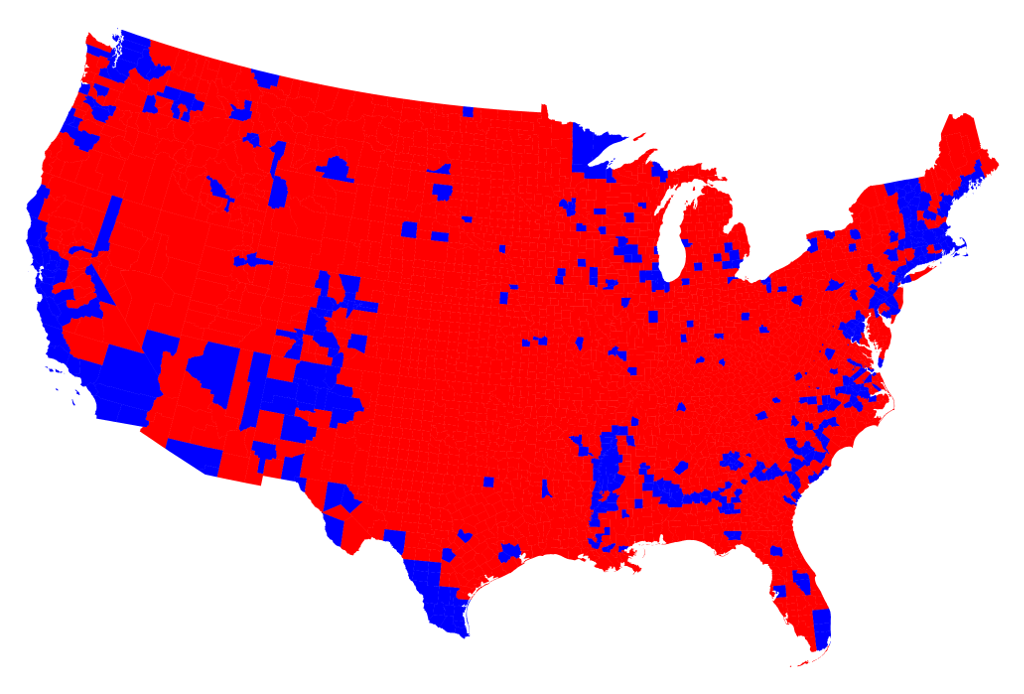
This is an election year in New Zealand. We vote for our parliamentary representatives and indirectly for our prime minister and government. Under our Westminster system the executive comprises MPs from the party (or parties) with the largest number of seats in parliament. We have a particularly silly form of proportional representation where about half the MPs represent electorates but these numbers are disregarded when considering the overall makeup of parliament, which is determined by the total of the party vote. To demonstrate how this would have worked with the US presidential election, Donald Trump may have won 30 of the 50 states and 80% of the counties in America, but Hillary Clinton would have become president under our system.

The proportional representation system gives minor parties power far in excess of their support and means the major parties often cannot really implement any of the policies on which they campaigned. As a result we have had successive governments that have pursued pretty much the same middle-of-the-road policies and have seen a gradual increase in the role of the state in our lives. There is little possibility that a party with radically different policies could ever get enough support to change this gradual progressivism. This is similar to the state of affairs in most Western democracies where the slightly left-of-centre party and the slightly right-of-centre party take turns ruling with essentially the same policies. Donald Trump's election, like Brexit, was the exception, where people said to hell with the same-same and took a punt on something different.

The lack of real choice in policies between the major New Zealand parties, National and Labour, could cause New Zealanders to look for alternatives in this year's election. One of the alternatives is the New Zealand First party led by Winston Peters, a perennial politician whose fortunes have risen and fallen several times over the past four decades since he was first elected as a National Party member of parliament. Peters' political career to date reached its zenith when he was deputy prime minister in National Party Prime Minister Jim Bolger's coalition government between 1996 and 1998. He again reached the top table of New Zealand's government when he served as Labour Prime Minister Helen Clark's foreign minister between 2005 and 2008. Peters has much in common with Donald Trump with his populist appeal to disaffected voters (in Peters' case mainly the elderly) and his nationalist and anti-immigration policies are reflected in New Zealand First's name, which sounds like a ready-made cap logo. His party is rising in the polls and is currently level-pegging with the third-placed Green Party on 11% of the national vote.

We approach the forthcoming election with extra uncertainty because of the resignation of popular prime minister John Key at the end of last year. Bill English, who was Key's deputy, has less personal appeal amongst voters than Key (although I like English because he has at least the semblance of principles whereas John Key clearly had none). English has been leader of the ruling National Party before, having led it to its worst electoral defeat in 2002, gaining barely 20% of the vote against the popular Helen Clark. So while National still leads the polling with nearly half the prospective vote, the gap to Labour is narrowing and if New Zealand First continues to eat into the vote share of the major parties, Winston Peters could well end up at least holding the balance of power again. My guess is that this time around, Peters will demand even more than in previous coalitions and could end up dictating many of the new government's policies.

It is hard to see the New Zealand political landscape changing much in the short term but Trump and Brexit have taught us that things can move very quickly. New Zealand doesn't have the same groundswell of political division and frustration that existed in Britain and the United States prior to their plebiscites last year, but I think New Zealanders are complacent and significant change could catch us unawares.

To paraphrase the Chinese curse, we live in interesting times.

Monday, December 5, 2016

John Key hasn't made NZ a better place


So John Key, Prime Minister of New Zealand for nearly three parliamentary terms, is to resign. Some of the more alarmist media have expressed shock, but others predicted it some time ago. My initial reaction was to tweet the above comment but on reflection I am not so sure that he has left the country no worse than he found it. Certainly it is not as good as it might have been after 8 years of government led by a National Party that is meant to stand for "equal citizenship and equal opportunity, individual freedom and choice, personal responsibility, competitive enterprise and reward for achievement, and limited government". John Key's government that has given us the notorious FATCA tax law, the draconian GCSB Amendment Act, a retreat from the principals of equality before the law and universal democratic suffrage, a heavy-handed and authoritarian response to the Christchurch earthquake that has hamstrung that city's recovery and the country's economic growth, and a myriad of other erosions of individual freedoms and expansions of government interference in our lives.

Some commentators have predicted that Judith Collins might follow Key as leader. Frankly, I think her selection would be electoral suicide for the National Party as Collins remains deeply unpopular after her resignation following various scandals during National's second term in office, despite Key reappointing her to Cabinet. The alternative seems to be Paula Bennett, but I doubt whether the latter has the necessary political presence and support amongst her colleagues to get the top job. The current deputy prime minister, Bill English, will be the caretaker until the National caucus votes on a new leader but he is hardly an inspiring choice to take the party into next year's election.

This country remains relatively free, prosperous and safe - perhaps one of the best places in the world to live based on these criteria, but under John Key the trend has not been positive and I hold out no hope that a new prime minister will reverse it.

Thursday, May 16, 2013

Dumbest Quote on New Zealand Budget

I like to post a Quote of the Day on my Twitter account (twitter.com/kiwiwit) and have decided I will post the best or worst here.

Today's QOTD is in the "so dumb it should be illegal" category and comes from Canterbury University political scientist Bronwyn Hayward on Minister of Finance Bill English's budget due out today:

"I think what is most disappointing about this tenure is the emphasis English gives to economic growth as 'the only way we can lift incomes, create permanent jobs'."

So, how else are we going to lift incomes and create permanent jobs? Wave a Socialist wand?

Wednesday, September 19, 2012

The Economic Outlook for New Zealand

This morning I went to a breakfast lecture given by ANZ Bank chief economist, Cameron Bagrie.  The high point of the morning was the excellent buffet breakfast, which is not to say Bagrie didn't speak very well - it was just that his message was very downbeat.  That makes him an unusual beast in the economist herd at the moment, with many of his profession both here and overseas being little more than mouthpieces for their profligate governments.

The message was simple: New Zealand is one of the most indebted nations in the world (when public and private debt is included), up there with Spain and Greece.  While New Zealand is enjoying economic growth in the 1 - 2 % range, even that modest level growth is built on record high commodity prices in recent years, which are now heading south very quickly.  Add to that the very slow recovery of our second largest city, Christchurch, from its devastating earthquakes and the fact that all our key export markets are in a worse economic state than ourselves, and you have solid evidence for a poor economic outlook.

Bagrie saw the solution as being conservative economic management combined with growth from natural resource-based industries such as mining, water and energy.  He said that finance markets saw both Finance Minister Bill English and opposition finance spokesman David Cunliffe as fiscally conservative and I suppose when you compare them with Ben-$400Bn-QE-per-month-Bernancke in the United States and the new President of France who wants to increase the government's share of GDP from 50% to 60%, they do look pretty conservative. Personally, I see Bill English's expectation of a balanced NZ government budget by 2014/15 (on the condition that we achieve 4 - 5 % economic growth) as a long odds gamble, but it's all relative, I suppose.

The problem with Bagrie's solution to our grim economic outlook is that he was preaching to the choir.  The audience was made up of ANZ Bank's business banking customers.  These are predominantly owners and managers of small to medium sized businesses.  I imagine that almost everyone in the audience agreed with Bagrie - let's exploit our natural resources to drive economic growth.  But New Zealanders in general, and the National Government in particular, do not seem to really care about economic growth and would rather be dictated to by minority interest groups to whom exploiting natural resources is heresy.  In the past three years that it has been in power, John Key's Government has:

  • Backed down on opening up even very small areas of our national parks to mining
  • Allowed various interest groups to hold up the partial privatisation of energy companies, thereby stymying new investment in the sector
  • Brought in an emissions trading scheme that has made investment in the energy sector far less attractive
  • Got into a fight with Maori tribes about ownership of water rights.
If this type of political incompetence and spinelessness is any indication, New Zealand has as much chance of building economic growth through exploitation of natural resources as has the entire country of suddenly floating to the equator. 

So, where does this leave us?  I don't think there is much doubt that Bagrie's prognosis, in the absence of a radical increase in political courage by our leaders and a sudden Road to Damascus economic enlightenment on the part of the New Zealand voting public, is correct.  We are a train headed for a broken bridge - an economic wreck in the making.  And the problem with economic wrecks, as the likes of Greece, Spain and Portugual are discovering (or re-discovering in the case of all three countries), is that they quickly become social and political wrecks too, with riots on the streets and the rise of opportunistic political despots.

New Zealanders are complacent.  We think we're immune to the economic 'flu that ails the rest of the world.  You don't need to be a noted economist to know that we're not.  We are going to catch a very serious cold at least, and we are very poorly prepared to deal with it. 

Sunday, December 6, 2009

NZ - a future nation of domestic servants?

It was interesting to hear Bill English's reaction to the 2025 Taskforce's recommendations on policies New Zealand should follow to catch Australia in GDP per capita by 2025. The taskforce was set up by the National Party-led Government as a condition of its 2008 election coalition agreement with ACT. English didn't disagree with the taskforce's recommendations so much because he thought they were likely to fail to meet the objective, rather he dismissed the objective itself. It other words, he said it was unrealistic for NZ to try and catch Australia.

Let us think about what this means for a moment. Australia's economic growth hasn't been spectacular in recent years, in fact, it has been quite modest in comparison with China and some other Asian nations. Australia itself will have its work cut out trying to keep up with its Asian neighbours over the next 15 years. If NZ doesn't even keep pace with Australia, where does that leave us?

I think the answer to this question is obvious. It will leave New Zealand as an increasingly poor country in an increasingly prosperous region. We are already starting to take on the characteristics of a third world nation with low wages and poor infrastructure, and an economy based on commodity exports and low-cost tourism. If the trend continues, New Zealanders in the future will work for Chinese and Malaysian companies as low-cost labour, manufacturing consumer goods or pharmaceuticals; or as domestic servants making the beds, cleaning the toilets and tending the gardens in wealthy Asian homes. We will become a remittance economy with New Zealanders working offshore sending money home to enable unemployed relatives here to survive, just like many Pacific Island economies today.

Is this what we aspire to? According to Bill English it is. Essentially he is saying New Zealand should not try to compete with its neighbours in the region. We should lie down and allow ourselves to be rogered by those who have the fortitude to compete on the world stage.

I have never before heard such a pathetic, defeatist vision for this country. If this is all English and his cronies think the people of this country are capable of, they should all resign immediately.