Showing posts with label Labour Party. Show all posts

Saturday, April 4, 2020

As bad as the Great Depression

We are starting to see the economic impact of Covid-19 with the announcements in the last few days of the closure by Bauer Media of its magazine publishing business in New Zealand and by NZ Media Enterprises of its Radio Sports network. Many other businesses are already struggling and we can expect to see many more announcements of closures and receiverships, notwithstanding the Government's wage subsidies and other handouts. The surprise expressed by Prime Minister Jacinda Ardern at the Bauer Media decision only shows her ignorance and insensitivity to the costs being imposed on New Zealand businesses. Of course, the Government's insensitivity didn't start with the Covid-19 response. Its treatment of landlords, farmers, banks and many other businesses as pariahs had already served to stymie business confidence since the socialist-nationalist-environmentalist coalition took power in October 2017. Only this week we have seen the implementation of a new minimum wage law, which prevents businesses from employing anyone for less than one of the highest minimum wages in the world. The government chose to go ahead with imposing this significant increase in costs on businesses despite the obvious signs that many companies will not survive the Covid-19 lockdown.

Make no mistake, we are in this Covid-19 situation for the long haul. Even if we bring the spread of the virus under control during the lockdown in New Zealand, and that is by no means certain at this time, it is going to continue in other countries for many more months, which means we will need to keep our borders closed for that time. Our tourism industry is facing a long period of utter devastation and many of our exporters may lose markets during this period. Domestic businesses such as retailers and restaurants will recover somewhat after the lockdown ends, but many companies and individuals will continue to hunker down, not investing or spending until they are sure the economy is well on the way to recovery. The OECD estimates [H/T Michael Reddell] that the impact of the Covid-19 shutdown on New Zealand will be amongst the worst of its members at nearly 30% of GDP, which is a similar impact to the Great Depression.

The Government will be gambling on an economic resurgence as soon as the lockdown ends. It will try and spend its way out of the downturn, as it always does. It will prime the economy with a flood of cash such as we have never known, and it is already doing this by hiking welfare benefits as part of its $12.1 billion "economic recovery package". The problem is that this money won't go a fraction of the way to covering the business and individual losses from the lockdown and consequent recession. Besides, the economic situation is primarily a supply-side (i.e. business investment and revenue) problem and governments today seem to only understand demand-side (consumption) policies.

Many politicians and voters don't seem to appreciate the reality that every dollar spent by the government needs to come from taxpayers, who need to earn that dollar in order for the government to take and spend it. Even when the government borrows money to fund its splurge, it is just postponing the bill to future taxpayers. The problem for many Western governments is that they are already overextended in terms of government debt and these events are just going to make the situation worse. Countries like the United States will be counting on the fact that they will quickly recover to their recent levels of strong economic growth, but while New Zealand is in comparatively good shape in terms of the government's balance sheet, no one can have a great deal of confidence that we are going to grow our way out of the hole we are digging for ourselves (the US GDP per capita growth rate has hit nearly 4% in recent years compared to New Zealand at less than 2%).

The reality of Covid-19 hasn't really hit the global economy yet. The recent falls in stock markets around the world have only taken us back to where markets were about three years ago. Once companies begin to announce the expected impact of Covid-19 on their earnings, I believe we will see significantly greater drops. The property market hasn't really shown any impact yet (other than a pause in sales), but given that some commercial tenants are simply refusing to pay rent during the lock down, we can expect a significant down turn in prices to reflect lower earnings in this sector as well. The reductions in earnings will mean more layoffs of employees, greater losses to investors, and even lower taxes to fund the government splurge. We will be in a race against time to recover from Covid-19 before we lock in the greatest economic downturn since the Great Depression.

I have written before about how complacent New Zealanders have been in recent years. I have been pessimistically confident that a significant economic downturn was coming, and although I didn't predict it would be due to a pandemic, I was expecting it to come this year. Now that it is here, I think we lack the political leadership in New Zealand and in many other countries to respond effectively. But that topic is probably best left to another post. 

Tuesday, August 21, 2018

Sooner or later, Atlas shrugs

When the new government manoeuvred its way into power in New Zealand last year I was prepared to give it the benefit of the doubt. The coalition agreements signed by the parties didn't look too extreme - they were promising to spend a lot more money but they weren't proposing to raise income taxes in this term. Their regional development policies, anti-immigration stance and ambivalence on the Trans-Pacific Partnership trade agreement actually looked a lot like Donald Trump's populist platform (although there is little in the latter that I support). The problem is that what was said in the coalition parties' manifestos and agreements was only part of the picture, as is now being revealed.

This government believes it can govern by fiat - the prime minister, Jacinda Ardern, demonstrated this when she announced her ban on oil and gas exploration without even taking it to cabinet. Other policies that her government has announced include new petrol taxes, the introduction of a Zero Carbon Act (which, based on the government's own numbers, is estimated to reduce our GDP by between 10% and 22% by 2050), increased welfare payments across the board, and raising the minimum wage to one of the highest in the Western world. The government is also reviewing tax, through its Tax Working Group, and all indications are that it is likely to introduce a capital gains tax.

New Zealand used to be known for its light-handed commercial regulation but even under the previous National Party-led government, businesses faced a raft of new, expensive and intrusive regulations such as a new and far more onerous health and safety act, an emissions trading scheme, and further controls on development in the growth-killing Resource Management Act. While the previous government lowered company taxes early in its term, most Western countries have reduced theirs further with the result that New Zealand is now one of the most highly-taxed countries for business. All of this precipitous policy-making has understandably caused a crisis of business confidence and the new government's response has been to chastise business leaders for their lack of enthusiasm. Their bewilderment at the sudden loss of business confidence shows they are a bunch of dogma-driven, wilfully-ignorant, arrogant fools.

Sooner or later, as Ayn Rand said, Atlas shrugs. Most people are happy to go along with being taxed and regulated, accepting the view that some government intervention in the economy is the cost of a democratic society, but there is a tipping point at which the productive members of society refuse to continue to be the milch cows for the unproductive. This tipping point is recognised in economics by the Laffer Curve - the empirical observation that continuing to increase tax rates ultimately results in lower revenues. Of course socialist governments often solve the problem by bringing out the guns - as we have seen in Venezuela - but history proves that free men and women are far more productive than slaves and that liberal, capitalist societies outperform repressive ones on every measure. Wise governments recognise this and backoff on the socialist policies - as the government of Sweden has done in recent years.

I have written before about how New Zealand's so-called 'rock star economy' wasn't worthy of the name even before the current jitters. It will be interesting to see whether this coalition government backs off on some of its ill-considered, dogmatic policies. If it doesn't, I think New Zealand will continue to slide into economic ignominy.

Monday, July 9, 2018

Turning a Rock Star Economy into a Basketcase

In 1984, the newly-elected Labour Party Government saved New Zealand from becoming a third world economy. Prime Minister Robert Muldoon's Stalinist economic policies had resulted in high inflation, increasing unemployment, a run on the dollar. and the imminent failure of the country's largest bank. The new finance minister, Roger Douglas, devalued the dollar, deregulated the economy, sold off inefficient state assets, and the economy recovered to experience a period of sustained growth for the next three decades that was interrupted only by global economic downturns. Roger Douglas's liberal economic policies continued with remarkable consensus under successive governments but now the Labour-New Zealand First coalition government seems determined to undo all of its predecessors' good work.

New Zealand was acclaimed as a 'rock star economy' after the 2007 Global Financial Crisis because of its resilience in the face of rising debt and sluggish growth in the rest of the world, but as economist Michael Reddell points out (here and here), our economy hasn't really been performing that well since the mid-2000s.

So what is the new government doing that risks our economic performance? The answer is almost everything. It has banned oil and gas exploration at a time when other countries such as the United States and Britain are freeing up regulations and encouraging investment in new fossil fuel extraction technologies like fracking. It has introduced new petrol taxes, which will raise the price of everything that has a transport cost, and it is about to introduce its Zero Carbon Act, which (as Michael Reddell points out here) will reduce our GDP by between 10% and 22% by 2050.

The government is choosing to pick winners with its cronyism Provincial Growth Fund, which is based on the mistaken belief that taxing people and businesses so that the government can dole out money to other businesses is good economics. It is increasing welfare payments across the board and eliminating incentives for beneficiaries to get back into work. It is raising the minimum wage to one of the highest in the Western world and it is pushing 'fair pay' - forcing employers to pay workers more than their market value - which of course will reduce demand for labour, thereby increasing unemployment (because, in reality, the minimum wage is always zero). The government is also reviewing tax, through its Tax Working Group, and if New Zealanders don't believe the result will be to increase taxation across the board they are deluding themselves.

All of these policies will be a dead weight on our economy, dragging down its already non-rockstar performance while other countries continue to soar past us. The net effect will be to make New Zealand, and New Zealanders individually, poorer compared to the rest of the world. I have travelled all around the world and have seen the stark contrast between countries that have high GDP per capita and those at the other end of the scale. New Zealanders take their relatively high standard of living for granted and do not realise that prosperity is fragile. I don't want to live in a poor country but it seems that is where we are headed.

The truth of the rock star analogy has always been more Ozzy Osbourne than Taylor Swift, but if we continue down the path the new government is laying out, even the aging Black Sabbath rocker will look more lively than New Zealand's economic performance.

Friday, April 20, 2018

New Zealand's very own Donald Trump

One of the most amusing news reports this week has been that of New Zealand prime minister, Jacinda Ardern, angrily denying to the world's media that she is like Donald Trump. There is great irony in someone who has a carefully-crafted image as the leader of a new generation of caring, ultra-progressive politicians being compared to the 71-year-old, 'Make America Great Again' president, but a comparison between the Ardern Government's policies and that of the Trump administration shows that the world's media is not too far off the mark.

The Wall Street Journal was the first to pick up on the similarity in political positions between the New Zealand Labour Party and Trump's Republicans even before last year's general election. The article focused on the Labour's pledge to cut New Zealand's annual immigration by 30,000 (compared to an annual total of 72,000 new immigrants), but being anti-immigration is not the only similarity to Trump. Like the US President, the Labour Party entered the election opposed to the Trans Pacific Partnership trade agreement (although Ardern has since signed a renegotiated agreement that has made even Donald Trump reconsider his opposition to it). And the new government's billion-dollar-a-year regional development fund (which already faces accusations of corruption) is exactly the sort of cronyism Trump is pursuing under his misguided programme to reinvigorate middle America. Ardern has even supported Trump's recent bombing of Syria, albeit with some public reservations.

Many of the similarities of the Ardern government's programme to that of Trump stem from its coalition with the nationalist New Zealand First Party. Ardern might angrily deny that she is like Trump but she can't dodge the fact that her coalition partner is a 'Make New Zealand Great Again' party with all of the same xenophobic, anti-free trade, crony-capitalist leanings that characterise Trump's Republican administration. But Ardern and her party entered into the coalition with New Zealand First willingly and, as I have written before, without the mandate of even a plurality of votes. So, if she doesn't like the comparison with Trump, she only has herself to blame.

The lady doth protest too much, methinks.

Saturday, December 2, 2017

Secret deal confirms new government's illegitimacy

New Zealand has suffered a non-violent coup d'état. What else would you call the seizure of political power by a bunch of parties, none of whom got anything like a plurality of votes let alone a majority, through a secret agreement that they are not prepared to disclose to the voters? It is certainly not democracy. National Party leader Bill English has called for the release of the secret agreement but new prime minister Jacinda Ardern has refused, despite claiming her government would be more open and transparent.

These people work for us, or at least that is meant to be the case in a liberal democracy. How dare they negotiate a secret agreement to hold power without disclosing to us what is in it? It is bad enough that our MMP electoral system allows power-hungry minority party politicians to hold us all to ransom without them doing secret deals over our how our country is governed. 

I have written before about how this mongrel coalition has no legitimacy and this secret agreement only adds to its bastardy. Readers will know that I am no fan of the National Party, but it is the party with the most right to govern in this country because it got a plurality of support in the election. Bill English should go further than his call for the release of the secret agreement and commit his party to do its utmost to bring this government down as soon as possible.

Monday, November 20, 2017

New Government already seeing unintended consequences

The unfortunate thing about believing that government is the solution to every problem is the Law of Unintended Consequences. This law says that almost any government action will produce unintended, and generally negative, consequences. The new New Zealand Government certainly believes that it has the solution to every problem, real or imagined, that prevails in this country with literally hundreds of new policies in their manifesto and coalition agreement. But they are already seeing unintended consequences of their policies, even before they have had time to enact any of them.

The most obvious example of this was today's headline in Wellington's DominionPost newspaper reporting that the city is heading for its worst rental crisis ever, with a sudden contraction in the number of properties being offered for rent. Property Investor's Association president Richard Bacon blames the new government's policies including the Healthy Homes Guarantee Bill, which is intended to raise the standards of properties offered for rent, saying that many landlords are pulling their properties out of the rental market in anticipation of higher compliance costs. So rather than getting healthier homes, many tenants will be getting no home at all.

Another example is the increase of the minimum wage to $20/hour. Muriel Newman points out in this article (based on figures from the Ministry of Business, Innovation and Employment), that this increase to one of the highest minimum wage levels in the world could destroy over 60,000 jobs. So rather than getting higher wages, many workers will be getting no wages at all.

A third example is the new government's policy of building 100,000 new homes. The details of how they are to go about this are still sketchy but if the government funds and constructs these houses, it will have an enormous effect on our already highly constrained building industry, diverting resources from private house construction. The real cause of the lack of new houses is the Resource Management Act, which enables local government to severely constrain the supply of land for house construction and to impose huge compliance costs on builders and developers, but the government has said it will not touch this draconian law. At the same time, the government intends to pursue a looser monetary policy, which will further inflate the real estate bubble. I am prepared to bet that the unintended consequences of these policies will be to further reduce the supply, and increase the price, of new housing.

I could go on. One doesn't need to be a genius to figure out the unintended consequences of almost every one of the new government's policies - they are obvious to anyone with a basic understanding of economics and human nature. But those with faith in the religion of big government don't want to hear facts and reason.

Thursday, November 9, 2017

Is the NZ Government the result of a personal grudge?

We learned this week that Winston Peters, the 'kingmaker' in the recent coalition negotiations to form the New Zealand government, is suing four National Party members of parliament, including former prime minister Bill English and deputy Paula Bennett, over the leaking of information that he had been overpaid his state pension for seven years. Peters' lawsuit seems to be a fishing expedition with journalists, National Party officials and even the chief executive of the Ministry of Social Development (the government agency responsible for payment of the pension) being served papers.

The most concerning thing about this matter is not the overpayment itself or the speculative nature of Peters' legal action, but the fact that it reveals an obvious conflict of interest in the coalition negotiations. Peters swore an affidavit in support of his legal action the day before the election, meaning that he was involved in the lawsuit when he sat down to negotiate a possible coalition agreement with the very National Party leadership that he was suing. He should have declared this conflict of interest before the election so that voters could have taken the matter into account or, at the very least, prior to the coalition negotiations getting underway. Ideally he should have recused himself from the coalition discussions and decision-making of his party.

In view of this, it is unsurprising that Peters chose the Labour Party as his coalition partner. I have written before about how Labour and New Zealand First don’t even have a plurality in the new parliament and the fact that the National Party, which has more seats than Labour and New Zealand First combined, would be part of a government under any electoral process other than our shambolic MMP system.

The fact that Peters didn't declare his conflict of interest begs the question whether he entered the negotiations in good faith and whether he had any intention of forming a coalition with National. It makes a mockery of the coalition negotiations and casts further doubt on the legitimacy of the new coalition government. Peters may have a legitimate grievance over the leaking of his confidential superannuation details but that doesn't justify him holding the country to ransom and making decisions of constitutional importance on the basis of a personal grudge. The fact that this is even a possibility raises serious concerns about the health of our democracy.

Thursday, November 2, 2017

NZ coalition agreement's best clause

Tucked in the very bottom of the coalition agreement between the New Zealand Labour Party and New Zealand First to form the new New Zealand government is a small, incongruous clause that could be missed on first reading. It says the parties agree to "Record a Cabinet minute regarding the lack of process followed prior to the National-led government’s sponsorship of UNSC2334."

United Nations Security Council resolution 2334 condemns Israeli settlements in the occupied Palestinian territories and I have written before about why I was so disgusted by my government's sponsorship of it. The Israelis claimed that New Zealand was pressured by the outgoing Obama administration into fronting the resolution (with the US abstaining, presumably so that the Democratic Party did not suffer blowback from the powerful American Jewish lobby). The fact that the new government's coalition agreement acknowledges that due process was not followed suggests that there may be substance to this claim.

New Zealand's stance is in contrast to Australian Prime Minister Malcom Turnbull's lauding of his country's strong relationship with Israel on his recent trip to that country. Turnbull took the opportunity during his visit to celebrate the extraordinarily courage of Australian (and New Zealand) cavalry during the Battle of Beersheba one hundred years ago.

It takes a degree of political courage to stand with Israel today. I am sure the clause in the coalition agreement would not have been welcomed by everyone in the Labour Party caucus and certainly not within the Green Party, their other political partner. I imagine that both the New Zealand First leader, Winston Peters, and deputy leader, Ron Mark (a former soldier who served in the Middle East), had a part to play in insisting on the inclusion of the clause, and for that I salute them.

Tuesday, October 31, 2017

Three years is plenty to screw up New Zealand

One of the more interesting pieces of work I've done recently is preparing a briefing for clients on the impact on their business of New Zealand's new coalition government. I went through the details of the coalition agreements between Labour, New Zealand First and the Greens and also, with a fine-tooth comb, through their manifestos. I believe I now have a pretty good understanding of all of their promises.

The total cost of new spending over the next few years is more than $15 billion. It is not obvious how they are going to pay for it, with only a few hundred million of new revenue identified. The source of the money, of course, will be new taxes and borrowing (i.e. deferred taxes) - they just weren't honest enough to admit it in the election campaign. They have revealed only that they intend to cancel the previous National Government's proposed tax cuts for next year and that they will establish a Tax Working Group to look at the tax system. The latter sounds to me like a surreptitious means of justifying the higher taxes the coalition will require to fund all that extra spending.

The other shocking aspect of my analysis is the sheer number of new policy initiatives and laws the Labour-led government plans to introduce. I have written before of how there are ordinarily about five hundred pieces of legislation winding their way through Parliament's processes. Expect this to increase substantially. If we are not already one of the most regulated countries in the world, we are about to become so. 

I believe the coalition government won't last more than three years (and possibly considerably less). Unfortunately, three years is plenty to screw up New Zealand, given that they seem to be seriously commited to the task.

Thursday, October 19, 2017

Good luck with that, Jacinda

The people have spoken - well, a minority of them anyway. We have a coalition government that doesn't even have a plurality of the votes. After a month of dithering, the leader of the New Zealand First Party, Winston Peters, who lost his own electoral seat in last month's election and whose party was reduced to 7% of the vote, decided to form a coalition with the New Zealand Labour Party. Combined, the two parties won 44.1% of the party votes - less than the National Party's 44.4% - and yet they have been able to form a government because the Green Party, with 6.3% of the vote, is prepared to support them on 'confidence and supply' (i.e. on budget votes). 

It is not as if the partners to the polyamorous affair have much in common. New Zealand First is a nationalist, protectionist, anti-immigration party and its leader moulds himself on Robert Muldoon, the authoritarian New Zealand prime minister from 1975 to 1984 who took the country to the verge of bankruptcy. Labour is a classic, left-of-centre social democratic party, and the Greens are a typical 'watermelon' alliance of environmentalists and Marxists.

The new prime minister, Jacinda Ardern, is not only New Zealand's youngest premier in over a hundred years, she is the least experienced, having never held a full-time job outside of politics and never having held even an executive position in government. She will need to rule over a rag-tag coalition with less mandate than National to govern and to keep the oldest political fox of them all, Winston Peters, from eating all her chickens. I give it less than twelve months until her government disintegrates and we have another election.

In the meantime, I wish Jacinda Ardern and her coalition good luck and implore them not to stuff up our great little country too much before the big kids take over again.

Tuesday, October 17, 2017

Greens enable Winston Peters to hold NZ to ransom

I wrote recently about why I thought New Zealand's electoral system was the dumbest in the world, and so it has proved to be. Nearly a month after the election we still don't have a government and while I don't think this is in itself a bad thing, watching our politicians jockeying for power has been unedifying. All the blind ambition, self-aggrandisement and incompetence we have come to expect of our politicians has been on display.

The uniquely unqualified, inexperienced and unproven Labour Party leader, Jacinda Ardern, who will become our prime minister in a Labour-led government, has been displaying a quiet confidence in her public comments. Bill English, the current prime minister and leader of the National Party, which won the largest share of the vote, is more inscrutable. Meanwhile, Winston Peters, whom the media have dubbed the 'kingmaker', cannot contain his delight at being the centre of attention again and continues to make the country wait for his decision. As the Guardian newspaper put it, Winston Peters and the anonymous board of his nationalist New Zealand First Party are holding the country to ransom.

This is all pathetic but the prize for the most damaging self-indulgence must go to the Green Party, the leftist environmentalists who have refused to consider negotiating with the centrist National Party, preferring to give Labour their proxy in coalition negotiations. This has, of course, strengthened Winston Peters' hand, an outcome for which their supporters surely could not have voted. A National-Green coalition could govern without New Zealand First's support and thus even the pretence of negotiations between these two parties would have taken the wind out of Winston Peters' sails. Many commentators have expressed disappointment with the Green's holier-than-thou attitude with even former Party MP Nandor Tanczos calling for his party to enter into negotiations with National.

Winston Peters may be holding the country to ransom but it is the Greens who have given him the means to do so. I hope the voters remember that when it comes to the next election, which, I am picking, may be not that far away.

Thursday, September 21, 2017

The World's Dumbest Electoral System

New Zealand has the world's dumbest electoral system. Saying such a thing in this country provokes the same reaction as when you say, "the world is not suffering catastrophic global warming", but sometimes one must speak truth to power. There is a reason why only one country in the world had the system before New Zealand adopted it and that country (Germany) has special historical reasons for having a system that ensures no single political party can ever govern alone.

Under our Mixed Member Proportional (MMP) system, you get two votes - the first determines who becomes your local electorate member of parliament, the second is for the party you prefer. The complication comes from the fact that it is the party vote alone that determines the make-up of parliament, which means the electorate vote counts for nothing in terms of legislative power. In effect, winning electorate seats costs a party list seats. A party can get into parliament if they get at least 5% of the party vote even if they have no electorate seats, or if a party gets at least one electorate seats, it's party vote counts as well even if it gets less than 5% support. Confused? Well, you are not alone - by some estimates, 80% of New Zealand voters do not understand how the system works.

The complexity of the system produces some weird effects. Consider the following two scenarios. 


In the first scenario, a centre-left government comprising Labour, New Zealand First and Greens is the most likely outcome because even though National has far more seats than Labour, the latter will be able to form a coalition with fellow opposition parties the Greens and New Zealand First (note that for the sake of simplicity I have ignored smaller parties and the impact of the race-based Maori electorates, which further complicate the picture).

The second scenario is almost exactly the same as the first except that the Greens get 0.1% fewer votes. This means they would be wiped out because they did not reach the magic 5% threshold to get party list seats in parliament (assuming, as is likely the case, they do not win any electorate seats). National would have an overall majority of seats and be able to form a government. So, 0.1% of the votes can completely change the outcome and make the difference between significant representation in parliament for a minor party or none at all. 

The libertarian ACT Party, which is polling at 0.3% in the latest poll, will likely have at least one seat in the next parliament because they will win the Epsom electorate, whereas the Green Party, which is hovering around 5%, may get none. As a libertarian, that is an outcome I would like to see but it is hardly fair.

The system could be easily fixed by separating the effects of the two types of vote. The party vote should determine only the proportion of the party list seats rather than the overall make-up of parliament. In other words, winning an electorate seat wouldn't cost you a party list seat. I believe this is exactly how most New Zealanders imagine MMP works, so it would be aligning the system with expectations. Under this proposal, the 5% threshold could be abolished - or at least lowered to level needed to get one party list seat - and this would eliminate the bizarre effects outlined in the second scenario above.

It is time for a change in our electoral system.

Wednesday, September 13, 2017

Campaign finance laws are a subversion of democracy

I watched with interest last week as Gareth Morgan's The Opportunities Party took Television New Zealand to court seeking to overturn the network's decision not to invite Morgan to the televised election debate between the leaders of New Zealand's minor parties. I have nothing but contempt for Morgan because of his naive support for the evil North Korean regime (as Liberty Scott blogged about here) and his ill-informed comments on a range of other subjects such as Israel and terrorism. He has what is perhaps the stupidest policy ever to come out of a New Zealand political party, that of taxing non-income earning assets based on a nominal rate of return, which would mean income-poor people such as the elderly would have to sell their homes.

The fact that Morgan is a fool does not mean he shouldn't have the same opportunities to promote his stupid policies as the other political parties, and this raises the issue of the legal constraints on political funding in this country and in much of the Western world. You can be as dumb as Gareth Morgan and still appreciate that the existing major political parties have a vested interest in keeping small parties from promoting their policies. Incumbent governments, particularly those of a left-wing bent (who believe, perhaps falsely, that they are less likely to attract wealthy benefactors), restrict challengers' access to state and private media and impose campaign funding restrictions that benefit themselves.

In New Zealand we have laws limiting and requiring disclosure of campaign contributions, although the authorities here have been reluctant to prosecute breaches, as for example when the incumbent government broke the law in the 2005 Labour Party 'pledge card' case. We also have state funding for campaign advertising on television and other media and this is allocated on the basis of support for the parties at previous elections, which significantly handicaps any new or emergent party. These laws are made worse by the discriminatory treatment of smaller political parties by media organisations such as Television New Zealand (which, incidentally, is state-owned).

The campaign finance laws in America are particularly onerous, as exemplified by the jailing in 2014 of conservative commentator Dinesh D'Souza for making an undeclared political donation, and the US Government's attempts to stop organisations contributing to political debate, which was thwarted by Supreme Court in the Citizens United case. The court decided in that case that campaign contributions are a form of political speech and organisations have the same right to free speech enshrined in the First Amendment as individuals. The American television networks also treat smaller parties with disdain, which was particularly evident in the US Presidential campaigns with the discriminatory treatment of the Libertarian Party's Gary Johnson and Green Party's Jill Stein.

The argument in favour of political funding laws is that they even out the playing field because otherwise a few rich people could heavily influence an election by buying up huge amounts of advertising in the mainstream media. I think this overvalues the role of the mainstream media in elections, particularly in this day when one Youtube commentator can have more viewers than a television network, and it is patronising of voters, who are far less influenced by media campaigns than people think (witness the fact that Donald Trump won the presidency with a fraction of the television advertising spend of Hillary Clinton).

I think the United States Supreme Court got it right for once - political donations are a form of speech and any impingement of them is a restriction on free speech and on freedom of association. I don't think the state should be limiting or contributing to political promotion and that current campaign finance laws are a subversion of democracy and individual rights. Furthermore, I don't believe anyone should have to publicly disclose political donations because this is a breach of the right to privacy. We have the right to vote in secret and this should extend to the contributions to those for whom we may vote.

Wednesday, August 30, 2017

New Zealanders' election dilemma

New Zealanders, at least those with a libertarian leaning, are faced with a familiar dilemma in next month's election - do we vote for socialists with odious principles or conservatives with none?

The current National-led government has been hopeless for those of us who value freedom. It has enacted a plethora of legislation and regulations that reduce our rights to privacy, free speech, equality under the law and even universal suffrage. The GCSB Amendment Act and the Telecommunications (Interception Capability and Security) Act significantly increased the government's rights to intercept our private communications. The Harmful Digital Communications Act made it an offence to say or publish anything that is 'abusive' or 'insulting'. And the long-promised Resource Legislation Amendment Bill did nothing to lessen the bureaucratic barriers to development but gave unelected Maori tribal elites joint control over local government planning and consent processes. All of this from a party that is supposed to stand for equal citizenship, individual freedom and choice, personal responsibility and limited government. I have nothing but contempt for such hypocrites.

The Labour Party is at least a little more honest about its intentions, announcing increases in state spending across the board. It says it does not plan to increase income tax other than cancelling the derisory tax cuts National has promised for next year, but has said it will introduce new taxes on water (as if water is not already taxed through water rates), visitors to New Zealand, and to set up a tax working group (presumably to figure out how they can get more money out of us).

The Taxpayers Union rates New Zealand First the worst party for election bribes at a cost of more than $13,000 per household, ahead of Labour on more than $11,000, but National is making a late run by more than doubling its bribes in the last week alone. The National Party's lolly scramble is particularly hypocritical after they recast the Labour Party's new election slogan "Let's Do This" as "Let's Tax This."

The only vaguely libertarian party in this election is ACT, but with only one MP and polling under 1%, it is not going to have much influence even in a centre-right government. The best we can hope for is for its sole MP, David Seymour, to continue the sterling work he has been doing pushing for his End of Life Choice Bill allowing voluntary euthanasia.

The least bad option, much as it galls me to say it, is another National-led government tempered by a coalition partner that will constrain its big state ambitions. New Zealand First may be the best choice because it is opposed to the further expansion of Maori tribal privilege, which I think presents a greater long term threat to freedom in this country than that party's profligacy.

It's Hobson's choice.

Wednesday, August 9, 2017

Left's defence of Turei is remarkably shortsighted

A few weeks ago I wrote about the admission by Metiria Turei, the co-leader of the New Zealand Green Party, that she committed welfare fraud when she was younger. I had intended to leave the matter alone but have found myself drawn back to it, much as one is drawn to the sight of a rotting corpse - it is deeply unpleasant but fascinating nevertheless. More interesting than Turei's admission has been the reaction to it. An opinion poll shows nearly three-quarters of New Zealanders believe that her fraud is unacceptable but, as I said on Lindsay Mitchell's blog, it is discouraging that half of Green Party supporters, and even a significant proportion of National Party voters, think Turei did nothing wrong.

Turei defended her actions by saying it was a choice between feeding her child and complying with the law. A number of commentators have pointed out that her claim doesn't hold water, that she was living with the partner of her child and with her mother at the time she claimed a sole parent benefit. She has said she will not seek a cabinet position if the Greens are part of the government after next month's election but has refused to resign either as co-leader or as an MP. Her attitude compares with the resignation from Parliament of ACT Party MP, David Garrett, for passport fraud, which at least had the mitigation of not benefiting him financially.

This week two Green MPs, Kennedy Graham and David Clendon, resigned in protest against Turei's refusal to step down. It is reassuring to know that there are still some people with integrity in a party in which half of its supporters support benefit fraud. 

The worst thing about Turei's admission is the fact that the political left-wing have rallied behind her rather than condemning her actions. Her Green Party co-leader, James Shaw, has defended her and the new leader of the larger centre-left Labour Party has said she will work in coalition with a Turei-led Green Party. Left-wing bloggers have also defended her. 

I think the left's defence of Turei shows a remarkable lack of judgement. Do they not realise that the whole taxation-welfare state they so defend is completely dependent on the pretence that it is legally and morally right? The redistributionist system relies on the acquiescence of taxpayers because if enough people decided they did not want to pay their taxes, there is no way the state could enforce it notwithstanding the draconian sanctions available to the tax authorities. Does the left really want us to believe that defrauding the system is acceptable? It is, of course, a double-edged sword and those who are on the receiving end of the redistribution have everything to lose. 

A libertarian like me might look at all this as a good thing - anything that hastens the collapse of the system is to be encouraged. Unfortunately, the end of that road is what we see in Venezuela today and no one who loves freedom and individual self-determination wants to see that in their country.

Tuesday, August 1, 2017

The limits of democracy

New Zealand faces a general election next month and it has got me thinking about the nature of democracy and the collective wisdom (or lack of it) in the electorate. New Zealand has had nine years of a conservative National Party-led government, which has largely continued the policies of the previous nine-year Labour Party-led government, leaving libertarians like myself with Hobson's choice. This election campaign mirrors the recent UK election in many ways with the National Party sitting on a 20-point lead over Labour but with some signs of that lead being eroded and smaller parties like the left-wing Greens and the nationalist New Zealand First likely to determine who governs.

One of the more hypocritical arguments of the political right-of-centre in recent times has been their impassioned defence of democracy. We saw this with Brexit and Trump - their supporters crowed about the people having spoken, as if a plurality of support (and in Trump's case it wasn't even a plurality) justifies any decision in and of itself. Of course, we have seen a corresponding volte-face on the part of the left-wing, which for years has justified increasing intrusion of the state into every area of our lives on the basis of their democratic mandate, and they are suddenly not so enamoured with a system that produced Brexit and a Trump presidency.

If you want an example of voters making consistently bad decisions you only need look at Venezuela. A relatively free and prosperous country two decades ago, Venezuela is now an economic basket case and its voters have just provided a mandate for President Maduro's decisions to strip the country's parliament of its powers and replace it with a new assembly that is stacked with his supporters. Maduro has said that he has a "prison cell waiting" for his political opponents. Admittedly, you could hardly call recent Venezuelan elections free and fair, with estimates of 70% of the populace opposed to Maduro and his Chavismo Socialists, but Maduro maintains that everything he and predecessor Hugo Chavez have done has been with a democratic mandate.

Democracy can be, to paraphase Winston Churchill, the worst of all systems. It shouldn't be an end in itself but rather it should deliver good government that limits its powers to the functions of defending individual rights. Unfettered democracy is often in conflict with these aims because it enables the majority to sacrifice individual rights in the name of collective good. The only way of preventing this is to limit what governments can do even with a popular mandate, through an entrenched constitution. 

The problem is how do you get an entrenched constitution that protects individual rights in a democratic system? We have seen the risks in New Zealand with the former prime minister, Geoffrey Palmer, proposing a constitution that proposes new rights such as to 'an adequate standard of living' that are the antithesis of real rights. A better example is the Constitution for New Freeland proposed by Lindsay Perigo but even its authors would concede that it has no chance of being adopted by democratic mandate. 

Perhaps the only way to get a genuinely rights-respecting constitution is following a revolution when the vacuum of power allows a fresh approach, such as was the case with the American Revolution. On the other hand, the French demonstrated that even the most noble revolutions do not guarantee good outcomes and the American Constitution has proved to be less of a bulwark against government abuses of power than the founders envisaged.

Maybe Churchill was right with the rest of his saying, that democracy is the worst of all possible systems except all the others and that the best we can expect is that the voters will be sensible with the responsibility they have. I hope that is the case in New Zealand next month.

UPDATE: A few hours is a long time in politics - the Labour Party leader, Andrew Little, has resigned following recent poor poll results. Jacinda Ardern is the new leader.

Wednesday, March 15, 2017

The possibility of a populist leader in New Zealand

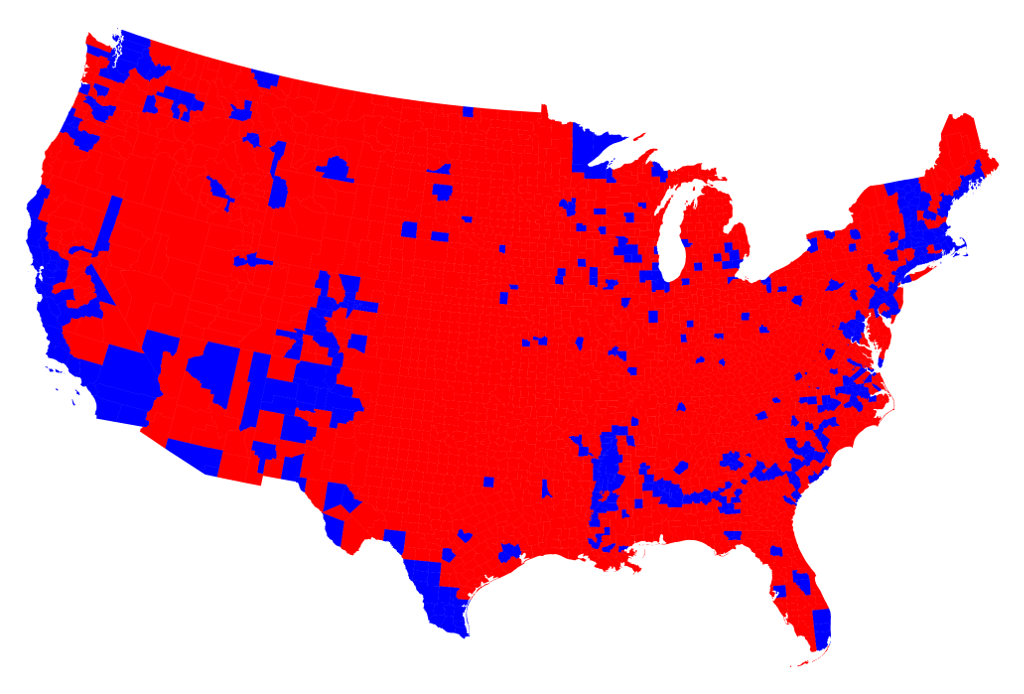
This is an election year in New Zealand. We vote for our parliamentary representatives and indirectly for our prime minister and government. Under our Westminster system the executive comprises MPs from the party (or parties) with the largest number of seats in parliament. We have a particularly silly form of proportional representation where about half the MPs represent electorates but these numbers are disregarded when considering the overall makeup of parliament, which is determined by the total of the party vote. To demonstrate how this would have worked with the US presidential election, Donald Trump may have won 30 of the 50 states and 80% of the counties in America, but Hillary Clinton would have become president under our system.

The proportional representation system gives minor parties power far in excess of their support and means the major parties often cannot really implement any of the policies on which they campaigned. As a result we have had successive governments that have pursued pretty much the same middle-of-the-road policies and have seen a gradual increase in the role of the state in our lives. There is little possibility that a party with radically different policies could ever get enough support to change this gradual progressivism. This is similar to the state of affairs in most Western democracies where the slightly left-of-centre party and the slightly right-of-centre party take turns ruling with essentially the same policies. Donald Trump's election, like Brexit, was the exception, where people said to hell with the same-same and took a punt on something different.

The lack of real choice in policies between the major New Zealand parties, National and Labour, could cause New Zealanders to look for alternatives in this year's election. One of the alternatives is the New Zealand First party led by Winston Peters, a perennial politician whose fortunes have risen and fallen several times over the past four decades since he was first elected as a National Party member of parliament. Peters' political career to date reached its zenith when he was deputy prime minister in National Party Prime Minister Jim Bolger's coalition government between 1996 and 1998. He again reached the top table of New Zealand's government when he served as Labour Prime Minister Helen Clark's foreign minister between 2005 and 2008. Peters has much in common with Donald Trump with his populist appeal to disaffected voters (in Peters' case mainly the elderly) and his nationalist and anti-immigration policies are reflected in New Zealand First's name, which sounds like a ready-made cap logo. His party is rising in the polls and is currently level-pegging with the third-placed Green Party on 11% of the national vote.

We approach the forthcoming election with extra uncertainty because of the resignation of popular prime minister John Key at the end of last year. Bill English, who was Key's deputy, has less personal appeal amongst voters than Key (although I like English because he has at least the semblance of principles whereas John Key clearly had none). English has been leader of the ruling National Party before, having led it to its worst electoral defeat in 2002, gaining barely 20% of the vote against the popular Helen Clark. So while National still leads the polling with nearly half the prospective vote, the gap to Labour is narrowing and if New Zealand First continues to eat into the vote share of the major parties, Winston Peters could well end up at least holding the balance of power again. My guess is that this time around, Peters will demand even more than in previous coalitions and could end up dictating many of the new government's policies.

It is hard to see the New Zealand political landscape changing much in the short term but Trump and Brexit have taught us that things can move very quickly. New Zealand doesn't have the same groundswell of political division and frustration that existed in Britain and the United States prior to their plebiscites last year, but I think New Zealanders are complacent and significant change could catch us unawares.

To paraphrase the Chinese curse, we live in interesting times.

Tuesday, July 26, 2016

Paying MPs less would improve their calibre

An unhealthy characteristic of many politicians today is that they have spent their entire lives in government. In the past a political career was something successful people embarked on later in life as a service to the community in which they had attained their wealth and position, and this model had the advantage of ensuring politicians had experience of the real world outside politics. I was reminded of this the other day when I read an article on the Stuff website reporting that veteran Member of Parliament Trevor Mallard has his eye on the position of Speaker of the House should his Labour Party be elected in next year's election.

Mallard is 62 years old and has been in politics all of his working life. He has been an MP for thirty years and prior to that was a Labour Party official, and he has never had any sort of career outside politics. I have nothing in particular against Mallard and he seems a decent fellow, but he is a good example of his type. Former prime minister Helen Clark is the same and is now attempting to cap off her career with the world's top bureaucratic sinecure, the job of Secretary-General of the United Nations.

The problem with this lack of real-world experience is that politicians come to believe that they have the capability of solving any problem better than people left to their own devices. They believe they are smarter than the rest of the population and that we all need their interference to be able to manage our lives. They think they can make better decisions than all of the rest of us and they arrogantly assume they have better judgement than the market - better than millions of people working in free association with each other to test ideas and to come up with ingenious solutions that no single person could conceive of on his or her own. Such delusions are unsurprising in people who have never had to work in a real job where their income depends on their ability to collaborate with others to produce something of real value to customers.

I think we need to return to the old model of drawing our parliamentary representatives from the ranks of the most successful in society and discouraging them from making long careers in politics. The obvious way to do this is to reduce or eliminate MP's remuneration. I would propose paying them only a small stipend, say around $20,000 per year plus expenses. That would ensure only those who genuinely wished to serve the country and who had a track record of success in other fields were likely to stand for election. It is probably the only job where paying the office-holder less would raise the calibre of the applicant.

The other change that would be needed to make this work is a significant reduction in the amount of time Parliament meets. I think Texas has a model for this - the Texan legislature meets for just 90 days every two years. Not only would this allow for MPs to continue to work in other jobs, it would have the benefit of considerably reducing the amount of legislation that Parliament could pass in the time available. It is no coincidence that Texas is also the most prosperous state in America.

Wednesday, February 3, 2016

Little in name, small-minded in policy

Three terms in opposition will make any political party desperate and the New Zealand Labour Party is no exception. That is why we have seen Andrew Little, the leader of the Labour Party who was elected not by a free vote of individual party members but by the block-voting of union affiliates, push two new policies that are cynical in the extreme. Firstly, he has proposed Labour will introduce three years' free tertiary education. Currently, many tertiary students take advantage of the government's no-interest student loans policy, a significant financial benefit over previous interest-bearing loans that was introduced (at considerable taxpayers' expense) by the previous Helen Clark Labour Government. The new policy is expected to cost around $1 billion per year.

Let us examine the impact of this new policy on two young people. The first chooses to study law and after graduating will quickly rise to be amongst the highest income earners in the country (probably representing Maori tribes seeking even larger Treaty of Waitangi claim payouts from the government - the most lucrative legal gig in New Zealand these days). The second chooses to leave school and use self-taught web development skills to start a small business building websites for local companies. This latter person takes the most risk and while he or she may make a reasonable income they are unlikely to make anywhere near the eventual income of the law graduate, and yet the web developer will have to pay more even taxes to support the lawyer's tertiary education. How is that fair?

The worst thing about this policy is that no one is demanding it (apart from, perhaps, the heads of the university students associations). It is so obviously an attempt to buy young people's votes at the next election that one wonders whether Andrew Little has any shame.

The second policy Little has announced is his opposition to the Trans-Pacific Partnership trade agreement. This is despite the fact that it was the Clark Labour Government that signed the original agreement and that all the latest version of the agreement does is to extend the deal to more countries (including the United States) and to more goods and services. Two senior members of Little's team (Phil Goff and David Shearer) have already indicated they will cross the floor and vote with the National Government in favour of the deal.

Why would Little break the unity of his caucus to oppose something his party has always supported? The reason is not so much about cynical vote-buying as about Little doing his masters' bidding. Little's masters are, of course, the union leaders who ensured he became Labour Party leader. The unions oppose TPP because it threatens feather-bedded jobs in protected industries and have ordered him to oppose it. Never mind democratic process, the union bosses have said 'jump' and Little's response is 'how high?'

Everyone expects politicians to act in their own political interests and that of their supporters, but in both these cases the Labour Party is pursuing narrow, sectoral interests rather than the interests of the country (or Labour voters) as a whole. If this is an indication of how a Little-led Labour Government will act, then I hope we never see such a thing in reality.

Friday, August 7, 2015

Yes, Bob Jones, I've had enough of airlines treating us like cattle, too.

A few months ago, the well-known New Zealand businessman, raconteur and boxing pundit, Bob Jones, was ejected from an Air New Zealand flight on the grounds that he refused to respond to a stewardess who wanted to know whether he was familiar with the operation of an emergency exit next to which he was sitting. Bob used to be best known for his brief political foray in the mid-1980s when he formed The New Zealand Party with the express intention of unseating the then prime minister, Rob Muldoon, whose politics and style of rule had come to more closely resemble that of Josef Stalin rather than the head of government in a Westminster democracy. Bob and his fledgling party attracted around 12% of the votes in the 1984 election, enough to unseat Muldoon and his cronies and to usher in the neo-liberal Labour Party that slashed taxes, sold off state assets, closed down unnecessary government agencies and led a most remarkable turn-around in New Zealand's economic fortunes from which the country still benefits today. I worked on that campaign with Bob Jones when I was a university student and remember him as always pleasant, courteous and good-humoured.

Bob Jones was in the news again this week because he has responded to his defenestration from that Air New Zealand flight in the best possible way - by buying his own executive jet. Actually, despite reports to the contrary, it is not the first time Bob has had his own executive jet - I recall his public investment company owned one during the height of the sharemarket boom that followed the defeat of the Muldoon regime. But his latest acquisition was a perfectly symbolic raised middle finger to New Zealand's national airline.

I've been reasonably successful financially in my career but not enough (yet) to buy my own executive jet. I most definitely would if I could because the treatment of commercial airline passengers all around the world is an absolute disgrace. Bob Jones is right to compare Air New Zealand unfavourably to Soviet-era airlines. As bad as Aeroflot once was (and it's safety record was so bad travel agents used to call it 'Aero-flop' in recognition of the propensity of its aircraft to crash), it at least operated in an era when airlines understood that good customer service didn't include bullying. Today, most airlines and airports treat their customers like cattle and I think it is only a matter of time before their staff resort to electric cattle prods to achieve their aims. Of course, they are aided by government security officials who treat all passengers, no matter how law-abiding, like convicted criminals.

The only aspect of all this with which I disagree with Bob Jones is that Air New Zealand is especially bad. Actually, all airlines in this part of the world are far ahead of those in the United States as anyone who has recently flown domestically there will tell you. Not only are U.S. airport security procedures far more intrusive (and literally bodily-intrusive in many cases) than ours, they have enormous structural issues due to the hub-and-spoke nature of their transit routes, a practice of always overbooking flights (which is frankly fraudulent) and a national psych that is anti-service - all of which results in an industry that regards passengers as something less valuable than insentient freight.

The only area in which Air New Zealand is worse than U.S. airlines is in its appalling, infantile safety videos (see example here). I guess they are supposed to be amusing but I find such videos only to be insulting and cringe-inducing, especially after the twentieth viewing. If they have to turn safety videos into childrens' fantasy tales in order to get people to watch them, what chance is there that anyone will have the maturity and presence of mind to actually follow the instructions during an emergency? It is all just part of the general infantilisation of Western culture that seems to be done to excess in this country.

Hmmm, I wonder how much that new jet costs?