Showing posts with label Donald Trump. Show all posts

Monday, May 11, 2020

The End of the World as We Know It

The four decades from 1980 to 2020 produced the greatest growth of liberty and prosperity in human history. Most of the great 20th Century dictatorships that had imprisoned half of the world's population collapsed or were replaced by more liberal versions of themselves. Average human income as measured by GDP per capita increased from approximately $2500 (in current US Dollars) to more than $11,000, and those living in extreme poverty as defined by the World Bank reduced from 44% of the world's population to less than 10%. The economic deregulation of the 1980s resulted in a wave of technological innovation in medicine, telecommunications, energy production, finance and consumer goods that has enabled people all over the world to live better and longer lives. The social liberalism that started in the 1960s accelerated during this period and, in the West at least, most of the remaining discriminatory laws against minorities such as gay people were swept aside.

The authoritarian instinct wasn't gone, however. In China, the Communist Party refused to follow its Russian and European counterparts into oblivion and in 1989 at Tiananmen Square reasserted its totalitarian rule with a bloodbath of tanks and guns against unarmed protestors. A few formerly-liberal countries like Venezuela also bucked the trend and embraced an austere form of socialism of which even the Khmer Rouge might have been proud. The United States reacted to the terrorist attacks against the World Trade Centre and other major landmarks in 2001 by invading Afghanistan and Iraq and introducing the repressive Patriot Act, turning its sophisticated surveillance capabilities against its own people, and many other Western governments followed suit. We had some economic stumbles, most notably the dotcom crash of 2000 and the global financial crisis of 2008, but while these interrupted the long periods of growth, the overall upward trend continued.

That era is over. Covid-19 has been the catalyst for, but not the exclusive cause of, a sea change in our social, economic and political lives that is unlikely to be short-lived. The signs were there before the pandemic. Elements of the environmental movement such as Extinction Rebellion had become shrill in their calls to sacrifice our economic and political freedom to avert a millenarian doomsday, and a combination of enhanced censorship laws and a "cancel culture" - complete with virtual-pitchfork-wielding mobs - saw the casting out from mainstream discourse of anyone who defied the increasingly narrow political orthodoxy. Voters responded by electing contrarian political bruisers such as Donald Trump in the United States, Jair Bolsonaro in Brazil and Viktor Orbán in Hungary, who vowed to overturn some of their opponents' excesses and imposed a few of their own. Covid-19 has merely brought all of this to a head.

Whether or not the Covid-19 lockdowns that most countries have imposed are justified from a epidemiological perspective, there is no doubt now that the economic costs and the political and social impacts will be significant and long-lasting. The elimination of the spread of the disease within a country's borders is just the beginning of the journey back. We will have to live with a less-onerous form of lockdown, including quarantine at the border, until we have a vaccine or develop natural herd immunity. According to the OECD, the lockdowns will have an initial negative impact on GDP of between 15% (Ireland) and 35% (Greece). The longer term economic impact is uncertain, although many economists are now expecting a U-shaped, rather than a V-shaped, recovery. We almost certainly haven't seen the full impact on stock prices, and as earnings plummet and more companies fail, the consequential impact on global markets is likely to be felt for years to come. Governments that already have high levels of national debt and large deficits will have limited capacity to use monetary and fiscal policy to drive long-term economic recovery, particularly with interest rates at historic lows.

Many of the changes we have adopted during the lockdown will survive the easing of restrictions. Some of these changes are positive - for example, the widespread use of working-from-home technology lessening the need for people to commute to central city offices (with a consequential reduction in traffic congestion and pollution). Others aren't so positive - such as the permanent loss of jobs in retailing and food service from the accelerated use of online shopping and home delivery. One of the worst effects may be a permanent disruption to social relations, particularly amongst the elderly, as people struggle to restore tenuous community relationships that existed before the lockdown. The pandemic has seen traditional social niceties replaced by mutual suspicion and this trend won't be easily reversed.

The biggest permanent impact is likely to be political. Covid-19 has seen the largest expansion of state power over our lives since World War II. We have broken through an invisible wall of convention that constrained governments as much as any formal constitutional barriers - the presumption that a citizen can do anything so long as it isn't legally forbidden has given way to the expectation that our governments will tell what we are allowed to do. This hasn't happened in defiance of the will of the people - polls indicate that a majority of voters in most Western nations favour the extension of the lockdown, and any questioning of its necessity is regarded by many as disloyal. The established media have been cheerleaders of the measures and their traditional role of holding government to account has been assumed by bloggers and podcasters, who are often cast as troublemakers. The traditional Western political divide between conservatives and progressives hasn't defined the battlelines over the lockdowns - governments of both political hues have adopted similarly stringent measures and it has been the ultra-progressive Sweden that has been a libertarian outlier.

We don't have to be dire pessimists to think that it will be many years before we shake off all of the effects of Covid-19. International travel, for example, won't return to normal until we have a vaccine and airlines may be required to make social distancing permanent, halving the number of passengers on a plane and doubling the fares, thereby returning air travel to the relative luxury of the 1970s. Perhaps we will see a levelling of the disparities in incomes that have grown up in recent decades between blue collar jobs and the managerial elite, as some of those "essential" workers demand wages more commensurate with the importance of their role in the lockdown. Recent moves towards greater protectionism in trade is likely to accelerate as nations embrace isolationism and autarky, which is likely to further constrain economic recovery and growth. And some governments will be reluctant to hand back the power they have assumed during the lockdown, justifying further constraints on liberty by the ongoing impacts of the lockdown itself, in a vicious circle of escalating repression. It will be a virtuous government indeed that abandons all of their lockdown measures at the earliest possible opportunity.

Those of us whose adult lives have largely played out over the last four decades should be grateful that we have lived through the best of times, but we owe it to our children and grandchildren to give them at least the same opportunities that we have had to enjoy happy, healthy and fulfilling lives. How we handle the recovery from Covid-19 will determine whether we do so.

Wednesday, August 1, 2018

Life After Trump

It is only 18 months into his term but the forty-fifth President of the United States has had such a impact on politics that already people are discussing what the post-Trump world will look like. It now seems likely that Donald Trump will stand for a second term in 2020 and he will be re-elected unless the Democratic Party finds itself a better candidate than the awful Hillary Clinton and a better campaign strategy than insulting half the electorate with terms like 'deplorable'. It is possible that Trump will be impeached before he gets the chance to stand again but that seems unlikely given the trivialities the Muller inquiry has come up with to date and the fact that both houses of Congress are in Republican hands.

The post-Trump world will have a different international order. The United States is becoming more isolationist under Trump with his anti-immigration stance, scuttling of trade agreements and criticism of NATO. On the other hand, he looks like he is succeeding in his efforts to bring North Korea in from the cold and his rapprochement with Putin probably lessens the likelihood of conflict with Russia. I think Trump is actually less of a warmonger than most recent presidents and that he is unlikely to start any new conflicts, so it may well be a more peaceful world than has existed since 9/11.

Trump's most positive legacy may be his rejection of the international climate change racket and his removal of renewable energy subsidies and bans on fossil fuel exploration. These are already having a positive effect on the US economy. Add in his tax cuts and broader deregulation and you start to see why the US economy is experiencing GDP growth exceeding 4% for the first time since 2014. On the other hand, Trump's protectionist trade policies will constrain both imports and exports and the negative impacts of these may send the whole world into recession, particularly if (as many analysts expect) there is another global stock market crash.

The biggest effect of the Trump years may be on politics itself. We have seen a massive polarisation and radicalisation of politics, particularly in the United States, and so entrenched are the left and right that, as a libertarian and individualist, I feel like a civilian caught between the cannon fire of two armies bent on mutual destruction. The most noticeable effect in the last few years is the resurgence of identity politics, with both sides pushing their particular grievances groups' victimhood. Not since the early 20th Century has your race, religion or some other collective characteristic been such a determinant of your worth in so many people's eyes. Trump hasn't been the sole cause of this collectivist groupthink but his derogatory labelling of Mexicans and people from Islamic majority countries has legitimised what ought to have no part in mainstream Western politics.

I remain an optimist about the future of Western society, notwithstanding the polarisation for which Trump is at least partly to blame. America has seen far worse political tensions in comparatively recent times and for all the doom and gloom, our lives continue to get better every year. I think Trump is an aberration, not a trend, and life after him will be just fine.

Friday, April 20, 2018

New Zealand's very own Donald Trump

One of the most amusing news reports this week has been that of New Zealand prime minister, Jacinda Ardern, angrily denying to the world's media that she is like Donald Trump. There is great irony in someone who has a carefully-crafted image as the leader of a new generation of caring, ultra-progressive politicians being compared to the 71-year-old, 'Make America Great Again' president, but a comparison between the Ardern Government's policies and that of the Trump administration shows that the world's media is not too far off the mark.

The Wall Street Journal was the first to pick up on the similarity in political positions between the New Zealand Labour Party and Trump's Republicans even before last year's general election. The article focused on the Labour's pledge to cut New Zealand's annual immigration by 30,000 (compared to an annual total of 72,000 new immigrants), but being anti-immigration is not the only similarity to Trump. Like the US President, the Labour Party entered the election opposed to the Trans Pacific Partnership trade agreement (although Ardern has since signed a renegotiated agreement that has made even Donald Trump reconsider his opposition to it). And the new government's billion-dollar-a-year regional development fund (which already faces accusations of corruption) is exactly the sort of cronyism Trump is pursuing under his misguided programme to reinvigorate middle America. Ardern has even supported Trump's recent bombing of Syria, albeit with some public reservations.

Many of the similarities of the Ardern government's programme to that of Trump stem from its coalition with the nationalist New Zealand First Party. Ardern might angrily deny that she is like Trump but she can't dodge the fact that her coalition partner is a 'Make New Zealand Great Again' party with all of the same xenophobic, anti-free trade, crony-capitalist leanings that characterise Trump's Republican administration. But Ardern and her party entered into the coalition with New Zealand First willingly and, as I have written before, without the mandate of even a plurality of votes. So, if she doesn't like the comparison with Trump, she only has herself to blame.

The lady doth protest too much, methinks.

Wednesday, February 7, 2018

The Nunes Memo and the Russia Investigation

We are witnessing the unfolding of the most fascinating scandal in the American political establishment since Watergate. I am referring, of course, to the revelations of the Nunes memo. Devin Nunes is the chairman of the House Intelligence Committee, which last week released a memo prepared for him by his staff that summarised the evidence presented to the committee about the FBI investigation into the Trump campaign's collusion with Russia.

In the last few days I have read many of the news reports about the release of the memo, the memo itself (which you can read here), some excellent analysis including this commentary in the Wall Street Journal (subscription required), and this long but detailed background from economist Ross McKitrick. It is particularly worth reading McKitrick's document because it goes back several years and links to earlier events such as the Hillary Clinton email scandal, and it accurately predicts what was in the Nunes document even though it was written before the release of the memo.

The key revelations of the Nunes memo are as follows:

  • The FBI obtained a Foreign Intelligence Surveillance Act (FISA) warrant to carry out surveillance against Carter Page, a Trump campaign advisor, by presenting to the Foreign Intelligence Surveillance Court evidence that was contained in a dossier written by a former British intelligence officer, Christopher Steele. It is worth pointing out that FISA warrants usually allow "two hops", meaning that the entire Trump campaign staff including Donald Trump himself would have been subject to surveillance under this warrant.
  • In applying for the warrant, and in subsequent renewals, the FBI did not reveal to the court that Christopher Steele was working for FusionGPS, a British research firm that was engaged by the Hillary Clinton campaign to conduct "opposition research" on Trump. The Clinton campaign paid FusionGPS nearly $1m to conduct the research, hiding the payment through a New York law firm called Perkins Coie. The FBI also did not reveal that they had significant doubts about the accuracy of the dossier, with then FBI Director James Comey calling it "salacious and unverified." The FISA warrants also relied on corroborating information from Yahoo News concerning a visit Page made to Russia in July 2016, which the FBI failed to disclose (and actually denied) also came from Christopher Steele. 
  • FBI officers were clearly engaged in a campaign to discredit president-elect Donald Trump, with text communication between two officers who were involved in the investigation saying, "there’s no way [Trump] gets elected — but I’m afraid we can’t take that risk. It’s like an insurance policy in the unlikely event you die before you’re 40."
The Democrats and much of the media have criticised the release of the Nunes memo but no one has denied the salient facts, which indicate that the investigation into the collusion of the Trump campaign with the Russians was initiated because of highly doubtful information commissioned by the Clinton campaign, and that the FBI misled the court to obtain warrants. The latter is a very serious matter and McKitrick speculates that it will result in criminal charges, at a minimum against the FBI officers involved (including deputy director Andrew McCabe who resigned suddenly last week), Clinton aides such as Cheryl Mill and Huma Abedin, and possibly Hillary Clinton herself. He goes so far as to point out that presidential immunity from prosecution does not apply after a president leaves office, implying that if Obama knew about all of this, then he may face prosecution.

Finally, it is worth looking back on how Donald Trump has handled these matters. He received a great deal of criticism for sacking James Comey last year and was painted as a paranoid idiot for claiming that the Obama administration was carrying out surveillance against his staff at Trump Tower. We know he was considering sacking special investigator Robert Muller but decided not to. With what we now know, it looks like he was justified in all these actions. But other than that, he has remained largely aloof from the Russian investigation. 

I think Trump has played a blinder. He has given the FBI, the special investigator, and Hillary Clinton and the Democratic Party, all the rope they wanted. It is now tightening around their own necks.

Monday, January 15, 2018

Niall Ferguson loses the plot

I have been a fan of the renowned economic historian Niall Ferguson for many years. The bookshelves in my office, where I am writing this, contain his works The Ascent of Money, Empire and Civilisation. I think he added a lot to our understanding of the extraordinary dominance of Western civilisation since the 15th Century with his identification of six 'killer apps' that drove the West's political, economic and military growth - competition, science, the property owning democracy, modern medicine, the consumer society and the Protestant work ethic. Therefore, I had high expectations of Ferguson's latest book, which I bought a few months ago but only got around to reading over the summer holidays.

The Square and the Tower is about networks and their ability to challenge established hierarchical political and social structures. Ferguson starts with the Illuminati, the secret society established in Munich in the 18th Century whose membership came to include princes, archdukes, clergymen and intellectuals, and which some people claim is still around, pulling the strings of power like some grand puppet master. Ferguson, to his credit, dismisses most of the conspiracy theories, for example pointing out that the Illuminati was shut down by the Bavarian government within a few years of its establishment. 

Most of the book is Ferguson's usual mix of facts, analysis and interesting connections, but where it parts ways with his earlier works is in its conclusions about current day events. Ferguson may dismiss conspiracy theories in the case of the Illuminati but is happy to embrace them in respect of Donald Trump, giving plenty of credence to the "Russia hacked the election" conspiracy and ironically blaming "fake news" for Trump's 2016 election victory and Brexit. 

He goes on to paint internet and social media giants such as Google and Facebook as the present day Illuminati and thinks they are "profoundly inegalitarian" because they are still largely owned by their founders. He seems to pine for a resurgence of totalitarianism when he says, "A generation mostly removed from conflict - the baby-boomers - had failed to learn the lesson that it is not unregulated networks that reduce inequality but wars, revolutions, hyperinflation and other forms of expropriation." This is reinforced when he claims equivalence between China and America, i.e. "both states are republics, with roughly comparable vertical structures of administration and not wholly dissimilar concentrations of power in the hands of the central government." Seriously, Niall?

In some of the later chapters he demonstrates his ignorance of the technologies on which he comments, for example when talking about digital currencies he says, "Bitcoin seems extraordinarily wasteful of computer resources because of the fact that it is 'mined' [on computers]." It is precisely because it involves the work of huge numbers of computers that gives Bitcoin its value, something I would have thought the author of "The Ascent of Money" would be able to appreciate. But, not to worry, if Ferguson is right, we'll all be using China's crypto-currency in future. 

Wednesday, December 20, 2017

2017 in Review

Two thousand and seventeen will be remembered as the Year of Trump. The yellow-haired one became president on January 20th, 2017, and despite predictions of doom, America seems to be still functioning about as well, or as poorly, as it has under previous presidents. He hasn't been impeached yet and the investigation into his team's collusion with the Russians seems to be going nowhere, with the only indictments being for lying to the investigators, which is not a crime in most countries and demonstrates prosecutorial desperation.

Hillary Clinton set a world record for sour grapes when she spent most of the year touring the United States and the world promoting her book What the Fuck?, a 500-page screed of excuses and blame mongering for her election loss to Trump. Of course her own name only appears on the cover.

The social justice wars heated up with wealthy white kids with iPhones and college funds violently opposing anyone with views that might differ from their post-modernist, neo-Marxist worldview. We were supposed to regard the enemies of these wealthy white kids as Nazis, but the black-uniformed and masked protestors looked more like SS enforcers to me than anyone they opposed.

Talking about intolerance, a guy at Google was sacked for circulating a critique of his company's gender equality policies, and a teaching assistant at a university in Canada was subject to a Maoist struggle session for playing her students an excerpt from a Canadian public television debate about the use of gender-neutral pronouns.

It was the year of 'Me Too', a phenomenon in which famous men were exposed for their sexual harassment of women. Weasels like Hollywood producer Harvey Weinstein certainly deserved to be shamed but by the end of the year it had turned into something of a witch hunt with accusations being equated with guilt and trivial trangressions such as making inappropriate comments being treated as if they were sexual assault.

Here in New Zealand an unholy alliance of lefties, greenies and nationalists formed our new government, despite the fact than none of them could muster so much as a plurality of votes. The new prime minister set the tone for her reign with claims that capitalism has failed, although she wasn't too specific on what she planned to replace it with. Perhaps we will see Maoist struggle sessions here too.

It wasn't a year of big discoveries in science, with the most significant being proof of the existence of gravitational waves, substantiating another of Einstein's predictions and adding to our knowledge of what happened at the birth the universe. We also detected the first interstellar visitor to our solar system, an cigar-shaped rock called Oumuamua that some think is an alien spaceship in disguise. Science continued to be politicised, with the once-respected journal Nature listing Trump's presidency and 'separation anxiety' over Brexit amongst their list of significant scientific events of 2017 (really!).

Some famous people left us in 2017 including musicians Tom Petty, Glen Campbell, David Cassidy, Chuck Berry, and Fats Domino; actors Roger Moore, Mary Tyler Moore and John Hurt; Playboy founder Hugh Hefner; Irish republican Martin McGuiness; and notorious murderers Ian Brady and Charles Manson. New Zealanders who died included cartoonist Murray Ball, businessman Doug Myers, the great All Black Colin Meads and the incomparable comedian John Clarke.

In concluding this review of another good year, I would like to thank you for reading my blog posts in 2017. I should stress that while I may express some concerns about the state of the world in these posts, I know that we live in the greatest time in human history and that our lives continue to improve exponentially due to greater individual freedom and the growth of capitalism throughout the world.

So, I will sign off for 2017 by leaving you with one of John Clarke's videos as the legendary farmer Fred Dagg addressing the United Nations on how fortunate we are here in New Zealand. May you have a very happy Christmas and a peaceful and prosperous 2018.

Thursday, November 16, 2017

A Year of Trump

You have to admit it, even if you detest Donald Trump and everything he stands for, the last year of US politics has been the most interesting since...well, probably since Teddy Roosevelt was in the White House (and I think there are many parallels between that earlier renegade Republican and Trump). I still find myself laughing aloud at Trump's tweets, the utter bewilderment and denial of Hillary Clinton that she lost to him, and most especially the mainstream media's continued outrage that they have lost control of the political narrative.

Trump hasn't achieved a lot in terms of policy - Obamacare is still in place, the wall hasn't been built, and the tax cuts he wants are bogged down in the congressional swamp - but doing nothing isn't a bad thing for a politician because it means he hasn't stuffed anything up, which is more than you can say for the preceding four presidents. The earnest ingenues in the new coalition government here in New Zealand should take a leaf from Trump's book and work on their golf game rather than pursuing their utopian dreams.

Much is made of Trump's low approval ratings but I wouldn't dismiss his prospects of re-election in 2020 just yet, assuming he decides to run. Three years is an eternity in politics and events may overtake the narrative as they did with George W Bush in 2001. The U.S. economy is finally rebounding, and if you add to that some tax cuts, a major foreign policy success, and a Democratic Party that continues to be its own worst enemy, and we could well see Trump win a second term.

There is much I dislike about Trump and his policies but it would be almost worth putting up with another few years of his cronyism, xenophobia and simplistic economics just to see the mainstream media's reaction to (as Australian rugby star George Gregan once said about the All Blacks losing the Rugby World Cup) "four more years."

Wednesday, October 4, 2017

The Mass Customisation of Politics

Business in the social media age is all about mass customisation. Industries such as telecommunications, banking and transportation have figured out that the key to success is to have economies of scale while allowing individuals to have products and services that are tailored to their needs. The commercial behemoths of old that insisted on one-size-fits-all have fallen by the wayside as new businesses exploit flexible manufacturing and service delivery models to accomodate individual consumers' needs.

Politics in the 21st Century is the same. Voters are increasingly unwilling to be boxed into traditional political definitions - left, right, socialist, nationalist. etc. Ironically, this is happening at a time when political labels such as 'extreme', 'Fascist' and 'Nazi' are being bandied about with increasing abandon and usually without justification. 

Many people, myself included, have a political philosophy that does not sit comfortably with most established party manifestos. We are a little bit left, a little bit right, and a whole lot completely outside the spectrum. This is not the same as being purely pragmatic - we have a philosophy that is well thought-out and articulated and are prepared to vote to maximise its realisation. We have little in common with the David Camerons and John Keys of this world who don't believe in anything much and who are willing to do whatever it takes to stitch together a coalition to keep them in power. We may vote for the lesser of evils but it doesn't mean we will accept the bland and uncommitted.

So how do we achieve mass customisation in politics when many countries seem to be locked into a traditional left-of-centre/right-of-centre, two-party paradigm? Partly it is achieved through breaking down the paradigm, and we have seen this with the rise of third parties in many Western countries. The other way it can be achieved is through localisation of politics.

Politics in many countries in recent decades has been characterised by greater centralisation. The European Community is the most obvious example and in the United States we have seen the growth of the federal government at the expense of the state or local government. The problem with this is that it means greater homogenisation and less opportunity for people like me, whose views don't fall into the traditional political buckets, to have our views represented. Localisation of political decisions means we can enjoy, at least at a local level, a more flexible set of policy setttings, and if we are not happy with the decisions of our local government, we can seek out somewhere more compatible with our political views.

It was the intention of America's founding fathers. particularly Jefferson and Hamilton, that the US Republic would be a place where different communities could experiment with different political and social settings, subject only to the universal rights enshrined in the Constitution. America today has become a highly centralised bureaucracy with the Federal Government interfering in every area of Americans lives from health care to what children eat in their school lunches. The complete dominance of US politics by the two major parties means that people who don't fall into the traditional Democrat and Republican camps have no real alternative, except that last year they chose a rebel Republican in Donald Trump to be president. Trump's support came from the disaffected middle and working classes, who rejected the big statism and identity politics of the Democrats and the social conservatism and crony capitalism of the Republicans, and is therefore understandable in terms of the mass customisation paradigm. Brexit was similarly a rejection of the traditional political choices.

Those who insist on seeing today's politics in terms of past dichotomies will continue to be surprised and bewildered by voters' choices. I think that the rejection of tradition political boundaries it is a very positive development but it needs to be accompanied by a decentralisation of political power if voters are to have genuine choices.

Wednesday, September 13, 2017

Campaign finance laws are a subversion of democracy

I watched with interest last week as Gareth Morgan's The Opportunities Party took Television New Zealand to court seeking to overturn the network's decision not to invite Morgan to the televised election debate between the leaders of New Zealand's minor parties. I have nothing but contempt for Morgan because of his naive support for the evil North Korean regime (as Liberty Scott blogged about here) and his ill-informed comments on a range of other subjects such as Israel and terrorism. He has what is perhaps the stupidest policy ever to come out of a New Zealand political party, that of taxing non-income earning assets based on a nominal rate of return, which would mean income-poor people such as the elderly would have to sell their homes.

The fact that Morgan is a fool does not mean he shouldn't have the same opportunities to promote his stupid policies as the other political parties, and this raises the issue of the legal constraints on political funding in this country and in much of the Western world. You can be as dumb as Gareth Morgan and still appreciate that the existing major political parties have a vested interest in keeping small parties from promoting their policies. Incumbent governments, particularly those of a left-wing bent (who believe, perhaps falsely, that they are less likely to attract wealthy benefactors), restrict challengers' access to state and private media and impose campaign funding restrictions that benefit themselves.

In New Zealand we have laws limiting and requiring disclosure of campaign contributions, although the authorities here have been reluctant to prosecute breaches, as for example when the incumbent government broke the law in the 2005 Labour Party 'pledge card' case. We also have state funding for campaign advertising on television and other media and this is allocated on the basis of support for the parties at previous elections, which significantly handicaps any new or emergent party. These laws are made worse by the discriminatory treatment of smaller political parties by media organisations such as Television New Zealand (which, incidentally, is state-owned).

The campaign finance laws in America are particularly onerous, as exemplified by the jailing in 2014 of conservative commentator Dinesh D'Souza for making an undeclared political donation, and the US Government's attempts to stop organisations contributing to political debate, which was thwarted by Supreme Court in the Citizens United case. The court decided in that case that campaign contributions are a form of political speech and organisations have the same right to free speech enshrined in the First Amendment as individuals. The American television networks also treat smaller parties with disdain, which was particularly evident in the US Presidential campaigns with the discriminatory treatment of the Libertarian Party's Gary Johnson and Green Party's Jill Stein.

The argument in favour of political funding laws is that they even out the playing field because otherwise a few rich people could heavily influence an election by buying up huge amounts of advertising in the mainstream media. I think this overvalues the role of the mainstream media in elections, particularly in this day when one Youtube commentator can have more viewers than a television network, and it is patronising of voters, who are far less influenced by media campaigns than people think (witness the fact that Donald Trump won the presidency with a fraction of the television advertising spend of Hillary Clinton).

I think the United States Supreme Court got it right for once - political donations are a form of speech and any impingement of them is a restriction on free speech and on freedom of association. I don't think the state should be limiting or contributing to political promotion and that current campaign finance laws are a subversion of democracy and individual rights. Furthermore, I don't believe anyone should have to publicly disclose political donations because this is a breach of the right to privacy. We have the right to vote in secret and this should extend to the contributions to those for whom we may vote.

Monday, July 24, 2017

New climate science papers support Trump's position on Paris Agreement

Donald Trump has announced that the United States will withdraw from the Paris Agreement on climate change and predictably this has produced a storm of protest from the political and corporatist elite (who benefit from such things), and a doubling down of predictions of doom from alarmists (some so overdone that even the leading proponents of anthropogenic global warming ['AGW'] theory have distanced themselves from them). 

Trump decided to withdraw from the Paris Agreement because he understood its implications - a racheting commitment that will undermine American self-determination and prosperity. He was advised that even though America is the one country that can probably meet its commitments (ironically because of its move to fracked natural gas instead of coal to generate power), the legal and constitutional risks of staying in the agreement far outweighed the diplomatic benefits of staying in it. If you want to understand more about why this is the case, listen to James Delingpole's interview of constitutional lawyer, Chris Horner, here).

It is interesting that just as the climate change lobby works itself into a lather about Trump's announcement, new scientific studies have appeared that cast more doubts on the basic AGW theory. The first of these studies (see published paper here) found that almost all of the warming in recent years in datasets published by leading climate research organisations such as NOAA and the UK MetOffice is due to adjustments to the raw temperature readings and that these almost exclusively made recent temperatures warmer. One would expect the adjustments, if statistically sound, to produce as many decreases as increases and, in fact, there is a strong argument for net reductions in recent readings to account for heat island effects from modern infrastructure.

The second study (see published paper here) is more of a bombshell, claiming that the entire physics of global-warming theory – the assumption that greenhouse gases warm the atmosphere by trapping outgoing heat – is wrong, and that the Earth's greenhouse effect is actually due to the intensity of the Sun's radiation combined with surface atmospheric pressure. The scientists and the publication seem credible, and even if you rightly take a sceptical viewpoint (as I always do on AGW matters irrespective of whether it is towards claims that support or contradict my existing views), it is further evidence that there is not an overwhelming scientific consensus on AGW theory.

I believe that mankind has an impact on the climate. I believe that carbon emissions from fossil fuels contribute to this impact. However, even without the new studies, there is strong evidence that the AGW effect is small and that the effects of increases in atmospheric carbon dioxide and modest global warming are likely to be beneficial overall to both humans and other living things. I also believe that mankind's best defence against any adverse climatic events is prosperity - and the best way of ensuring prosperity is free enterprise in a deregulated economy, which is the exact opposite of what those promoting solutions for AGW (such as the Paris Agreement) want to achieve.

Friday, July 21, 2017

You wouldn't recognise the working class if you fell over it

I find it laughable that left-wing commentators still insist that they speak on behalf of the 'working class'. Their rhetoric is filled with disparaging references to the 'upper class' and the 'bosses' as if they are quoting from one of Karl Marx's works and as if they themselves weren't part of the groups they are maligning. The reality is they don't speak on behalf on the working class at all and wouldn't recognise members of that group if they fell over them. The popularity of Brexit and Donald Trump, so despised by the left, with lower-income working people should be ample proof that the left-wing is completely out of touch with what such people really think.

The left-wing does not represent working people any longer. The biggest supporters of so-called progressive ideals today come from the highest income earners rather than those at the other end of the scale. They are the politicians, public servants, academics and those in the private sector that are most dependent on the government for their incomes, who typically earn far above average incomes and who have little exposure to the working class on whose behalf they purport to speak. Welfare beneficiaries support big-government left-wing parties for obvious reasons, but genuine working class people - those who continue to provide for themselves in spite of the disincentives to work of the welfare state - are now as likely to support right-of-centre parties and candidates. This is because it is the latter that speaks to their disaffection with the loss of high-paid blue collar jobs, the rising cost of living, and the perceived economic threat from immigration.

The problem for left-wingers is they have no self-awareness so they tend to believe their own propaganda. They claim their political interests are aligned with those of the underclass but for this to be believable they have to convince us, and themselves, that there is still a traditional class system. It is true that there is an elite in Western countries today but it does not comprise the same people who dominated the upper echelons of government and other institutions up until the middle of the 20th Century. Today's elite is technocratic and bureaucratic rather than aristocratic and largely comprises the left-wingers themselves. Like the elite of yesteryear, they arrogantly assume they know what is best for their subjects and speak disparagingly of those over whom they believe they should rule. The modern version of Marie Antoinette's apocryphal, "Let them eat cake", is surely Hillary Clinton's "deplorables" comment. And the consequences for the utterer were similar.

Monday, June 12, 2017

No smoke, no fire in Trump investigation

The media has been in a feeding frenzy ever since Donald Trump was elected over his supposed ties to Russia and Vladimir Putin, with the implication that Russian agents subverted the 2016 election to get their man Trump elected. I have expressed scepticism (here and here) about this story because I could not see how it benefited Russia to have Trump elected.

Last week finally we got to hear former FBI Director James Comey's testimony to the Senate Intelligence Committee on the investigation into the matter and if you discard the ongoing media hype and the political grandstanding of the committee members, it absolutely bears out my scepticism. I have read through the hours of testimony and so that you don't have to, I have listed the key questions and Comey's answers below. The questioners are senators Richard Burr, the chair of the committee, and James Risch and Marco Rubio - all Republicans.

  • BURR: Are you confident that no votes cast in the 2016 presidential election were altered?
  • COMEY: I’m confident. By the time — when I left as director, I had seen no indication of that whatsoever.
  • BURR: Director Comey, did the president at any time ask you to stop the FBI investigation into Russian involvement in the 2016 U.S. elections?
  • COMEY: Not to my understanding, no.
  • BURR: Did any individual working for this administration, including the Justice Department, ask you to stop the Russian investigation?
  • COMEY: No.
  • RISCH: ...while you were director, the president of the United States was not under investigation. Is that a fair statement?
  • COMEY: That’s correct.
  • RISCH: You talked with us shortly after February 14th, when the New York Times wrote an article that suggested that the Trump campaign was colluding with the Russians...so the American people can understand this, that report by the New York Times was not true. Is that a fair statement?
  • COMEY: In the main, it was not true.
  • RISCH: I want to drill right down...to the most recent dust-up regarding allegations that the president of the United States obstructed justice... He did not direct you to let [the Flynn investigation] go?
  • COMEY: Not in his words, no.
  • RISCH: He did not order you to let it go?
  • COMEY: Again, those words are not an order.
  • RUBIO: In essence, the president agreed with your statement that it would be great if we could have an investigation, all the facts came out and we found nothing. So he agreed that that would be ideal, but this cloud is still messing up my ability to do the rest of my agenda. Is that an accurate assessment of...
  • COMEY: Yes, sir. He actually went farther than that. He — he said, “And if some of my satellites did something wrong, it’d be good to find that out.”
  • RUBIO: Well, that’s the second part, and that is the satellites. He said, “If one of my satellites” — I imagine, by that, he meant some of the other people surrounding his campaign — “did something wrong, it would be great to know that, as well”?
  • COMEY: Yes, sir. That’s what he said.
Comey mostly declined to answer questions about Michael Flynn, the short-lived National Security Advisor whom Trump fired after discovering he lied about his ties to the Russian Government, because that case is still the subject of an on-going investigation. This suggests that matter is the only investigation into any of the current or former members of the Trump administration that has any substance.

So, will this mean the end of the media campaign to paint Trump as a Manchurian Candidate? I doubt it, and even if it is, the media will just manufacture another set of false accusations to undermine Trump and his administration. In a Western liberal democracy, and under President Donald Trump, they have the freedom to say whatever they please. But we don't have to listen.

Friday, June 2, 2017

No, Hillary, you lost it all on your own

Hillary Clinton gave an interview at the Code Conference this week in which she blamed everyone under the sun for her election loss - the Russians, Wikileaks, Macedonian fake news sites, a British data mining company, the dumb American electorate - in other words, everyone but herself. Her interview was cringe-inducing. This woman has lost her grasp of reality and if nothing else, it proves why she should never have been president. Has she no self-awareness at all? 

I have argued in an earlier post that it was not in the interests of Russia to have Donald Trump elected president of the United States, but if they did try to influence the election, they didn't do a very good job of it. A Stanford University study has shown that fake news probably had no effect on voters intentions. Even Hillary Clinton herself admits in the interview that the emails of DNC Chairman John Podesta's that were dumped by Wikileaks were 'anodyne to boredom' (sic). 

Hillary lost because of herself. She was a stinker of a candidate - an inarticulate, boring, elitist politician who has always had a whiff of corruption around her. She had no credible policy positions, having changed her stripes so often - on free trade, gay rights, health care and foreign policy amongst others - that two-thirds of Americans said they didn't trust her during the election campaign. She had the full support of the legendary Democratic Party electoral machine and the endorsement of almost every major media outlet, political commentator and celebrity in the country.

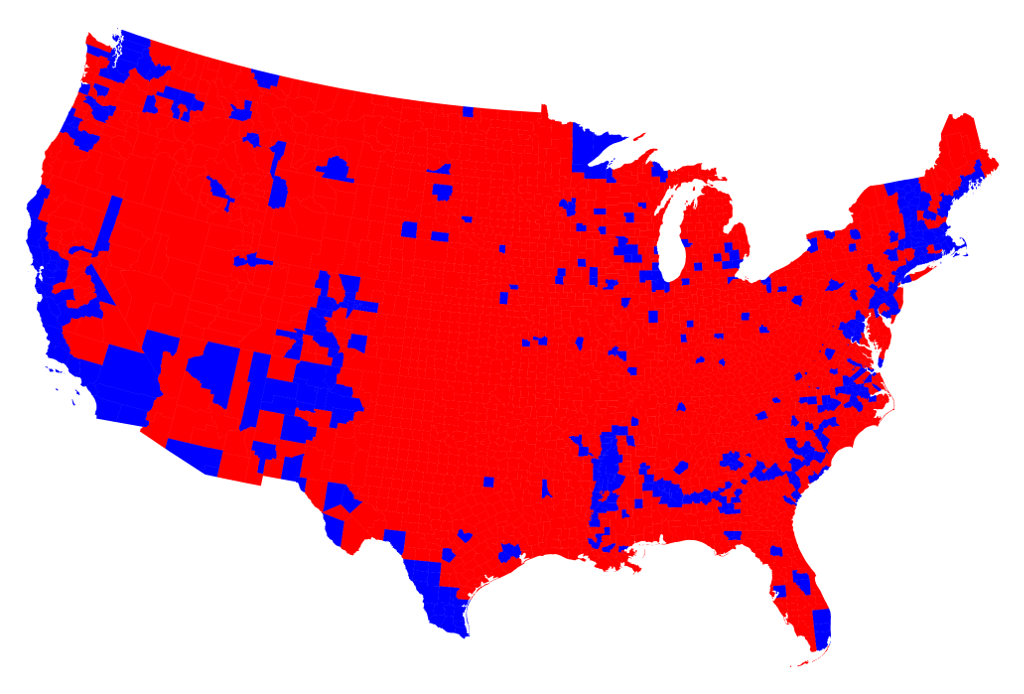
Trump had almost no support from the mainstream media and commentariat, and he didn't even have the unequivocal support of his own party. He won because he was (in the words of Fox News commentator Tucker Carlson) 'pure message'. You mightn't have liked his message, but you have to admit he stuck to it - on immigration, trade, climate change, etc. He bypassed the mainstream media through his use of social media and his hugely-popular rallies all over the country, to communicate that message directly to the electorate, and enough of the electorate in enough states liked enough of what they heard to give him 57% of the electoral college, 60% of the states, and 80% of the counties. And he worked harder than Clinton, doing twice as many campaign events as Clinton.

No one likes a sore loser and Clinton is particularly pathetic with her 'I was robbed' whining. Her political career is over and it is time she stepped aside and let the Democratic Party refocus and rebuild, and to be the responsible opposition party that America needs in the Trump era.

Tuesday, May 16, 2017

Climate of Change

It looks increasingly like Donald Trump will withdraw the United States from the Paris Climate Accord and in my opinion that will be a very good thing. I have written numerous times on this blog about anthropogenic (i.e. human-caused) global warming but will restate my conclusions and some of the evidence below to explain why I support Trump's position on climate change.

1. The earth has been warming since the 1600s, when we experienced what is known as the Little Ice Age, and has warmed about 0.85ºC since the mid-19th Century. Temperatures today are similar to those in what is known at the Medieval Warm Period, as shown in the following temperature reconstruction graph.

Reconstructed global temperature past 2,000 years (Loehe and UKMO data)

2. Carbon dioxide is a greenhouse gas. It makes the Earth habitable for life, and life would not exist on Earth if there was no CO2 in the atmosphere. An increase in atmospheric CO2, all other things being equal, would be expected to lead to an increase in average global temperatures but with a diminishing effect (the physics behind this is explained in the "Into the Laboratory" section of this article). 

3. Mankind's carbon emissions, mostly generated through the burning of fossil fuels, contribute to the CO2 in the atmosphere. The exact extent of mankind's contribution to the increase in CO2 is unknown because we don't know the net natural contribution, but in recent years mankind's total emissions has been roughly equal to the increase in CO2 so many scientists just assume that human emissions account for all of the increase. If this was true then CO2 levels would have been constant prior to the development of human civilisation, which is patently not true as the following graph shows.

Reconstructed atmospheric CO2 levels (100PPM) from various sources

4. Carbon dioxide is NOT a pollutant. To claim that is to say that all life on Earth pollutes the environment merely by living, which is patently ridiculous. The concentration of CO2 in the atmosphere has increased from around 250ppm to 400ppm since the 18th Century but current CO2 levels are not dangerous. In fact, we are still only a little above the minimum levels of atmospheric CO2 necessary to sustain life on Earth and scientists now accept that rising CO2 levels have led to increased greening of the world, including a net increase in rainforest and a receding Sahara Desert.

5. The current increase in global temperature levels are NOT dangerous to life. Human civilisation flourished in warm periods and geographical areas (such as the Middle East and Mediterranean) rather than in cooler periods and climes precisely because less resources needed to be spent creating shelter and growing food in warmer areas, leaving more resources to be devoted to civilisational advancement.

6. Dangerous weather events are NOT increasing around the world. In fact, the last decade has seen fewer hurricanes and storms than any other decade since modern records began. Total deaths attributed to all extreme weather events globally declined by more than 90% since the 1920s, in spite of a four-fold rise in population and much more complete reporting of such events (source: Goklany). Many more people die each year from extreme cold than from heat and therefore an increase in global temperatures is likely to further lower climate deaths. Millions die in the third world every year from toxic heating fuels such as dung and biomass, deaths that would be prevented if they converted to natural gas or other clean fossil fuels.

So what is the point of the international political consensus on reducing carbon dioxide emissions? We know that human carbon dioxide emissions won't lead to runaway global warming and that further CO2 increases won't be harmful to life. On the other hand, we can say with certainty that policies that reduce the ability of people in cooler climates to heat their houses will lead to more deaths, and likewise any policies that reduce the ability for people in the third world to shift to less toxic energy sources than they currently use.

I accept, as do almost all scientists, that human activity contributes to changes in the climate, but I think the evidence does not support the proposition that mankind's carbon emissions are the dominant factor in recent increases in global average temperatures. But what about the argument that prudent risk management means we should cut our emissions anyway? Well, a prudent risk management strategy always considers the costs of mitigation and at the moment the costs of mitigation far outweigh the costs of the risk. Eliminating human carbon emissions to stop global warming is akin to amputating your leg to get rid of a muscle ache.

This is why the Paris Accord is bad policy and why I hope Trump' sticks to his guns and withdraws from it.

Thursday, May 11, 2017

Why Comey had to go

I almost feel sorry for James Comey. He found himself in a no-win situation, having managed to alienate both Democrats and Republicans and his old and new bosses. I say 'almost' because the situation was largely of his own making. His experience is precisely why law enforcement officers, and public servants in general, should remain politically neutral in their jobs.

Comey began to dig himself a hole with his investigation of Hillary Clinton's use of a private email server for classified information. He closed the investigation and then reopened it right in the final stages of the presidential campaign, and then promptly closed it again. Those decisions stunk of political interference, or at least influence.

Then it was revealed that the FBI had been investigating the Trump team's connections to the Russians during the election campaign. I have written before about how I think the accusation of a Trump-Putin conspiracy is baseless, if for no other reason than Putin had nothing to gain and everything to lose from a Trump election. In any event, Clinton also had contact with the Russians during the campaign, and there is nothing wrong with a presidential candidate establishing links with important foreign leaders prior to taking office. Even if it is proven that the Russians acted to help Trump win, that is not illegal or even unusual - after all, President Obama tried to influence the outcome of the Brexit vote and did his best in the last Israeli election to stop Netanyahu being re-elected. Besides, nothing the Trump team might have done with the Russians could compare with the dealings Hillary Clinton and the Clinton Foundation had with Russian and Kazakhstani interests while she as Secretary of State was approving their takeover of American uranium mines.

Leaving aside the merits of the cases, I think the fact that the FBI was investigating both of the major candidates during the presidential election campaign - and in the case of the Clinton investigation, discussing it publicly - is a very unhealthy state of affairs for U.S. democracy. They say J. Edgar Hoover had an enormous influence on politics during his 37 years as FBI director but at least he had the good sense to play his cards close to his chest. Comey came to believe he was the most important player on the stage rather than someone who should stay in the background. Clearly, the job had got a bit much for him, or he had become a bit much for the job. 

Trump has done the right thing sacking Comey and I am sure Hillary Clinton would have done the same thing had she made it to the Oval Office. The President and the American public need to have confidence in their FBI director and clearly that was no longer the case.

Thursday, May 4, 2017

Left-wing view of democracy should not surprise

Yesterday, I participated in an interesting discussion on Chris Trotter's Bowalley Road blog about the health of democracy in the Western world. Chris, who I am sure wouldn't object to being described as an old leftie, wrote in response to a New Zealand Herald columnist who was bemoaning the death of democracy, as indicated by the election of Donald Trump in America, Theresa May in Britain and Bill English here in New Zealand.

I said that democracy was doing just fine and made the point that left-wingers always blame the state of democracy - or some other factor such as 'deplorables', Russian hackers or 'fake news' - for their failures rather than themselves and their philosophy. The fellow who responded to my point said that 'democracy has a bad time whenever bad guys get elected.'

This comment speaks volumes about the real view of many on the left about democracy. They believe, like President Recep Erdoğan of Turkey, that 'democracy is like a train, you get off once you have reached your destination.' In other words, democracy should be allowed to produce only one result - victory for their 'good guy'.

Democracy is by definition a pluralistic system and if there can be only one result, then that is not democracy but a dictatorship. Of course, the worst left-wing dictatorships have always styled themselves in Orwellian fashion as 'democratic republics', so perhaps we should not be surprised when left-wingers in Western democracies reveal that this is also their interpretation of what it means to be a democracy.

Someone in America once said, 'scratch a liberal (in American terms a left-winger) and a fascist bleeds'. So true.

Friday, April 28, 2017

Trump at 100 Days

Tomorrow is the 100-day mark in Donald Trump's presidency and like jouranlists and bloggers all over the world, I am taking the opportunity to provide my assessment on how I think he is doing.

The 45th president of the United States of America certainly set a cracking pace (as I wrote about here) but more recently he seems to be getting bogged down in the swamp he said he would drain. I have looked at a number of his campaign promises in various policy areas and graded them from A+ (completely achieved) to E (has done nothing) and then averaged them to get an overall grade.

Healthcare: He promised to repeal Obamacare, but rather than trying to repeal it he supported Paul Ryan's replacement American Care Act, which was withdrawn when it failed to gain enough support to pass in in the House. His professed approach now seems to be to wait for Obamacare to implode, which is a bit pathetic really. Therefore, he gets a D for this.

Immigration: Repeated knock-downs of Trump's executive orders by the federal courts has meant he has failed to implement his policies in this area, but that is not a bad thing in my view because his policies were ill-advised and poorly thought out. It also shows the American system of government with its separation of powers is working. But in terms of Trump's delivery, he gets a D for this.

Taxation: He has announced tax reforms including lowering rates for companies and individuals, and simplifying the Byzantine system of deductions - so he gets a B-, but maintaining or improving on that grade will depend on follow-through.

Draining the Swamp: He promised to reduce the size of government starting with a freeze on federal hiring, and to stop officials becoming lobbyists after they leave their government jobs. He has signed executive orders to give effect to these policies, so a good start and a B+ for effort.

Reduce Government Compliance: He promised to introduce a requirement for two federal regulations to be elminated for every one introduced. He has signed an executive order stating that two regulations have to be identified for elimination, so, again, a good start and a B+.

Trade: He said he would renegotiate the North American Free Trade Agreement and withdraw from the Trans-Pacific Partnership Agreement. He also said he would label China a 'currency manipulator'. He has fudged on the first, signed a memorandum to effect the second, and backed down on the third. These were all silly policies in my view but a B- for partial delivery.

Energy: He promised to lift restrictions on fracking and clean coal production, and build the Keystone and Dakota Access pipelines. He has issued executive orders on all of these, so he here he gets an A+.

Climate Alarmism: He said he would withdraw from the Paris Climate Accord and stop payments to UN climate change programmes. He hasn't done either yet, reportedly because Ivanka doesn't like these policies, so he gets an E for this.

These are not all the campaign promises he made but they are enough to give an overall grade for his commitment to delivery. The average is a C+, which is not brilliant but probably better than most presidents achieved after just 100 days in office.

So what grade would you give Donald Trump for his performance so far?

Wednesday, April 12, 2017

Trump and Syria - the entire dumbass neocon package

Well, that didn't take long. Donald Trump has ditched perhaps the most sensible of the policies he was elected on - a less interventionist foreign policy - by bombing Bashar al-Assad's Russian-supported forces in Syria for their alleged use of chemical weapons. I say 'alleged' because I think it is far from proven yet whether Syrian Government forces deliberately used these weapons and, as Chris Trotter says, it seems odd that al-Assad would suddenly order their use at a time when his forces were winning the civil war and he was being accepted back into international peace talks.

Trump's order should at least have the redeeming feature of ending the ridiculous conspiracy theories about Putin controlling Trump, although the immensely deluded commentators at MSNBC seem to think the whole thing is an even more convoluted conspiracy in which Putin allowed Trump to bomb his ally Assad's forces to put the media off the scent of the original Putin-Trump election conspiracy. Occam's Razor be damned!

I have always thought a Putin-Trump conspiracy defies commonsense. The biggest on-going threat to Russia is the economic threat of low oil prices, and the main reason for the decline in oil prices in recent years is US oil and gas production from fracking. And the one person most committed to increasing America's energy independence by removing carbon emission rules, building new oil pipelines and encouraging fracking? Well, that would be Donald Trump.

The worst thing about Trump's decision to bomb Syrian forces is that it indicates the neocons have taken control of the White House again, despite the fact that Trump seemed to be the one Republican president they couldn't control. The neocons are the people from the military-industrial-political complex who love to start wars because they benefit from them - in jobs, profits and political careers - people like Dick Cheney, Donald Rumsfeld and Bill Kristol. Trump's recent removal of Steve Bannon (who has some unadmirable policy positions but a militaristic foreign policy is not among them) from his National Security Council signalled this shift.

I almost could have forgiven Trump his dumbass immigration and trade policies for the prospect of a more considered foreign policy, but now we're just left with the entire dumbass neocon package.

Thursday, March 30, 2017

Failure of health care bill proof American Republic is alive and well

Many have seen the failure of the American Health Care Act, which has just been withdrawn because of lack of support in the US House of Representatives, as the first major test of Donald Trump's presidency. The reality is that even though Trump promised in his election campaign to repeal and replace President Obama's Affordable Care Act, the new bill was Speaker Paul Ryan's baby much more than Trump's, so its defeat probably won't cause Trump any significant political harm.

I think the bill's defeat is a victory for America for a couple of reasons. Firstly, the bill itself was universally considered to be unworkable and it certainly did not meet Trump's promise of "affordable coverage for everyone, lower deductibles and health care costs [and] better care." More importantly, it demonstrated to all those who have been painting Trump's victory as the end of the American Republic, that nothing could be further from the truth. The separation of powers is alive and well and Congress just exercised its power to cast out a proposed new law that the president supported. 

One of the great characteristics of the American system of government is that its participants do not slavishly act according to their party affiliations. Republicans may control the House of Representatives, the Senate and the Presidency, but that doesn't mean a Republican bill has an easy ride to become law. Here in New Zealand, our MPs tend to toe the party line, as dictated by the prime minister and his cabinet, far more than they do in America.

The recent decisions by the federal courts to stay Trump's immigration orders is further evidence that reports of the death of the Republic are premature. America may have its problems, but a lack of democracy and checks on power are not among them.

Wednesday, March 15, 2017

The possibility of a populist leader in New Zealand

This is an election year in New Zealand. We vote for our parliamentary representatives and indirectly for our prime minister and government. Under our Westminster system the executive comprises MPs from the party (or parties) with the largest number of seats in parliament. We have a particularly silly form of proportional representation where about half the MPs represent electorates but these numbers are disregarded when considering the overall makeup of parliament, which is determined by the total of the party vote. To demonstrate how this would have worked with the US presidential election, Donald Trump may have won 30 of the 50 states and 80% of the counties in America, but Hillary Clinton would have become president under our system.

The proportional representation system gives minor parties power far in excess of their support and means the major parties often cannot really implement any of the policies on which they campaigned. As a result we have had successive governments that have pursued pretty much the same middle-of-the-road policies and have seen a gradual increase in the role of the state in our lives. There is little possibility that a party with radically different policies could ever get enough support to change this gradual progressivism. This is similar to the state of affairs in most Western democracies where the slightly left-of-centre party and the slightly right-of-centre party take turns ruling with essentially the same policies. Donald Trump's election, like Brexit, was the exception, where people said to hell with the same-same and took a punt on something different.

The lack of real choice in policies between the major New Zealand parties, National and Labour, could cause New Zealanders to look for alternatives in this year's election. One of the alternatives is the New Zealand First party led by Winston Peters, a perennial politician whose fortunes have risen and fallen several times over the past four decades since he was first elected as a National Party member of parliament. Peters' political career to date reached its zenith when he was deputy prime minister in National Party Prime Minister Jim Bolger's coalition government between 1996 and 1998. He again reached the top table of New Zealand's government when he served as Labour Prime Minister Helen Clark's foreign minister between 2005 and 2008. Peters has much in common with Donald Trump with his populist appeal to disaffected voters (in Peters' case mainly the elderly) and his nationalist and anti-immigration policies are reflected in New Zealand First's name, which sounds like a ready-made cap logo. His party is rising in the polls and is currently level-pegging with the third-placed Green Party on 11% of the national vote.

We approach the forthcoming election with extra uncertainty because of the resignation of popular prime minister John Key at the end of last year. Bill English, who was Key's deputy, has less personal appeal amongst voters than Key (although I like English because he has at least the semblance of principles whereas John Key clearly had none). English has been leader of the ruling National Party before, having led it to its worst electoral defeat in 2002, gaining barely 20% of the vote against the popular Helen Clark. So while National still leads the polling with nearly half the prospective vote, the gap to Labour is narrowing and if New Zealand First continues to eat into the vote share of the major parties, Winston Peters could well end up at least holding the balance of power again. My guess is that this time around, Peters will demand even more than in previous coalitions and could end up dictating many of the new government's policies.

It is hard to see the New Zealand political landscape changing much in the short term but Trump and Brexit have taught us that things can move very quickly. New Zealand doesn't have the same groundswell of political division and frustration that existed in Britain and the United States prior to their plebiscites last year, but I think New Zealanders are complacent and significant change could catch us unawares.

To paraphrase the Chinese curse, we live in interesting times.