Showing posts with label New Zealand First. Show all posts

Sunday, May 3, 2020

Ignorance Upon Uncertainty

It has been more than a week since I last posted and since then in New Zealand we have come out of Covid-19 lockdown Level 4 into Level 3. I have no idea what these levels mean in terms of detailed rules and the authorities seem to be making it up as they go along, with the New Zealand Police refusing to release their own advice about the legality of their enforcement of the rules. This Kafkaesque uncertainty is the hallmark of authoritarian governments everywhere - if the rules are arbitrary, you can always be deemed to be in breach of them.

I have imagined that among the small blessings of the lockdown, an increased appreciation for the value of the producers in society might come out of this situation. People have become aware that they can't take it for granted that their supermarket has plenty of the right type of toilet paper or packaged flour. They have also become aware that the people who run the factories, who drive the trucks that deliver the goods, or who stack the shelves in the stores, should be considered "essential workers" as much as the doctors and the nurses tending the Covid-19 patients. But most don't understand the workings of the complex supply chains that ensure the shelves are full with what they need, or how the packages that they order on Amazon or AliExpress miraculously arrive at their door from the other side of the world. It would astound most people to know that there is no central organising authority that operates those supply chains, but rather they are a result of the collaborative efforts of a myriad of businesses, big and small, all around the world.

Even worse is the fact that most people (including many of our leaders) don't understand how the broader economy works, and they don't seem to appreciate the economic and social damage that is being done with the Covid-19 shutdown. They believe the government can flip a switch and turn the economy off or on at will and that all will soon be back to normal. Employers are being criticised in the media for laying off workers or even for closing down, as if the proprietors of such businesses are traitors acting against the national interest.

Our prime minister, Jacinda Ardern, showed her utter ignorance of how the economy works - or worse, a Marxist understanding of the economy - with her comments that the private sector should value their workforce in the same way government does. This is particularly galling to business owners who are struggling because of her lockdown policies (which, as I have written before, are only necessary because of Ardern's early inaction to prevent Covid-19 entering New Zealand) and in increasing numbers are losing their life's work. Does Ardern not realise that every cent government spends ultimately comes from a private business somewhere? She is criticising private business owners for not being as generous as she is with the money she seizes from them!

Ardern's criticism came after one of her colleagues, Deborah Russell, in an example of the most breathtaking left-wing arrogance, blamed businesses themselves for not being able to withstand the government-ordered lockdown. The left likes to go on about victim-blaming but in typically hypocritical fashion are happy to engage in a little of it themselves when the victims are business owners.

Meanwhile the deputy prime minister, Winston Peters, leader of the "far right" New Zealand First Party, wants to "put up the shutters" to foreign investment and trade, returning New Zealand to the "Polish shipyard" economy of his mentor Robert Muldoon's government during the 1970s and early 1980s. New Zealand at the time had a protected manufacturing sector that produced shoddy, expensive goods; draconian exchange controls that meant you had to apply to the Reserve Bank to get a strictly-limited amount of foreign currency before travelling overseas; and - Muldoon's coup de grace - wage and price controls that meant a corner store had to apply to the prime minister personally if it wanted to put up the price of tea. The economy was Soviet in all but name and it is to this state that Peters wants to return this country.

The problem is not just with central government. Local councils refuse to cut back their spending in the crisis and are intent on increasing their tax take from struggling businesses and home owners. They seem oblivious to the evidence that many New Zealanders are already struggling to meet their existing financial commitments.

All of the Covid-19 assistance programmes have involved greater spending by the state. The Government is acting like a benevolent rich uncle, doling out wage and salary assistance, business loans and increased welfare benefits as if New Zealanders won't realise they will have to pay back every cent. Perhaps the Government is right to count on the public's ignorance - it is apparent that many people do not realise governments have no source of funds other the taxes they extort from hardworking citizens. Even government borrowing is just a demand on future taxpayers.

I don't see any evidence that Covid-19 will result in an increased appreciation for the producers in society. I think we are fated to repeat the mistakes of the past, whereby governments and the public regard the producers as milch cows, to be exploited until they are empty vessels, and then to be blamed for not being productive enough. Perhaps if the economic downturn from the Covid-19 is long and deep enough, governments will realise at some point that they need to release their grip on the producers' throats. I fear that may take many years.

Tuesday, August 21, 2018

Sooner or later, Atlas shrugs

When the new government manoeuvred its way into power in New Zealand last year I was prepared to give it the benefit of the doubt. The coalition agreements signed by the parties didn't look too extreme - they were promising to spend a lot more money but they weren't proposing to raise income taxes in this term. Their regional development policies, anti-immigration stance and ambivalence on the Trans-Pacific Partnership trade agreement actually looked a lot like Donald Trump's populist platform (although there is little in the latter that I support). The problem is that what was said in the coalition parties' manifestos and agreements was only part of the picture, as is now being revealed.

This government believes it can govern by fiat - the prime minister, Jacinda Ardern, demonstrated this when she announced her ban on oil and gas exploration without even taking it to cabinet. Other policies that her government has announced include new petrol taxes, the introduction of a Zero Carbon Act (which, based on the government's own numbers, is estimated to reduce our GDP by between 10% and 22% by 2050), increased welfare payments across the board, and raising the minimum wage to one of the highest in the Western world. The government is also reviewing tax, through its Tax Working Group, and all indications are that it is likely to introduce a capital gains tax.

New Zealand used to be known for its light-handed commercial regulation but even under the previous National Party-led government, businesses faced a raft of new, expensive and intrusive regulations such as a new and far more onerous health and safety act, an emissions trading scheme, and further controls on development in the growth-killing Resource Management Act. While the previous government lowered company taxes early in its term, most Western countries have reduced theirs further with the result that New Zealand is now one of the most highly-taxed countries for business. All of this precipitous policy-making has understandably caused a crisis of business confidence and the new government's response has been to chastise business leaders for their lack of enthusiasm. Their bewilderment at the sudden loss of business confidence shows they are a bunch of dogma-driven, wilfully-ignorant, arrogant fools.

Sooner or later, as Ayn Rand said, Atlas shrugs. Most people are happy to go along with being taxed and regulated, accepting the view that some government intervention in the economy is the cost of a democratic society, but there is a tipping point at which the productive members of society refuse to continue to be the milch cows for the unproductive. This tipping point is recognised in economics by the Laffer Curve - the empirical observation that continuing to increase tax rates ultimately results in lower revenues. Of course socialist governments often solve the problem by bringing out the guns - as we have seen in Venezuela - but history proves that free men and women are far more productive than slaves and that liberal, capitalist societies outperform repressive ones on every measure. Wise governments recognise this and backoff on the socialist policies - as the government of Sweden has done in recent years.

I have written before about how New Zealand's so-called 'rock star economy' wasn't worthy of the name even before the current jitters. It will be interesting to see whether this coalition government backs off on some of its ill-considered, dogmatic policies. If it doesn't, I think New Zealand will continue to slide into economic ignominy.

Friday, April 20, 2018

New Zealand's very own Donald Trump

One of the most amusing news reports this week has been that of New Zealand prime minister, Jacinda Ardern, angrily denying to the world's media that she is like Donald Trump. There is great irony in someone who has a carefully-crafted image as the leader of a new generation of caring, ultra-progressive politicians being compared to the 71-year-old, 'Make America Great Again' president, but a comparison between the Ardern Government's policies and that of the Trump administration shows that the world's media is not too far off the mark.

The Wall Street Journal was the first to pick up on the similarity in political positions between the New Zealand Labour Party and Trump's Republicans even before last year's general election. The article focused on the Labour's pledge to cut New Zealand's annual immigration by 30,000 (compared to an annual total of 72,000 new immigrants), but being anti-immigration is not the only similarity to Trump. Like the US President, the Labour Party entered the election opposed to the Trans Pacific Partnership trade agreement (although Ardern has since signed a renegotiated agreement that has made even Donald Trump reconsider his opposition to it). And the new government's billion-dollar-a-year regional development fund (which already faces accusations of corruption) is exactly the sort of cronyism Trump is pursuing under his misguided programme to reinvigorate middle America. Ardern has even supported Trump's recent bombing of Syria, albeit with some public reservations.

Many of the similarities of the Ardern government's programme to that of Trump stem from its coalition with the nationalist New Zealand First Party. Ardern might angrily deny that she is like Trump but she can't dodge the fact that her coalition partner is a 'Make New Zealand Great Again' party with all of the same xenophobic, anti-free trade, crony-capitalist leanings that characterise Trump's Republican administration. But Ardern and her party entered into the coalition with New Zealand First willingly and, as I have written before, without the mandate of even a plurality of votes. So, if she doesn't like the comparison with Trump, she only has herself to blame.

The lady doth protest too much, methinks.

Thursday, November 9, 2017

Is the NZ Government the result of a personal grudge?

We learned this week that Winston Peters, the 'kingmaker' in the recent coalition negotiations to form the New Zealand government, is suing four National Party members of parliament, including former prime minister Bill English and deputy Paula Bennett, over the leaking of information that he had been overpaid his state pension for seven years. Peters' lawsuit seems to be a fishing expedition with journalists, National Party officials and even the chief executive of the Ministry of Social Development (the government agency responsible for payment of the pension) being served papers.

The most concerning thing about this matter is not the overpayment itself or the speculative nature of Peters' legal action, but the fact that it reveals an obvious conflict of interest in the coalition negotiations. Peters swore an affidavit in support of his legal action the day before the election, meaning that he was involved in the lawsuit when he sat down to negotiate a possible coalition agreement with the very National Party leadership that he was suing. He should have declared this conflict of interest before the election so that voters could have taken the matter into account or, at the very least, prior to the coalition negotiations getting underway. Ideally he should have recused himself from the coalition discussions and decision-making of his party.

In view of this, it is unsurprising that Peters chose the Labour Party as his coalition partner. I have written before about how Labour and New Zealand First don’t even have a plurality in the new parliament and the fact that the National Party, which has more seats than Labour and New Zealand First combined, would be part of a government under any electoral process other than our shambolic MMP system.

The fact that Peters didn't declare his conflict of interest begs the question whether he entered the negotiations in good faith and whether he had any intention of forming a coalition with National. It makes a mockery of the coalition negotiations and casts further doubt on the legitimacy of the new coalition government. Peters may have a legitimate grievance over the leaking of his confidential superannuation details but that doesn't justify him holding the country to ransom and making decisions of constitutional importance on the basis of a personal grudge. The fact that this is even a possibility raises serious concerns about the health of our democracy.

Thursday, November 2, 2017

NZ coalition agreement's best clause

Tucked in the very bottom of the coalition agreement between the New Zealand Labour Party and New Zealand First to form the new New Zealand government is a small, incongruous clause that could be missed on first reading. It says the parties agree to "Record a Cabinet minute regarding the lack of process followed prior to the National-led government’s sponsorship of UNSC2334."

United Nations Security Council resolution 2334 condemns Israeli settlements in the occupied Palestinian territories and I have written before about why I was so disgusted by my government's sponsorship of it. The Israelis claimed that New Zealand was pressured by the outgoing Obama administration into fronting the resolution (with the US abstaining, presumably so that the Democratic Party did not suffer blowback from the powerful American Jewish lobby). The fact that the new government's coalition agreement acknowledges that due process was not followed suggests that there may be substance to this claim.

New Zealand's stance is in contrast to Australian Prime Minister Malcom Turnbull's lauding of his country's strong relationship with Israel on his recent trip to that country. Turnbull took the opportunity during his visit to celebrate the extraordinarily courage of Australian (and New Zealand) cavalry during the Battle of Beersheba one hundred years ago.

It takes a degree of political courage to stand with Israel today. I am sure the clause in the coalition agreement would not have been welcomed by everyone in the Labour Party caucus and certainly not within the Green Party, their other political partner. I imagine that both the New Zealand First leader, Winston Peters, and deputy leader, Ron Mark (a former soldier who served in the Middle East), had a part to play in insisting on the inclusion of the clause, and for that I salute them.

Tuesday, October 31, 2017

Three years is plenty to screw up New Zealand

One of the more interesting pieces of work I've done recently is preparing a briefing for clients on the impact on their business of New Zealand's new coalition government. I went through the details of the coalition agreements between Labour, New Zealand First and the Greens and also, with a fine-tooth comb, through their manifestos. I believe I now have a pretty good understanding of all of their promises.

The total cost of new spending over the next few years is more than $15 billion. It is not obvious how they are going to pay for it, with only a few hundred million of new revenue identified. The source of the money, of course, will be new taxes and borrowing (i.e. deferred taxes) - they just weren't honest enough to admit it in the election campaign. They have revealed only that they intend to cancel the previous National Government's proposed tax cuts for next year and that they will establish a Tax Working Group to look at the tax system. The latter sounds to me like a surreptitious means of justifying the higher taxes the coalition will require to fund all that extra spending.

The other shocking aspect of my analysis is the sheer number of new policy initiatives and laws the Labour-led government plans to introduce. I have written before of how there are ordinarily about five hundred pieces of legislation winding their way through Parliament's processes. Expect this to increase substantially. If we are not already one of the most regulated countries in the world, we are about to become so. 

I believe the coalition government won't last more than three years (and possibly considerably less). Unfortunately, three years is plenty to screw up New Zealand, given that they seem to be seriously commited to the task.

Thursday, October 19, 2017

Good luck with that, Jacinda

The people have spoken - well, a minority of them anyway. We have a coalition government that doesn't even have a plurality of the votes. After a month of dithering, the leader of the New Zealand First Party, Winston Peters, who lost his own electoral seat in last month's election and whose party was reduced to 7% of the vote, decided to form a coalition with the New Zealand Labour Party. Combined, the two parties won 44.1% of the party votes - less than the National Party's 44.4% - and yet they have been able to form a government because the Green Party, with 6.3% of the vote, is prepared to support them on 'confidence and supply' (i.e. on budget votes). 

It is not as if the partners to the polyamorous affair have much in common. New Zealand First is a nationalist, protectionist, anti-immigration party and its leader moulds himself on Robert Muldoon, the authoritarian New Zealand prime minister from 1975 to 1984 who took the country to the verge of bankruptcy. Labour is a classic, left-of-centre social democratic party, and the Greens are a typical 'watermelon' alliance of environmentalists and Marxists.

The new prime minister, Jacinda Ardern, is not only New Zealand's youngest premier in over a hundred years, she is the least experienced, having never held a full-time job outside of politics and never having held even an executive position in government. She will need to rule over a rag-tag coalition with less mandate than National to govern and to keep the oldest political fox of them all, Winston Peters, from eating all her chickens. I give it less than twelve months until her government disintegrates and we have another election.

In the meantime, I wish Jacinda Ardern and her coalition good luck and implore them not to stuff up our great little country too much before the big kids take over again.

Tuesday, October 17, 2017

Greens enable Winston Peters to hold NZ to ransom

I wrote recently about why I thought New Zealand's electoral system was the dumbest in the world, and so it has proved to be. Nearly a month after the election we still don't have a government and while I don't think this is in itself a bad thing, watching our politicians jockeying for power has been unedifying. All the blind ambition, self-aggrandisement and incompetence we have come to expect of our politicians has been on display.

The uniquely unqualified, inexperienced and unproven Labour Party leader, Jacinda Ardern, who will become our prime minister in a Labour-led government, has been displaying a quiet confidence in her public comments. Bill English, the current prime minister and leader of the National Party, which won the largest share of the vote, is more inscrutable. Meanwhile, Winston Peters, whom the media have dubbed the 'kingmaker', cannot contain his delight at being the centre of attention again and continues to make the country wait for his decision. As the Guardian newspaper put it, Winston Peters and the anonymous board of his nationalist New Zealand First Party are holding the country to ransom.

This is all pathetic but the prize for the most damaging self-indulgence must go to the Green Party, the leftist environmentalists who have refused to consider negotiating with the centrist National Party, preferring to give Labour their proxy in coalition negotiations. This has, of course, strengthened Winston Peters' hand, an outcome for which their supporters surely could not have voted. A National-Green coalition could govern without New Zealand First's support and thus even the pretence of negotiations between these two parties would have taken the wind out of Winston Peters' sails. Many commentators have expressed disappointment with the Green's holier-than-thou attitude with even former Party MP Nandor Tanczos calling for his party to enter into negotiations with National.

Winston Peters may be holding the country to ransom but it is the Greens who have given him the means to do so. I hope the voters remember that when it comes to the next election, which, I am picking, may be not that far away.

Thursday, September 21, 2017

The World's Dumbest Electoral System

New Zealand has the world's dumbest electoral system. Saying such a thing in this country provokes the same reaction as when you say, "the world is not suffering catastrophic global warming", but sometimes one must speak truth to power. There is a reason why only one country in the world had the system before New Zealand adopted it and that country (Germany) has special historical reasons for having a system that ensures no single political party can ever govern alone.

Under our Mixed Member Proportional (MMP) system, you get two votes - the first determines who becomes your local electorate member of parliament, the second is for the party you prefer. The complication comes from the fact that it is the party vote alone that determines the make-up of parliament, which means the electorate vote counts for nothing in terms of legislative power. In effect, winning electorate seats costs a party list seats. A party can get into parliament if they get at least 5% of the party vote even if they have no electorate seats, or if a party gets at least one electorate seats, it's party vote counts as well even if it gets less than 5% support. Confused? Well, you are not alone - by some estimates, 80% of New Zealand voters do not understand how the system works.

The complexity of the system produces some weird effects. Consider the following two scenarios. 


In the first scenario, a centre-left government comprising Labour, New Zealand First and Greens is the most likely outcome because even though National has far more seats than Labour, the latter will be able to form a coalition with fellow opposition parties the Greens and New Zealand First (note that for the sake of simplicity I have ignored smaller parties and the impact of the race-based Maori electorates, which further complicate the picture).

The second scenario is almost exactly the same as the first except that the Greens get 0.1% fewer votes. This means they would be wiped out because they did not reach the magic 5% threshold to get party list seats in parliament (assuming, as is likely the case, they do not win any electorate seats). National would have an overall majority of seats and be able to form a government. So, 0.1% of the votes can completely change the outcome and make the difference between significant representation in parliament for a minor party or none at all. 

The libertarian ACT Party, which is polling at 0.3% in the latest poll, will likely have at least one seat in the next parliament because they will win the Epsom electorate, whereas the Green Party, which is hovering around 5%, may get none. As a libertarian, that is an outcome I would like to see but it is hardly fair.

The system could be easily fixed by separating the effects of the two types of vote. The party vote should determine only the proportion of the party list seats rather than the overall make-up of parliament. In other words, winning an electorate seat wouldn't cost you a party list seat. I believe this is exactly how most New Zealanders imagine MMP works, so it would be aligning the system with expectations. Under this proposal, the 5% threshold could be abolished - or at least lowered to level needed to get one party list seat - and this would eliminate the bizarre effects outlined in the second scenario above.

It is time for a change in our electoral system.

Wednesday, August 30, 2017

New Zealanders' election dilemma

New Zealanders, at least those with a libertarian leaning, are faced with a familiar dilemma in next month's election - do we vote for socialists with odious principles or conservatives with none?

The current National-led government has been hopeless for those of us who value freedom. It has enacted a plethora of legislation and regulations that reduce our rights to privacy, free speech, equality under the law and even universal suffrage. The GCSB Amendment Act and the Telecommunications (Interception Capability and Security) Act significantly increased the government's rights to intercept our private communications. The Harmful Digital Communications Act made it an offence to say or publish anything that is 'abusive' or 'insulting'. And the long-promised Resource Legislation Amendment Bill did nothing to lessen the bureaucratic barriers to development but gave unelected Maori tribal elites joint control over local government planning and consent processes. All of this from a party that is supposed to stand for equal citizenship, individual freedom and choice, personal responsibility and limited government. I have nothing but contempt for such hypocrites.

The Labour Party is at least a little more honest about its intentions, announcing increases in state spending across the board. It says it does not plan to increase income tax other than cancelling the derisory tax cuts National has promised for next year, but has said it will introduce new taxes on water (as if water is not already taxed through water rates), visitors to New Zealand, and to set up a tax working group (presumably to figure out how they can get more money out of us).

The Taxpayers Union rates New Zealand First the worst party for election bribes at a cost of more than $13,000 per household, ahead of Labour on more than $11,000, but National is making a late run by more than doubling its bribes in the last week alone. The National Party's lolly scramble is particularly hypocritical after they recast the Labour Party's new election slogan "Let's Do This" as "Let's Tax This."

The only vaguely libertarian party in this election is ACT, but with only one MP and polling under 1%, it is not going to have much influence even in a centre-right government. The best we can hope for is for its sole MP, David Seymour, to continue the sterling work he has been doing pushing for his End of Life Choice Bill allowing voluntary euthanasia.

The least bad option, much as it galls me to say it, is another National-led government tempered by a coalition partner that will constrain its big state ambitions. New Zealand First may be the best choice because it is opposed to the further expansion of Maori tribal privilege, which I think presents a greater long term threat to freedom in this country than that party's profligacy.

It's Hobson's choice.

Wednesday, April 5, 2017

Resource Bill is anathema to democracy

A few weeks ago I wrote a post about the possibility of a populist leader, à la Donald Trump or Nigel Farage, coming to the fore in New Zealand politics. I said that the lack of real choice in policies between the major New Zealand parties, National and Labour, could cause New Zealanders to look for populist alternatives in this year's election, but I also said that New Zealand doesn't have the same groundswell of political division and frustration that resulted in the electoral wins for Brexit and Trump. However, I think we are seeing the rise of an issue that could be a game-changer in New Zealand politics.

New Zealanders have put up with increasingly undemocratic changes to our legal and constitutional frameworks since the 1970s, all in the name of redressing alleged historical wrongs to Maori. People of Maori descent comprise about 15% of the population of New Zealand but those who identify as Maori today often have only a small fraction of Maori ancestry. They are likely to be more of English or Scots descent as Maori, which makes their contemporary grievances all the more ridiculous - they are calling for redress for the actions of one lot of their ancestors against another lot.

The Treaty of Waitangi, signed by many Maori chiefs in 1840, and by Governor William Hobson on behalf of the Crown, made all Maori British subjects, and their descendants (by constitutional succession) New Zealand citizens. Maori today are represented in government both through their vote in general electorates and through a small number of race-based electorates. Tribal leaders, who are chosen through family links and traditional alliances, have no constitutional role in national or local governament - but that is about to change.

The Resource Legislation Amendment Bill, which may pass into law this week, grants tribal leaders the right to sit on local councils with full voting rights. This means every decision of a council in future will be determined by people who are not elected or accountable for their decisions - people who often have conflicts of interest in the matters they are deciding. Few New Zealanders realise the implications of the legislation because the government has been at pains to keep its dealings on this bill from public scrutiny. New Zealanders do not realise that every local government decision concerning their properties, livelihoods, recreation and taxes in future will be subject to the whims of unelected tribal representatives.

I believe this Bill is very wrong for several reasons. Firstly, it is racist and contrary to principles of universal suffrage to give members of any race a position of privilege in our government. Secondly, the tribal leaders do not represent even the vast majority of people of Maori descent, who live in urban areas and often do not have strong affiliations to their ancestral tribes. Thirdly, it shows a contempt for democracy and constitutional safeguards and is likely to lead to corruption.

Lawyer and former member of parliament Stephen Franks says, "So far as I can tell from the Bill there is virtually nothing to prevent power sharing agreements with iwi/hapu [i.e. tribes] from by-passing democracy and diving below the current legal safe-guards against dishonesty and self-dealing."

Former ACT Party member of parliament Rodney Hide says, "Tribalism is the worst form of economic organisation. It’s collectivist, it lacks incentive to perform, the principals can’t readily sack their agents and there’s invariably a complete lack of transparency and hence accountability. The structure works to the advantage of tribal bosses, not members."

I couldn't agree more. This is one of the most significant constitutional changes in New Zealand's history and it is being sneaked into law. Once the public realise its implications it may become the issue that drives New Zealand voters into the arms of a populist leader like Winston Peters (who is of Maori descent but opposed to race-based privilege).

I think the silent majority has had enough of the gradual erosion of democratic rights and legal equality in New Zealand and that people are ready to fight back in the same way as British and US voters did last year. The political establishment will express bewilderment just as they did in Britain and the US, but they will only have themselves to blame.

Wednesday, March 15, 2017

The possibility of a populist leader in New Zealand

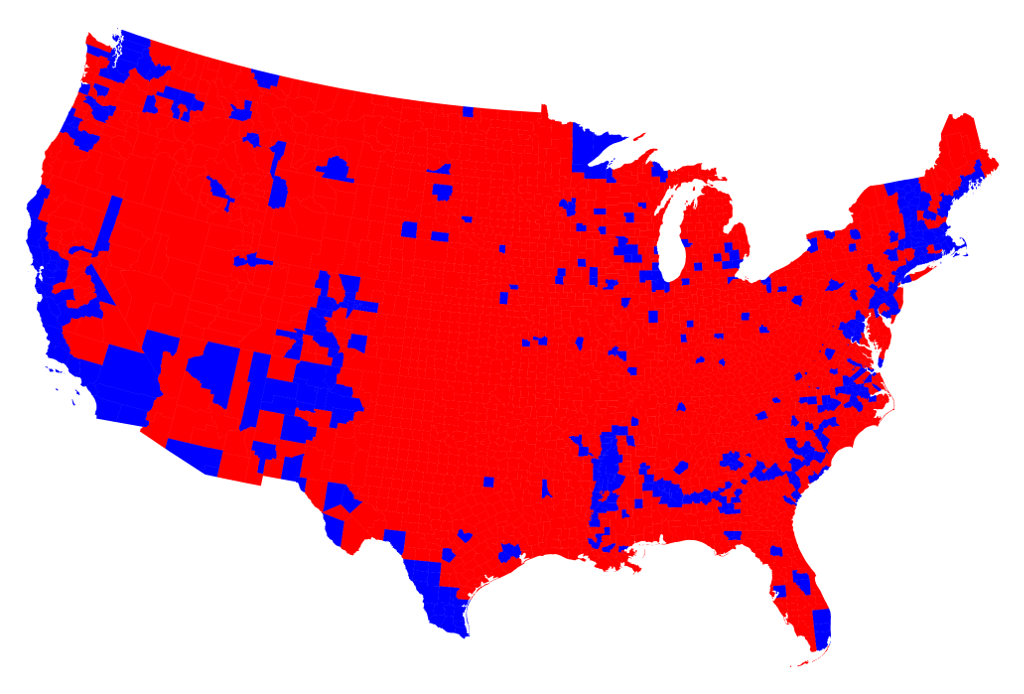
This is an election year in New Zealand. We vote for our parliamentary representatives and indirectly for our prime minister and government. Under our Westminster system the executive comprises MPs from the party (or parties) with the largest number of seats in parliament. We have a particularly silly form of proportional representation where about half the MPs represent electorates but these numbers are disregarded when considering the overall makeup of parliament, which is determined by the total of the party vote. To demonstrate how this would have worked with the US presidential election, Donald Trump may have won 30 of the 50 states and 80% of the counties in America, but Hillary Clinton would have become president under our system.

The proportional representation system gives minor parties power far in excess of their support and means the major parties often cannot really implement any of the policies on which they campaigned. As a result we have had successive governments that have pursued pretty much the same middle-of-the-road policies and have seen a gradual increase in the role of the state in our lives. There is little possibility that a party with radically different policies could ever get enough support to change this gradual progressivism. This is similar to the state of affairs in most Western democracies where the slightly left-of-centre party and the slightly right-of-centre party take turns ruling with essentially the same policies. Donald Trump's election, like Brexit, was the exception, where people said to hell with the same-same and took a punt on something different.

The lack of real choice in policies between the major New Zealand parties, National and Labour, could cause New Zealanders to look for alternatives in this year's election. One of the alternatives is the New Zealand First party led by Winston Peters, a perennial politician whose fortunes have risen and fallen several times over the past four decades since he was first elected as a National Party member of parliament. Peters' political career to date reached its zenith when he was deputy prime minister in National Party Prime Minister Jim Bolger's coalition government between 1996 and 1998. He again reached the top table of New Zealand's government when he served as Labour Prime Minister Helen Clark's foreign minister between 2005 and 2008. Peters has much in common with Donald Trump with his populist appeal to disaffected voters (in Peters' case mainly the elderly) and his nationalist and anti-immigration policies are reflected in New Zealand First's name, which sounds like a ready-made cap logo. His party is rising in the polls and is currently level-pegging with the third-placed Green Party on 11% of the national vote.

We approach the forthcoming election with extra uncertainty because of the resignation of popular prime minister John Key at the end of last year. Bill English, who was Key's deputy, has less personal appeal amongst voters than Key (although I like English because he has at least the semblance of principles whereas John Key clearly had none). English has been leader of the ruling National Party before, having led it to its worst electoral defeat in 2002, gaining barely 20% of the vote against the popular Helen Clark. So while National still leads the polling with nearly half the prospective vote, the gap to Labour is narrowing and if New Zealand First continues to eat into the vote share of the major parties, Winston Peters could well end up at least holding the balance of power again. My guess is that this time around, Peters will demand even more than in previous coalitions and could end up dictating many of the new government's policies.

It is hard to see the New Zealand political landscape changing much in the short term but Trump and Brexit have taught us that things can move very quickly. New Zealand doesn't have the same groundswell of political division and frustration that existed in Britain and the United States prior to their plebiscites last year, but I think New Zealanders are complacent and significant change could catch us unawares.

To paraphrase the Chinese curse, we live in interesting times.

Thursday, May 29, 2014

UKIP challenges cosy centre-left-right political establishment

This week saw the UK Independence Party (UKIP) defy predictions and the serried ranks of its opponents to win the largest share of the UK vote for the European Parliament. In doing so, UKIP had to overcome an unholy alliance of all other political parties and every mainstream media outlet that rallied against it. During the election campaign UKIP candidates and supporters were repeatedly slandered but it was to little effect as more than four million voters cast votes for the party portrayed as comprising so many looneys and racists. UKIP support has been built on disaffection with Britain's membership of the European Community and admiration for the no-holds-barred style of its leader, Nigel Farage. Its policies, far from being lunatic fringe, are now being firmly embraced by the other political parties.

The closest equivalent to UKIP in New Zealand is New Zealand First, which, like UKIP, is anti-immigration and built around an almost cultish devotion to its leader, Winston Peters. I think what makes UKIP and New Zealand First appealing to a small but significant segment of the population is that they both defy the traditional stereotyping of the left-right spectrum. Both parties derive their support as much from 'working class' and Labour Party supporters as from the well-heeled and Conservative/National Party supporters. What I enjoy about UKIP's success is that it sends a strong message to the political class that the traditional assumptions about what constitutes a Labour or Conservative voter are no longer valid.

Recently a friend of mine called me a 'libertarian conservative' and I pointed out to him that the term is an oxymoron. The current political system in most Western nations is heavily statist and crony-capitalist and no one would seriously describe it as libertarian. Conservatism, by definition, is about supporting the status quo. Really, I am a radical. I want to see radical change to our political and economic systems and I find that often I have more in common with radicals of the left than conservatives of the centre-right.  I believe there is a significant and growing segment of the population in most Western nations who believe as I do - people who want both social and economic freedom, who distrust state intrusion into their lives in both work and personal arenas.

I wouldn't describe UKIP as libertarian but it is certainly more radical than either Labour or the Conservatives and any party that seeks to overturn the cosy centre-left-right arrangement that passes for political pluralism in most Western nations has some appeal to me.