Showing posts with label Brexit. Show all posts

Tuesday, April 2, 2019

The Mess that is Brexit

In June 2016, a majority of British voters cast their ballots in favour of leaving the European Union. Since then we have seen a litany of prevarication, obstruction and evasiveness as the British political establishment has tried to backpedal on its commitment to implement the will of the voters. Finally we reached Brexit Day, the 29th March 2019, when Prime Minister Theresa May promised Britain would leave the EU, and nothing has happened. It is the most extraordinary demonstration of political cynicism and cowardice since Neville Chamberlain's 'Peace in our Time'.

The vote to leave the EU should have triggered a plan to deliver it - a series of inexorable steps that showed clear intent and that provided certainty for Britons and their erstwhile European overlords. Within weeks of the vote May's government should have published a draft set of principles that laid out what the decision means in practice (e.g. Britain would no longer be in the customs union and its courts wouldn't be bound by decisions of the European Court of Justice). After a short period of public consultation, these principles would be finalised and agreed by Cabinet.

Then legislation should have been introduced to Parliament, which gave effect to the referendum result including invoking Article 50 (the formal advice of withdrawal). The legislation would have allowed for the negotiation of a leaving agreement with the EU but should have made clear that in the absence of such an agreement, Brexit would come into legal effect on a specified date irregardless. This would have ensured Britain was negotiating from a position of strength and that the current debacle of last minute parliamentary votes was avoided. Undoubtedly there would be have been many legislative and regulatory details that needed to be addressed before Brexit happened but these could have been dealt with by amendments to the main legislation or by regulation.

Why didn't it happen like this? The obvious answer is a combination of political ineptitude on the part of Theresa May and her cabinet and a deliberate campaign to undermine the outcome of the referendum. But the reasons are more complex than the poor behaviour of British politicians.

The Brexit fiasco is a reflection of a deeper malaise in British society. The cowardice and duplicity we have seen with Brexit are endemic to that once great country. This is the country whose authorities turned a blind eye to the sexual abuse of thousands of young girls and yet prosecutes people for making jokes on Twitter. The country has more surveillance cameras than any other country on Earth and has recently implemented a scheme to make internet users verify their identity before they can view even the most innocuous pornography online. Britain is becoming a place where its rulers regard their subjects primarily as a threat and attempt to control their every move with increasingly draconian measures.

Some commentators have predicted that the British people will rise up like the French with their gilets jeune protests, while others have said that they are too meek and conformist to do anything. I am hopeful that the long-subdued British bulldog, which showed its teeth momentarily in the Brexit vote, will end up biting its rulers where it hurts.

Thursday, July 12, 2018

Is Theresa May about to sell out her country?

It is all going wrong for those who supported Brexit. British Prime Minister Theresa May appears to be close to agreeing such a bad deal with the European Union that it has prompted her foreign minister, Boris Johnson, and Brexit minister, David Davis, to resign from Cabinet. It seemed a simple thing to do, for a sovereign nation like Britain to withdraw from an economic alliance, but the problems that have arisen prove that the EU has become by stealth something much more than an economic alliance. It is a supernational entity that has become so entangled in the laws and institutions of its members that withdrawing is like amputating a leg to remove a passenger from a crashed train.

I am pro-Brexit despite it probably being contrary to my personal interests. I am an Irish citizen who has lived in Britain for more time than in any other country except New Zealand, and it may well be that I will be unable to return to live in Britain in future. So why do I support Brexit?

I am certainly no nationalist. I have written before about how I believe that all nation states are artificial constructs, no matter how old or grand they are, and that there is nothing inherently good in one national structure versus another (although I don't think the same of political systems). I believe that smaller, more local government is generally better at protecting individual rights because it is easier to hold accountable than larger, more geographically spread government. I guess that makes me a localist - I like my politics grown locally in small holdings, like those who are localists in buying their food. 

The European Union is a very big step on the road to a heterogeneous, global government, and that prospect scares the hell out of me. The type of society I would like to live in - a society that places maximum value on individual rights and freedoms and in which the government has strictly limited powers and is highly accountable to its citizens - is the very opposite of the European Union. There are so many layers of hierarchy between the people and their distant EU overlords in Brussels that it would put the Qing Dynasty to shame. There is no real representation or accountability, with all important policy decided by the unelected European Commission and its president Jean-Claude Juncker* rather than the show pony European Parliament. And that is exactly why the people of Britain voted to wrest back control of their country. Theresa May vowed to deliver the Brexit her people voted for, but I fear she has caught a dose of the Juncker hauteur and is about to sell out her own country.

* It is hardly surprising that Juncker has acted like an emperor who regards the Brexit vote as a personal slight on his majesty when you realise he has all the powers of an emperor. It is also revealing that when you click on the link to information about Juncker on the European Commission's website, you get the message "Access denied - You are not authorized to access this page." [UPDATE: The link has been fixed overnight - perhaps someone at the European Commission reads my blog!]

Friday, July 21, 2017

You wouldn't recognise the working class if you fell over it

I find it laughable that left-wing commentators still insist that they speak on behalf of the 'working class'. Their rhetoric is filled with disparaging references to the 'upper class' and the 'bosses' as if they are quoting from one of Karl Marx's works and as if they themselves weren't part of the groups they are maligning. The reality is they don't speak on behalf on the working class at all and wouldn't recognise members of that group if they fell over them. The popularity of Brexit and Donald Trump, so despised by the left, with lower-income working people should be ample proof that the left-wing is completely out of touch with what such people really think.

The left-wing does not represent working people any longer. The biggest supporters of so-called progressive ideals today come from the highest income earners rather than those at the other end of the scale. They are the politicians, public servants, academics and those in the private sector that are most dependent on the government for their incomes, who typically earn far above average incomes and who have little exposure to the working class on whose behalf they purport to speak. Welfare beneficiaries support big-government left-wing parties for obvious reasons, but genuine working class people - those who continue to provide for themselves in spite of the disincentives to work of the welfare state - are now as likely to support right-of-centre parties and candidates. This is because it is the latter that speaks to their disaffection with the loss of high-paid blue collar jobs, the rising cost of living, and the perceived economic threat from immigration.

The problem for left-wingers is they have no self-awareness so they tend to believe their own propaganda. They claim their political interests are aligned with those of the underclass but for this to be believable they have to convince us, and themselves, that there is still a traditional class system. It is true that there is an elite in Western countries today but it does not comprise the same people who dominated the upper echelons of government and other institutions up until the middle of the 20th Century. Today's elite is technocratic and bureaucratic rather than aristocratic and largely comprises the left-wingers themselves. Like the elite of yesteryear, they arrogantly assume they know what is best for their subjects and speak disparagingly of those over whom they believe they should rule. The modern version of Marie Antoinette's apocryphal, "Let them eat cake", is surely Hillary Clinton's "deplorables" comment. And the consequences for the utterer were similar.

Wednesday, March 15, 2017

The possibility of a populist leader in New Zealand

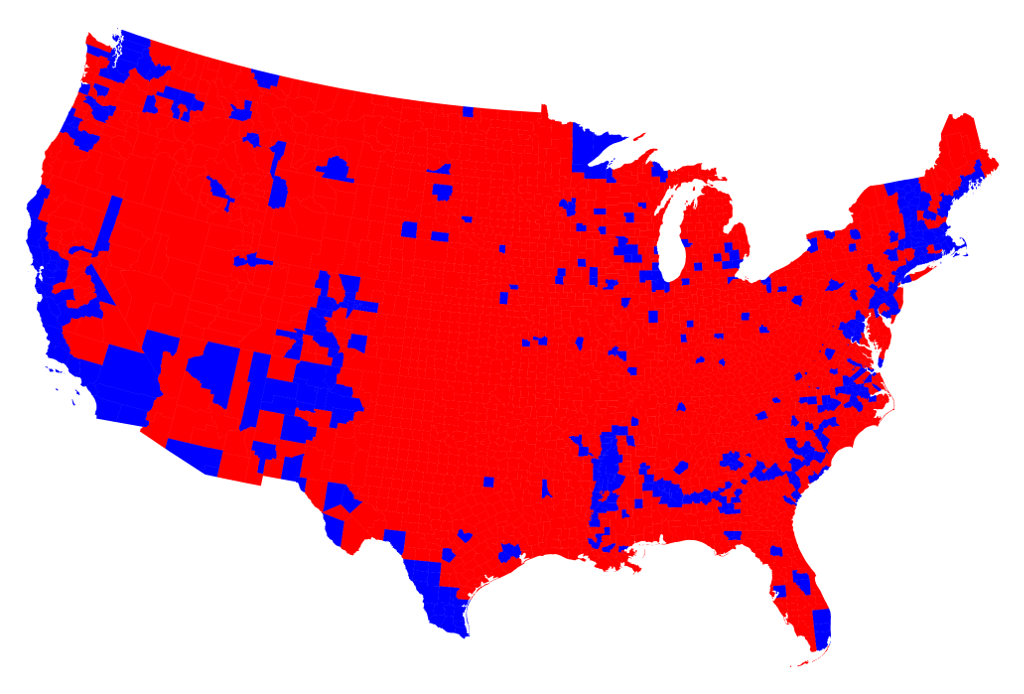
This is an election year in New Zealand. We vote for our parliamentary representatives and indirectly for our prime minister and government. Under our Westminster system the executive comprises MPs from the party (or parties) with the largest number of seats in parliament. We have a particularly silly form of proportional representation where about half the MPs represent electorates but these numbers are disregarded when considering the overall makeup of parliament, which is determined by the total of the party vote. To demonstrate how this would have worked with the US presidential election, Donald Trump may have won 30 of the 50 states and 80% of the counties in America, but Hillary Clinton would have become president under our system.

The proportional representation system gives minor parties power far in excess of their support and means the major parties often cannot really implement any of the policies on which they campaigned. As a result we have had successive governments that have pursued pretty much the same middle-of-the-road policies and have seen a gradual increase in the role of the state in our lives. There is little possibility that a party with radically different policies could ever get enough support to change this gradual progressivism. This is similar to the state of affairs in most Western democracies where the slightly left-of-centre party and the slightly right-of-centre party take turns ruling with essentially the same policies. Donald Trump's election, like Brexit, was the exception, where people said to hell with the same-same and took a punt on something different.

The lack of real choice in policies between the major New Zealand parties, National and Labour, could cause New Zealanders to look for alternatives in this year's election. One of the alternatives is the New Zealand First party led by Winston Peters, a perennial politician whose fortunes have risen and fallen several times over the past four decades since he was first elected as a National Party member of parliament. Peters' political career to date reached its zenith when he was deputy prime minister in National Party Prime Minister Jim Bolger's coalition government between 1996 and 1998. He again reached the top table of New Zealand's government when he served as Labour Prime Minister Helen Clark's foreign minister between 2005 and 2008. Peters has much in common with Donald Trump with his populist appeal to disaffected voters (in Peters' case mainly the elderly) and his nationalist and anti-immigration policies are reflected in New Zealand First's name, which sounds like a ready-made cap logo. His party is rising in the polls and is currently level-pegging with the third-placed Green Party on 11% of the national vote.

We approach the forthcoming election with extra uncertainty because of the resignation of popular prime minister John Key at the end of last year. Bill English, who was Key's deputy, has less personal appeal amongst voters than Key (although I like English because he has at least the semblance of principles whereas John Key clearly had none). English has been leader of the ruling National Party before, having led it to its worst electoral defeat in 2002, gaining barely 20% of the vote against the popular Helen Clark. So while National still leads the polling with nearly half the prospective vote, the gap to Labour is narrowing and if New Zealand First continues to eat into the vote share of the major parties, Winston Peters could well end up at least holding the balance of power again. My guess is that this time around, Peters will demand even more than in previous coalitions and could end up dictating many of the new government's policies.

It is hard to see the New Zealand political landscape changing much in the short term but Trump and Brexit have taught us that things can move very quickly. New Zealand doesn't have the same groundswell of political division and frustration that existed in Britain and the United States prior to their plebiscites last year, but I think New Zealanders are complacent and significant change could catch us unawares.

To paraphrase the Chinese curse, we live in interesting times.

Friday, March 10, 2017

Hawking wants to put the fox in charge of the henhouse

Stephen Hawking is someone I most admire. He has been confined to a wheel chair since his twenties with ALS but that hasn't stopped his mind soaring to the farthest reaches of the universe to solve some of the great mysteries of science - how did it all begin, what are black holes and how do they work, and what is the nature of time and why does it run in only one direction? He is probably the most influential physicist since Albert Einstein and Niels Bohr and certainly the best known of our contemporary scientists.

Recently he has been turning his attention to scientific issues that cross over into the political arena, including the potential risk of technologies such as robotics to wipe out humanity. On the positive side, he has been urging greater exploration and eventually colonisation of Mars and other planets, but he has also been pushing the hoary old idea of global government. He sees the latter as the solution to the problem of humanity's aggressive nature but he acknowledges the risk of such a governing body becoming tyrannical. Indeed.

I think we should consider Hawking's concerns in light of the revelations of another Steven. I am reading the book, Better Angels of Our Nature, by Steven Pinker, which is probably the most comprehensive treatise on the trends in human violence that has ever been written. Pinker shows that contrary to the impressions of many people today, human violence of every type has been decreasing sharply since the the Middle Ages - including war, religious and judicial violence, criminal assault and even domestic violence. It gives a very positive picture of humanity in the 21st Century and when combined with other studies that look at the very positive trends in the quality of life, prosperity and equity for humanity, it is grounds for a great deal of optimism rather than Hawking's pessimism.

One of the conclusions we can draw from Pinker's and other data is that the greatest threat to humanity does not come from the inherent violence in our nature, which for whatever reasons is decreasing, but from the propensity of human beings to look for solutions to their problems from strong leaders. It is powerful governments who represent the existential risk to humanity, not individuals. Hawking's solution is to trust a global government to keep us safe, which is simply putting all our eggs in one basket. I am not a famous physicist but I am something of a risk management expert and I can tell you that Hawking's proposal is a very foolhardy risk management strategy.

The answer to an existential risk, as any corporate investment strategist will tell you, is to diversify. In government terms that means localisation and federation, not centralisation and unification. Fortunately, this seems to be exactly what is now happening in global politics with Brexit and other bids to break down the European 'superstate', a resurgence of federalism and even calls for secession ('Calexit') in the United States, and the formation of new bilateral and multi-lateral political and trade alliances to replace the traditional transnational blocs.

Hawking is right to be concerned about the future of humanity. I, too, think we should colonise (and terraform) Mars and even Venus. This is part of a prudent risk management strategy for mankind. But I don't think we should trust strong, centralised government. This is, to use another analogy, putting the fox in charge of the henhouse.

Friday, December 16, 2016

The Year of the Deplorables (and some Greats)

Two Thousand and Sixteen will be remembered as the year of the Deplorables. The clever, considerate, right-thinking people that run the governments of Britain and the US had been doing what they always do - looking after their subjects who are too stupid to look after themselves - when the ungrateful hoards turned their backs and voted for Brexit and Trump. This was despite almost the entire news media, the smart people in academia and the bureaucracy, and most of the lovely people in the entertainment industry, telling them how they should vote and how racist, sexist and xenophobic they were to even consider not choosing Remain and Hillary. I mean, how dumb and ungrateful can people get?

The so-called Islamic State organisation claimed responsibility for bombings and terrorist attacks in Brussels, Baghdad, Kabul, Pakistan, Germany, Ohio, Cairo and Turkey (to name just a few) and there was the terrible attack on a gay nightclub in Orlando, Florida - but of course the thousands of deaths from terrorism in the name of Islam paled into insignificance against the true horror (if you believe Western governments and the mainstream media) that was Islamophobia, particularly that fomented by Donald Trump.

We had the Olympics in Rio de Janeiro with an opening ceremony that tried to out-propagandise the London one, this time on environmentalism, which was a bit rich considering Brazil has destroyed more rainforest than any other on earth and the host city was so polluted some athletes refused to compete because of fears for their health.

On the subject of sports, Ireland broke an 111-year losing streak by finally beating the All Blacks, the Chicago Cubs overcame the Curse of the Billy Goat to win the World Series (for which I was in North America, so had to take an interest), Novak Djokovic was finally dethroned after 200 weeks as the number one men's tennis player in the world by Andy Murray, and Muhammed Ali, whom I thought truly was The Greatest, died.

We also lost David Bowie, who died just after releasing a last album that presaged his death, followed by Prince and, later in the year, the eloquent Leonard Cohen, and Bud Spencer - the star of spaghetti westerns that I loved in my childhood. On a happier note, the Cuban people finally got rid of their murderous dictator, Fidel Castro, and hopefully his brother Raul won't be far behind.

Bob Dylan won the Nobel Prize for Literature and promptly proved he didn't deserve it by saying the award "was truly beyond words", and all of the rest of United States' Nobel winners were immigrants, demonstrating once again that immigrants usually aren't bludgers and criminals.

At the end of the year an undistinguished New Zealand prime minister (whose name I've already forgotten) resigned to be replaced by...er, the other chap.

And if some of the above depresses you, a Swedish author has a wonderful advent calendar on Twitter that makes you realise that 2016 was one of the best years ever to be alive on Earth (H/T Not PC).

Finally, I would like to thank those of you who read and commented on my blog. I have tried to keep up the regular posts, although overseas travel and some busy periods in my work thwarted my best intentions. As always, I resolve to do better next year. Merry Christmas!

Tuesday, November 29, 2016

Castro's Apologists Reveal Their Anti-democratic Tendencies

A while ago I was doing some work for a government agency and I was surprised to see one of the staff had a picture of Che Guevara as the screen background on his PC. I somewhat facetiously asked him whether he alternated the image with others of murderous secret police chiefs such as Heinrich Himmler, Lavrentiy Beria and Erich Mielke. He seemed unaware that Che Guevara was the head of Fidel Castro's secret police and ran the Cuban dictator's concentration camps and that he personally killed hundreds of Castro's political opponents.

I recalled this incident while reading some of the tributes to Castro over the weekend, particularly the fawning eulogies from left-wing politicians like Justin Trudeau and Jeremy Corbyn, and it got me thinking about why so many on the left seem to be wilfully blind to the crimes against humanity of Communist dictators like Castro, Stalin, Mao and Kim Il-Sung. I say wilfully because, unlike the public servant above, I cannot believe these Western politicians are unaware of the crimes of those they admire.

Why are democratically-elected Western leaders so keen to embrace and legitimise dictatorial thugs? I think the answer is obvious and revealing, like a political Freudian slip. Most Western leaders believe in big government as the solution to all the world's problems and there is no bigger form of government than brutal dictatorship. In praising Castro, they are revealing their secret pining for the free hand he had to do whatever he wanted. As Mark Steyn put it, 'if you believe in big problems that demand big government solutions, democracy just gets in the way.'

The distrust of democracy amongst Western leaders has been all too evident this year in their responses to the Brexit referendum and the US presidential election. Their churlish dismissal of the voters as ignorant, racist and xenophobic has revealed their distaste of the reality of democracy. They like the pretence of having a democratic mandate but only when voters stick to the script they have written.

The very worst thing about the reaction of these Western apologists to Castro's death is their arrogance in thinking they can speak for the Cuban people, such as Trudeau's observation that the dictator 'served his people for almost half a century.' It takes a particularly weasel-like hypocrisy to label Castro's extra-judicial killing of thousands of his countrymen and his imprisonment of tens of thousands of his political opponents as 'serving his people'.

The only aspect of Castro's death that is regrettable is that he died in his sleep and thereby denied his oppressed people the opportunity of seeing him hang for his crimes.

Thursday, July 14, 2016

Britain replaces the Weasel with Big Sister

David Cameron has stepped down and Britain has a new prime minister in Theresa May. If there was any doubt about Cameron's character before, he removed all doubt with his petulant resignation when the Brexit referendum didn't go his way. This is the man who promised the referendum and set the date, so his response shows the most callous disregard for the democratic process that he put in place and for the interests of his country. He is reported as saying, "Why should I do all the hard shit?" to implement the decision of the electorate. Clearly, it has never occurred to him that being prime minister might involve some "hard shit". The only positive thing to come out of all this is that Cameron has ensured he will be regarded for posterity as the monumental fuck-up he really is.

I wrote before the referendum that I didn't delude myself that Britain is suddenly going to become a paragon of individual liberty if a majority votes for Brexit and unfortunately I've already been proved right by the Conservative Party's choice for the new prime minister. Theresa May is no friend of liberty, having introduced as Home Secretary the notorious Investigatory Powers Bill, known as the 'Snoopers' Charter', which is described in this article in The Independent as "the most intrusive surveillance legislation of any democratic country". May wants to force all technology companies to install 'backdoors' to enable spying on mobile phones and supports draconian enforcement of 'cyberbullying'. The Independent article points out that European Union law has more protections for individual privacy and use of data than the UK and raises the risk that May could oppose any equivalent legislation in the UK, leaving Britain without even its current privacy and civil liberties protections.

So, Britain has replaced the Weasel of Westminster with Big Sister, and as a sign of the post-referendum future of Britain, it is very ominous.

Tuesday, July 5, 2016

The arrogance of the annointed ones

I thought of the European Union and the reaction to the Brexit vote when I read these words from Thomas Sowell:
In their haste to be wiser and nobler than others, the anointed have misconceived two basic issues. They seem to assume: 1) that they have more knowledge than the average member of the benighted, and 2) that this is the relevant comparison. The real comparison, however, is not between the knowledge possessed by the average member of the educated elite versus the average member of the general public, but rather the total direct knowledge brought to bear through social processes (the competition of the marketplace, social sorting, etc.), involving millions of people, versus the secondhand knowledge of generalities possessed by a smaller elite group.

 H/T Mark J Perry at American Enterprise Institute

Sunday, June 26, 2016

Let them eat cake

The people have spoken - the ignorant, bigoted, little-Englanders who are too old and stupid to know what is good for them (or so churlish Remain supporters would have us believe) had the gall to opt out of the great European superstate.

The reaction to the Brexit vote in the last few days has been unsurprising, given the contempt the political elite and their supporters showed for Leave supporters in the lead up to the vote. The irony of this reaction is that it is exactly why the Leave side won. When the political elite treats the rest of the population with contempt, they shouldn't be surprised when the rest rise up and destroy that which the elite hold dear. Thus has been the case with all political revolutions throughout history. It was 'let the eat cake' all over again.

This was only the second British referendum on membership of the EU since 1975 when Britain proposed joining what was then called the European Economic Community. Successive UK governments have since signed up to the Maastricht Treaty (1992), the Amsterdam Treaty (1997) and the Treaty of Lisbon (2007), amongst other commitments, without seeking a mandate from the British people to extend the reach of the EU into British domestic affairs. In fact, the entire political model of the EU seems to be about gaining ever-increasing power for Brussels without seeking any democratic mandate to do so.

Anyone who has a ounce of political sense could have foreseen that this carefully-crafted, undemocratic accretion of power would start to unravel sooner or later. The only question now is whether or not Britain will be the last of the EU member countries to leave, with politicians in The Netherlands, France, Italy, Sweden and Denmark calling for similar referenda for their countries.

There is already a rear-guard action being fought against the Leave decision with a petition for a second referendum and for another Scottish independence referendum, but there is no reason for a British Government to respond to these calls. Those who opposed the Brexit decision need to accept the majority decision and give the British Government (whoever leads it) time to negotiate Britain's new relationship with the EU and other countries. Predictions of disaster will, I am sure, come to nothing and, given time, the Remain supporters might be surprised by the positive outcomes of the decision for Britain.

Monday, June 20, 2016

Brexit could be a small step back to Great Britain

I am not much of a betting man but even if I was I wouldn't want to wager on on the outcome of the Brexit referendum. It could go either way. The polls last week showed a surge in support for Leave but this has been reversed in the last few days since the terrible news about the murder of British MP Jo Cox, which reminds us that actual events have a way of confounding even the most confident predictions.

I am not surprised at the bitterness of the debate, especially from the Remain side since it became apparent that Leave might win. The Eurocracy and its cronies have a lot to lose, after all. The Remain side has become more and more desperate as its fortunes have waned and the Leave side has struggled to stay focused on the arguments as it has been subjected to ad hominem attacks, outrageous claims of doom and, most disgracefully, to being blamed for the actions of the mental health patient who killed Jo Cox.  

Even here in New Zealand we haven't been immune from the crazier aspects of the debate with the Fairfax Media group managing to dig up a farmer who believes a Leave win would be bad for New Zealand agricultural exports. Given that Britain joining the European Common Market was probably the single most economically damaging event in New Zealand's history and that the EU's Common Agricultural Policy continues to significantly impact our agricultural trade with the whole world, one can only laugh at Fairfax's gall.

I am pro-Brexit because I believe in small, representative, rights-protecting government and I think the European Community is the exact opposite - monolithic, unrepresentative and rights-trampling. However, I am not overly invested in the outcome of the referendum and I don't delude myself that Britain is suddenly going to become a paragon of individual liberty if a majority votes for Brexit next Thursday. Britain is a shameful example of the growth of the authoritarian state in Western countries, particularly so because it is the origin of so much of classical liberal thought and practice.

A win for Leave will be a small step on the way back to the truly liberal society Britain once was. A vote for Remain will be the very end of the road for that great tradition.

Tuesday, May 31, 2016

International politics provides relief from local tedium

Politics in New Zealand is soporific at the moment with a boring budget and even a quite muted response from the left-wing opposition, but politics in the rest of the world it is getting quite exciting.

In the US, leading Democratic political candidate Hillary Clinton has been found by the Inspector General of the State Department to have breached government policies by using a personal email server for departmental business. What is worse is that she repeatedly lied about it (as even MSNBC, which is usually hugely sympathetic to Clinton, now admits). The Inspector General's report puts the onus on the FBI, which is running a parallel investigation, to decide whether she and her staff should face criminal charges, and if that happens her run at the presidency is over. Does that mean the Democratic nomination will go to Bernie Sanders? Not necessarily. The Democratic Party seems intent on tearing itself apart into implacable Hillary vs Bernie factions, and Democratic Party rules allow the delegates pledged to Hillary to switch to a candidate more acceptable to the Clinton faction like Joe Biden or John Kerry (as Karl Rove points out in this Wall Street Journal article).

Meanwhile the mainstream media continues to do what it can to undermine Donald Trump's run at the presidency, with the New York Times leading the charge by giving legitimacy to claims that Trump is a fascist. I think Trump is a big government cronyist and a racist, sexist demagogue, but I don't think he even begins to qualify as a fascist. Such claims just add to the perception that Trump is the antagonist of the political establishment and that is a lot of the reason for his increasing popularity with American voters. I wonder whether the geniuses at the New York Times will ever realise this and that they are helping pave Trump's road to the White House.

In the United Kingdom, the prospects of a decision to leave the European Community in next month's referendum are on a knife-edge (the polls are currently averaging 40% to 39% in favour of Remain). I believe we may see a last minute surge in support for Leave due to the Remain campaign's increasingly desperate appeal to people's fears with their ridiculous claims that Brexit will lead to World War 3, worsening climate change and national economic collapse. Whatever the outcome, British politics will not be same with the Brexit issue having created new alliances and splits that cross the traditional left-right divide and many in the Conservative Party are already calling for David Cameron's scalp for his dishonesty during the Brexit campaign.

It is all entertaining, if nothing else.

Wednesday, March 16, 2016

The desperation of the anti-Brexit league

It is fascinating watching the British political establishment try to rebottle the genie they have unleashed with the referendum on membership of the European Union. Prime Minister David Cameron has tried to be too clever by half, promising in 2013 that a referendum would be held in an attempt to placate disaffected Conservative Party supporters who were flocking to the anti-EU UK Independence Party. The referendum was to be held by the end of 2017 but Cameron has brought it forward to June this year, presumably in response to the increasing support for a British exit ("Brexit"). Cameron tried to stem the flow of support for Brexit by renegotiating Britain's role and commitments in the EU but this appears to have been little more than an empty gesture and reaction has been mixed at best.

We are now seeing an increasing desperation from pro-EU politicians and media such as this article in The Guardian that suggests airfares and mobile phone charges will increase if Britain leaves the EU. What they don't take into account, of course, is the lower compliance costs that will come from leaving behind a myriad of EU regulations covering everything from the bendiness of bananas to the use of the word 'jam'.

Cameron has tried to force his Conservative Party colleagues to fall into line in opposing Brexit but an increasing number of them like Boris Johnson and Michael Gove are defying him. The fight is essentially coming down to the political establishment and centre-left against the rebellious, libertarian, centre-right. That is hardly surprising as big, centralised government has always been a left-wing ideal, with global government the ultimate Marxist objective. The European Union, the United Nations, even global agreements such as the Paris Agreement on Climate Change, are seen as useful milestones on the journey to that goal.

In an age of instant, mass, global communication, it should be no longer necessary (if it ever was) to have big, centralised and homogeneous government. The age of empires is over. Our aspirations should be for small, local and heterogeneous societies. Everyone should have real choice about the type of community in which they choose to live. If you want to live in a collectivist society where everyone is responsible for everyone else, that should be your choice, but if I want to live in a society that values individual responsibility and independence, that should be my choice. I believe there are some non-negotiables in human affairs - the rights to 'life, liberty and the pursuit of happiness' pretty much covers the key ones - but the rest of it should be over to people in local communities to decide for themselves.

A majority vote for Brexit will be a small but welcome step against the tide of ever-bigger government.